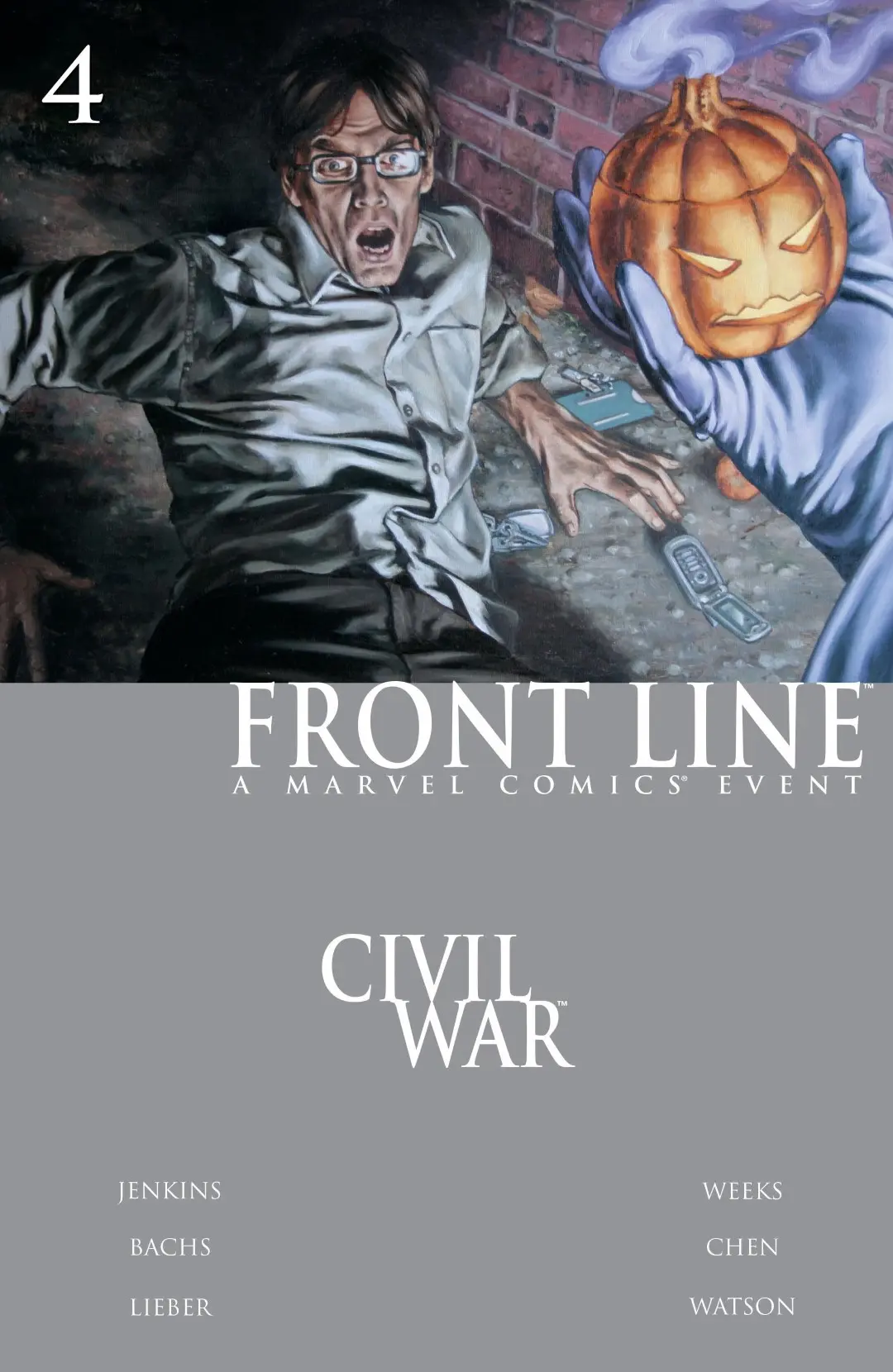
Civil War: Front Line Issue 4 (2006)
Publisher: Marvel
Read Free Comics Online of Civil War: Front Line Issue 4 (2006) Read Free Online with very high-quality images on google without any cost, Read Free Marvel comics online at Read Free comics Online.
Scroll down to read free comics online.
Read Next Issue
Civil War: Front Line Issue 4 (2006) Read Free Marvel Comics Online
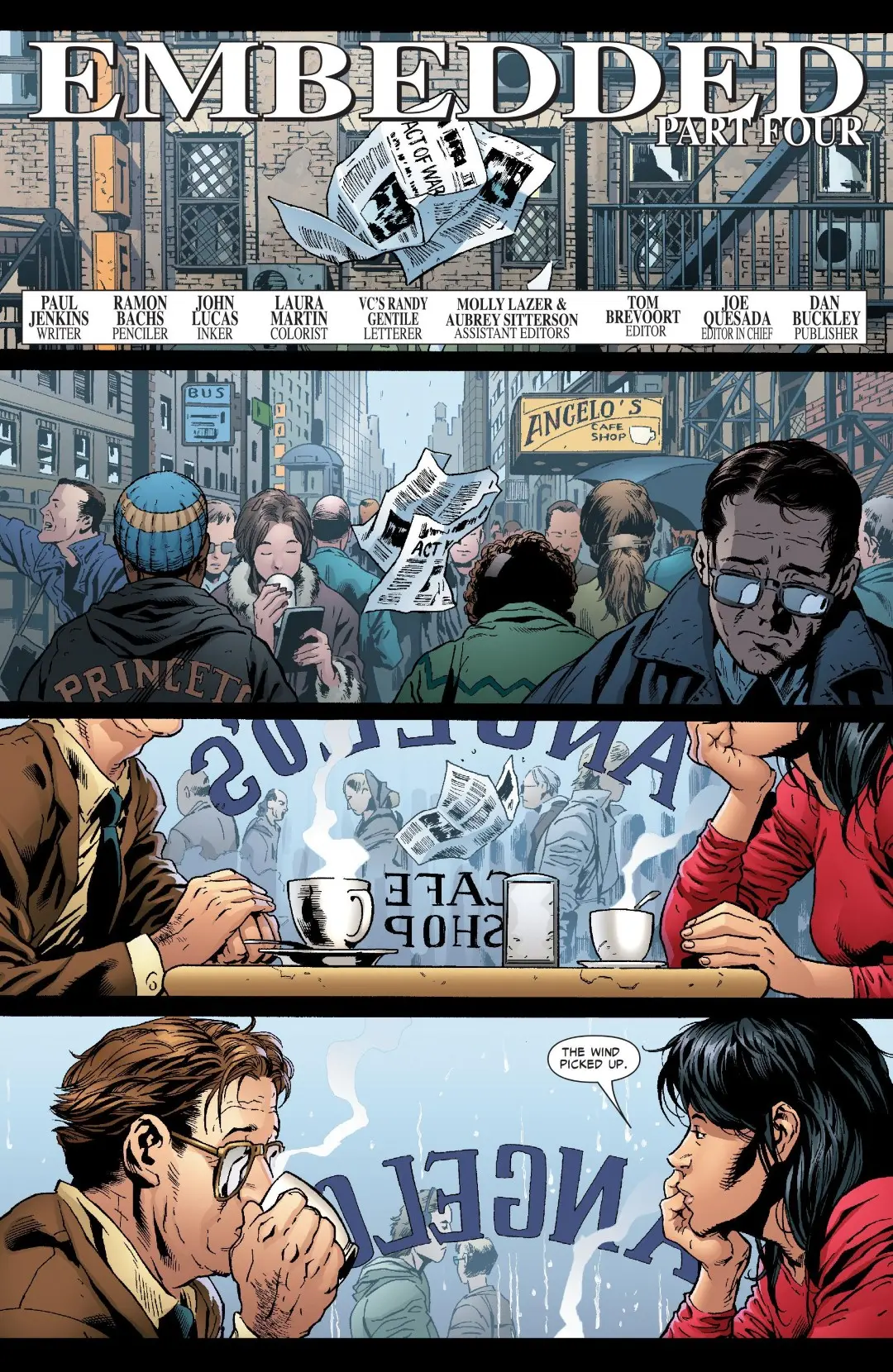
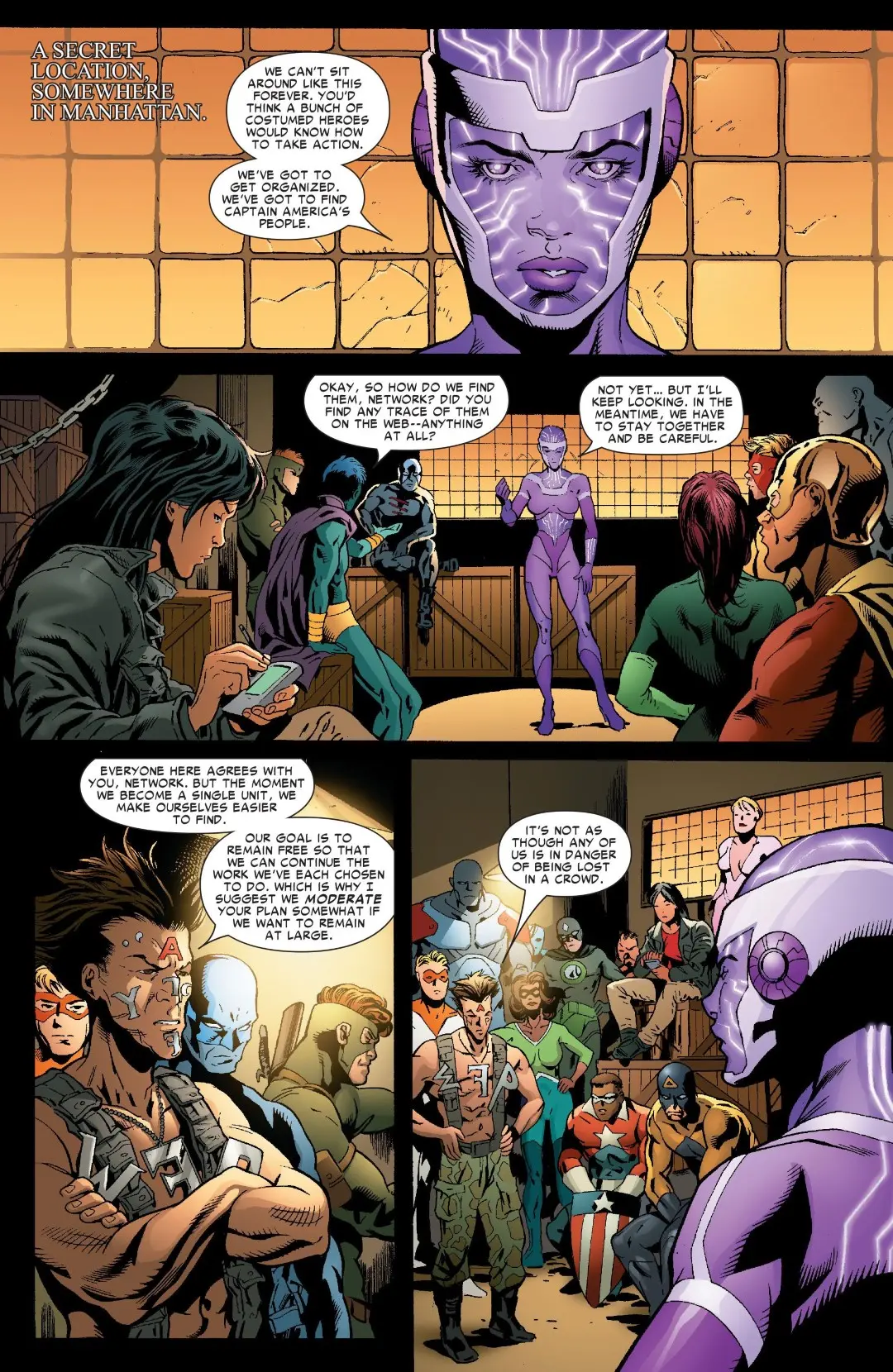
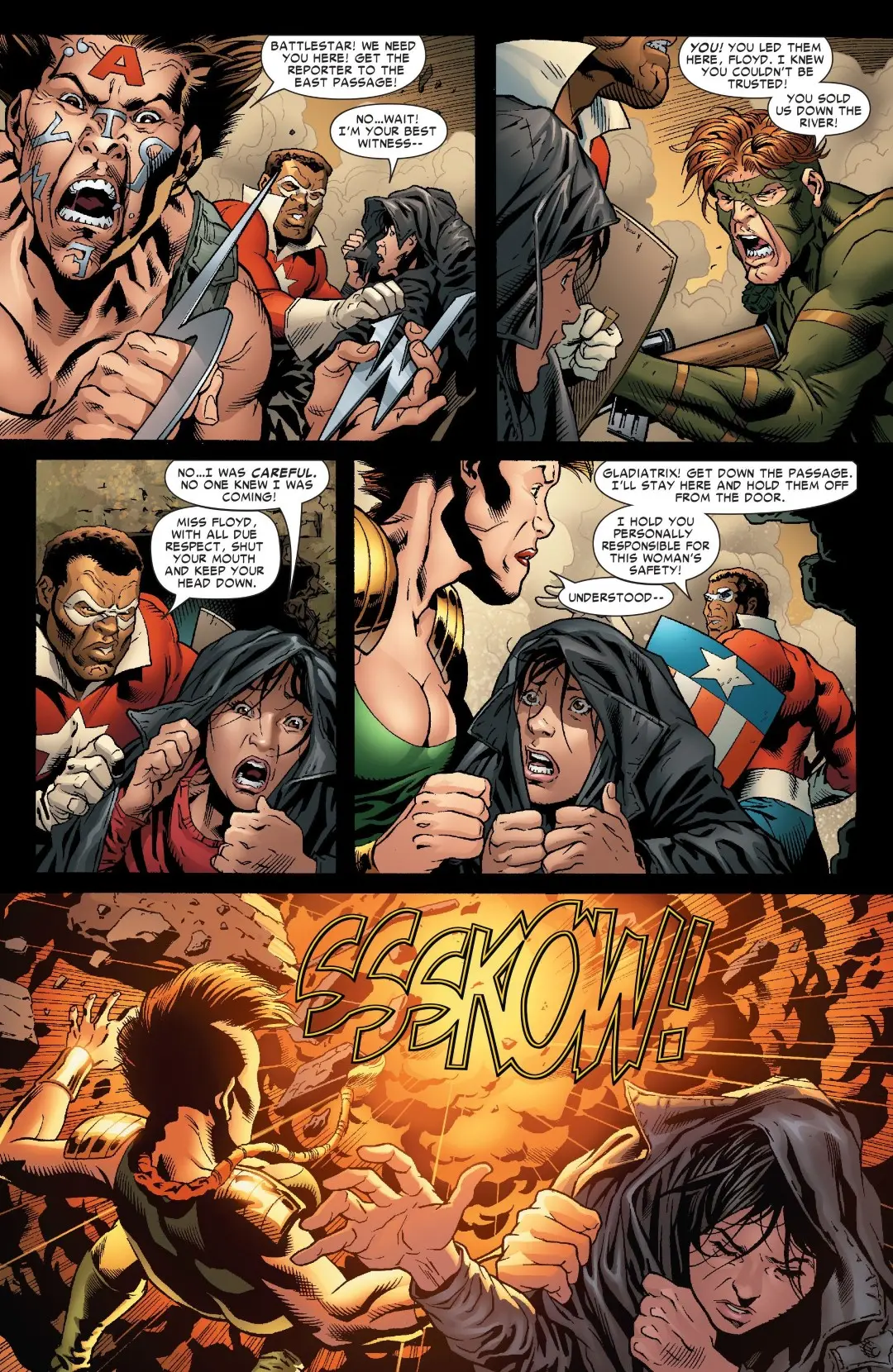
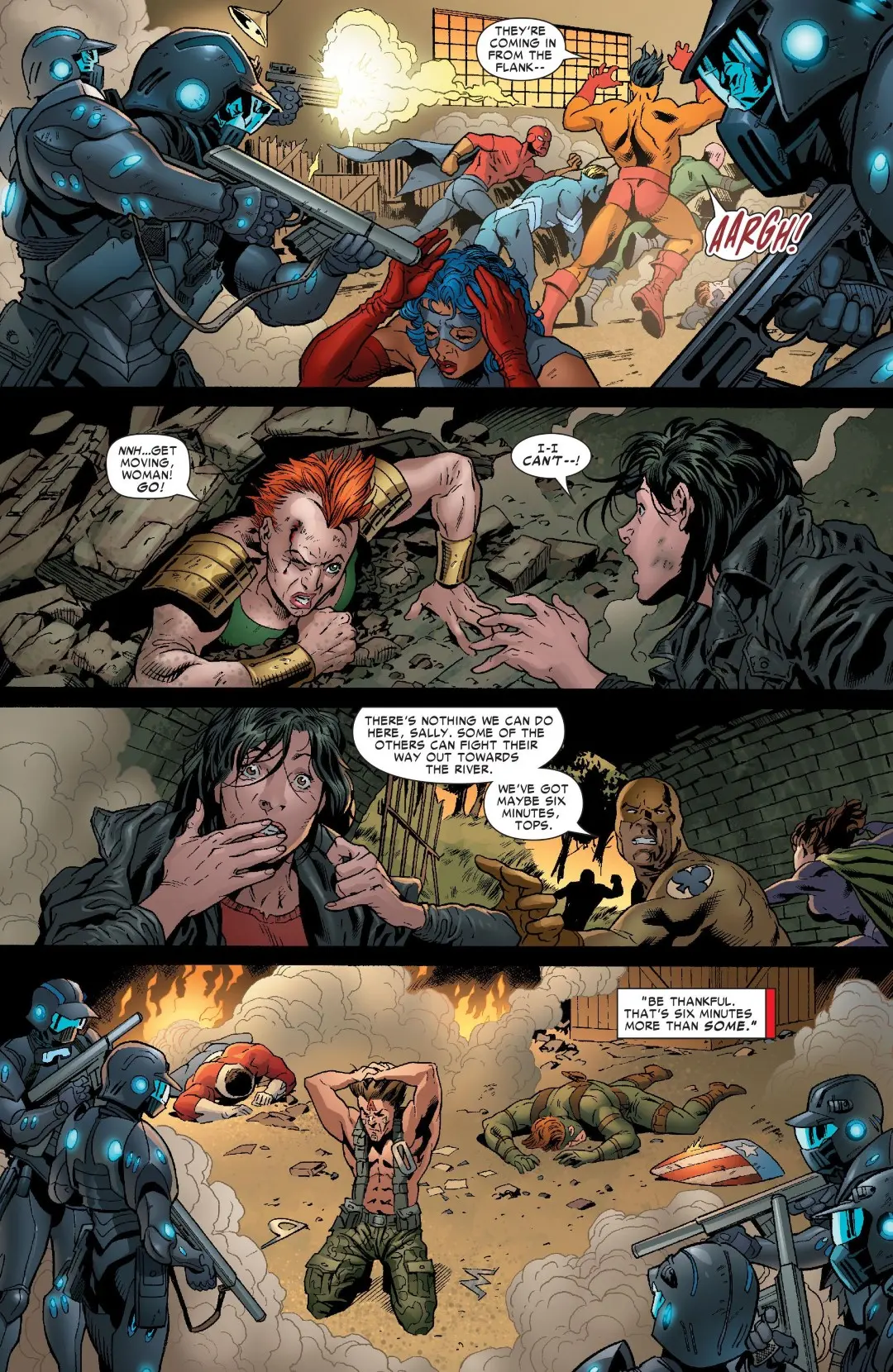
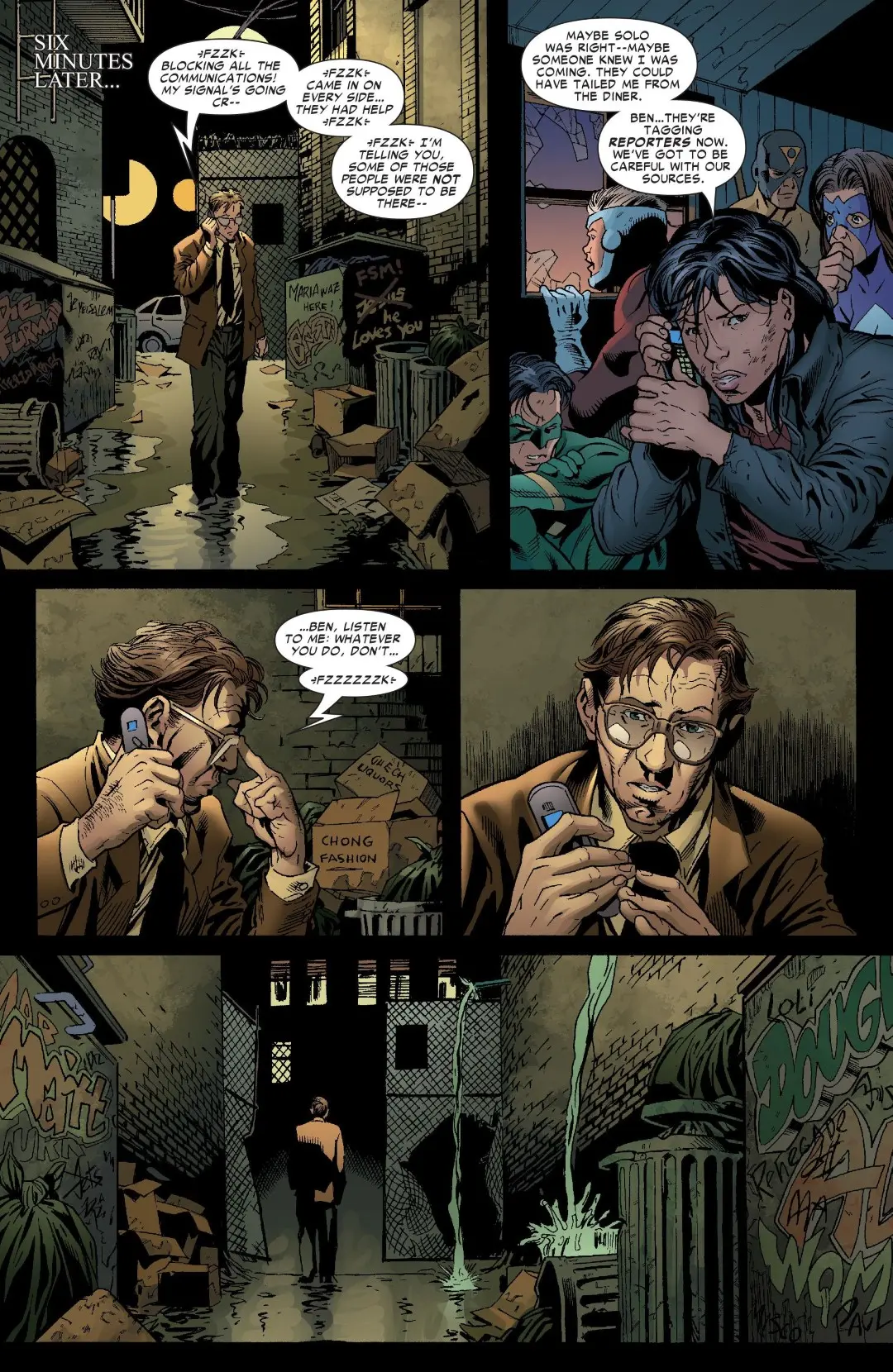
The penultimate chapter of the ground-level series that redefined how superhero conflicts affect ordinary people arrives with devastating force. Civil War: Front Line Issue 4 (2006) finds veteran reporter Ben Urich and his passionate young colleague Sally Floyd trapped between the two warring factions of the Superhuman Registration Act. The issue opens with Sally embedded among a group of anti-registration vigilantes led by the obscure hero Typeface. Their secret meeting is violently interrupted by a S.H.I.E.L.D. raid commanded by Iron Man himself, forcing Sally to flee for her life through the chaos of exploding walls and energy blasts. The scene captures the terrifying reality that in this war, a press badge offers no protection, and journalists have become targets as dangerous as any super-powered combatant.
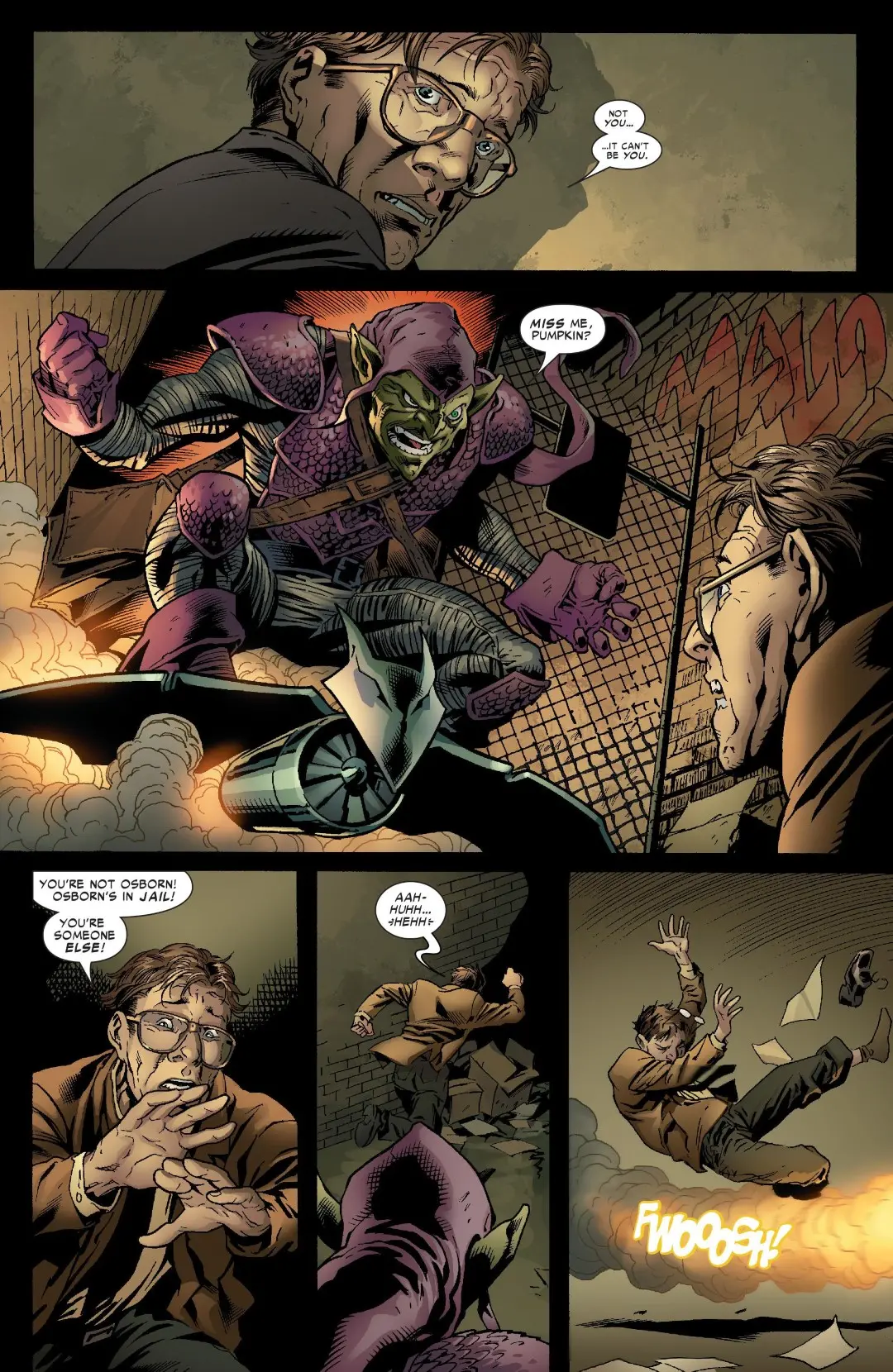
Meanwhile, Ben Urich follows a lead that takes him down a path far darker than any street-level crime story. He comes face to face with a figure he believed safely locked away in a maximum-security prison: Norman Osborn, the Green Goblin. The Goblin’s unexpected freedom is a chilling reminder that the Civil War has created a vacuum where villains are beginning to exploit the chaos. Osborn’s presence in the narrative suggests that the true battle may not be between Captain America and Iron Man, but against those who see the heroes’ division as an opportunity to reclaim power. Urich, who has spent his career exposing corruption, now realizes that the story he is chasing may be larger and more dangerous than he ever imagined.
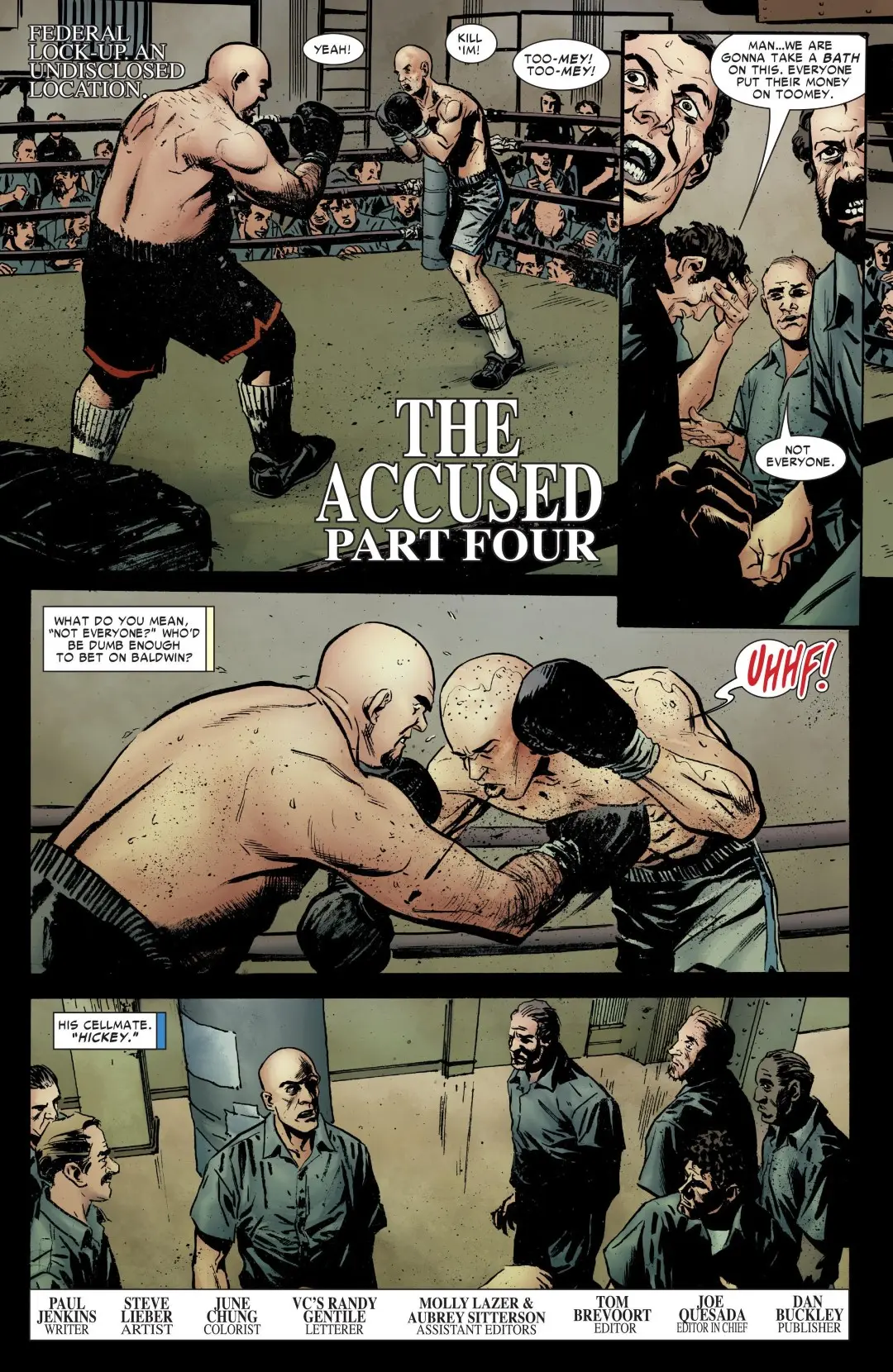
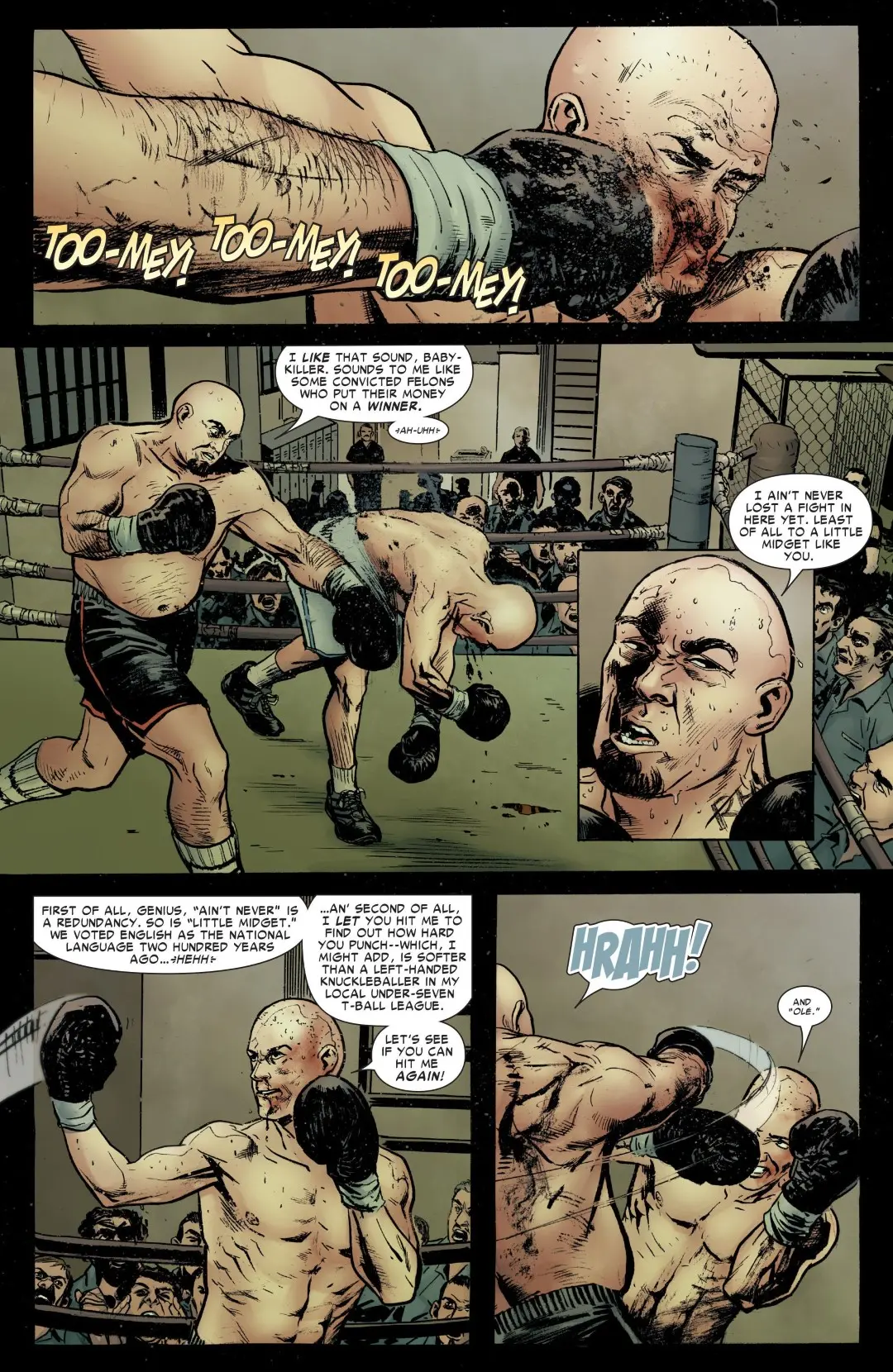
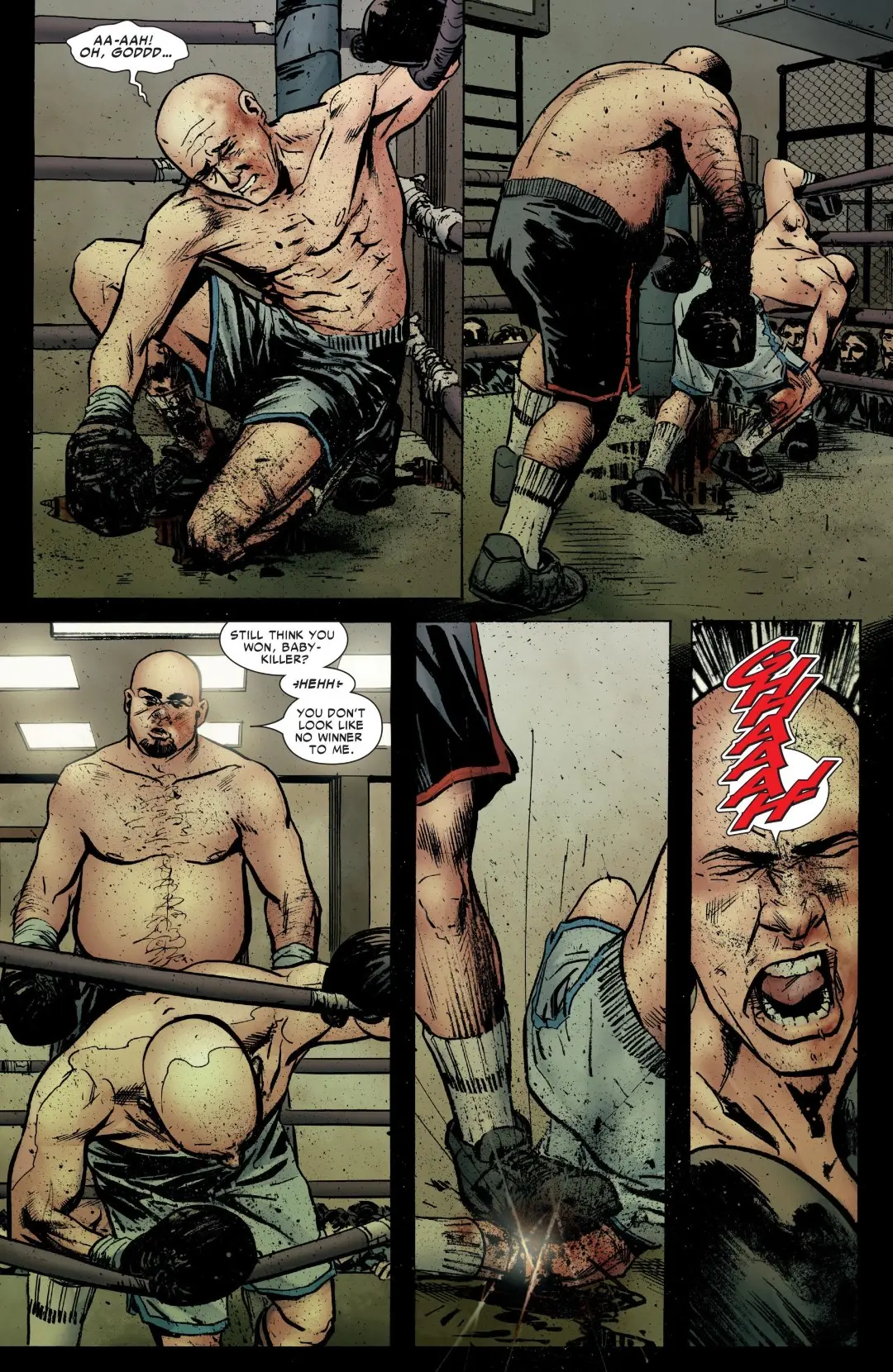
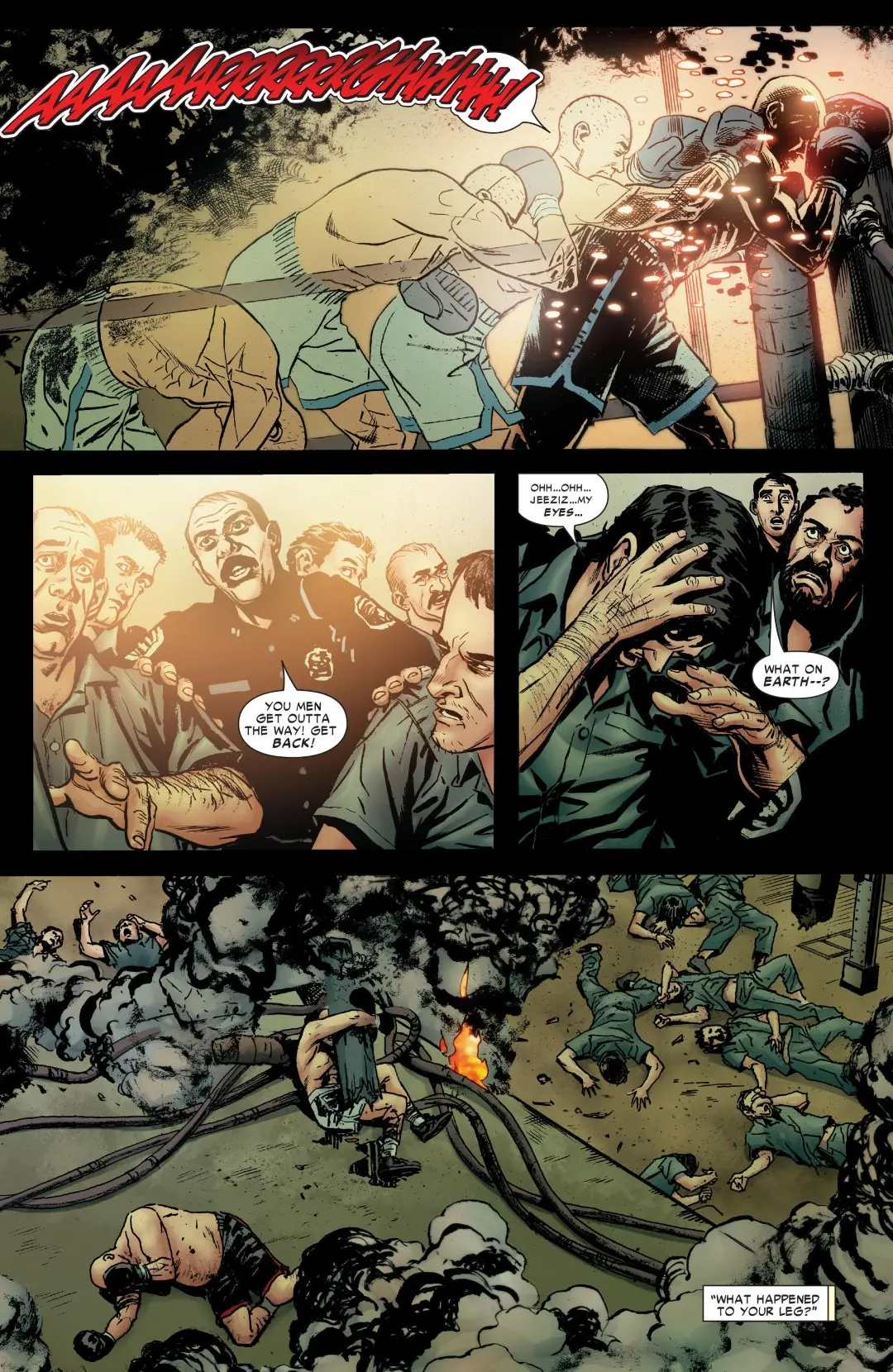
The issue’s second major thread, “The Accused,” focuses on the tragic figure of Robbie Baldwin, the sole survivor of the New Warriors and the unwitting catalyst of the Stamford disaster that triggered the Superhuman Registration Act. Imprisoned and vilified by a nation hungry for scapegoats, Robbie faces a brutal fight for survival behind bars. An inmate named Toomey, who has lost family in the Stamford explosion, attacks him with a ferocity born of grief. Robbie, whose powers have been suppressed by dampening technology, is forced to rely on his wits and physical training. He manages to hold his own until a mysterious attacker strikes from the shadows, cutting his leg with a blade and leaving him vulnerable and bleeding. The sequence highlights the psychological devastation of being blamed for a tragedy you survived.
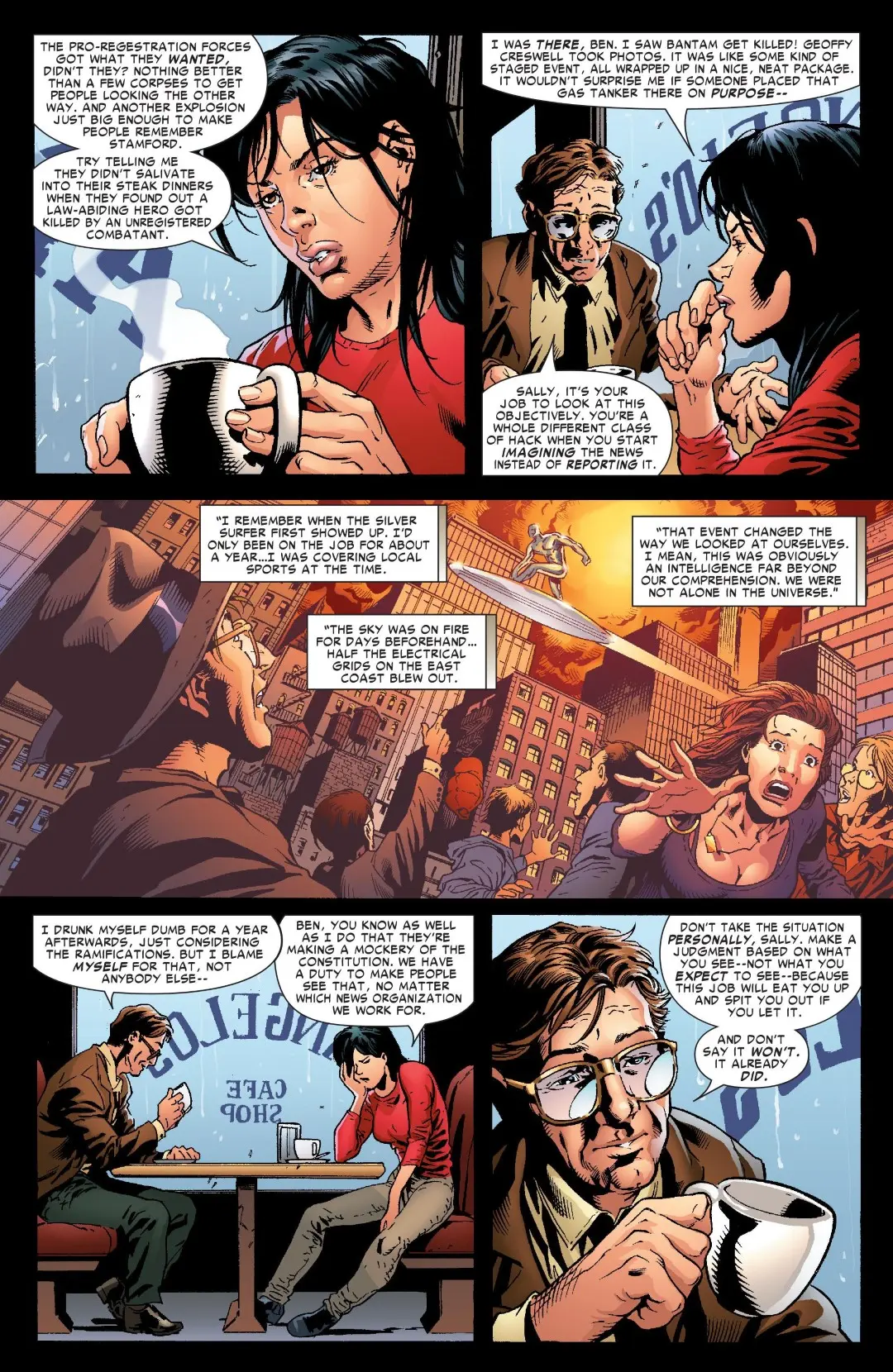
Back on the streets, Sally Floyd finds herself separated from her anti-registration contacts and forced to navigate a city that has become a war zone. She witnesses ordinary citizens turning on each other, neighbors reporting neighbors to authorities, and the fabric of community unraveling under the pressure of the Registration Act. Her internal monologue reveals a growing disillusionment with the very concept of journalism. She wonders whether the truth matters when no one wants to hear it, and whether the role of the reporter has become obsolete in a world where facts are dismissed as propaganda by both sides. This crisis of conscience is the emotional core of Civil War: Front Line Issue 4 (2006), forcing readers to question whether the pursuit of truth can survive when truth itself has become a weapon.
Ben Urich, meanwhile, confronts Norman Osborn in a tense, dialogue-heavy scene that crackles with menace. The Green Goblin does not threaten Urich directly; instead, he offers a twisted kind of mentorship, praising the reporter’s tenacity while warning him that the truth he seeks will destroy more lives than it saves. Osborn speaks of the war as a chess game, with heroes and villains as pawns, and hints that he has already positioned himself to benefit regardless of the outcome. Urich, who has interviewed murderers and madmen before, finds himself shaken by the calm certainty in Osborn’s voice. He leaves the encounter knowing that the story he is chasing has become a labyrinth with no clear exit.
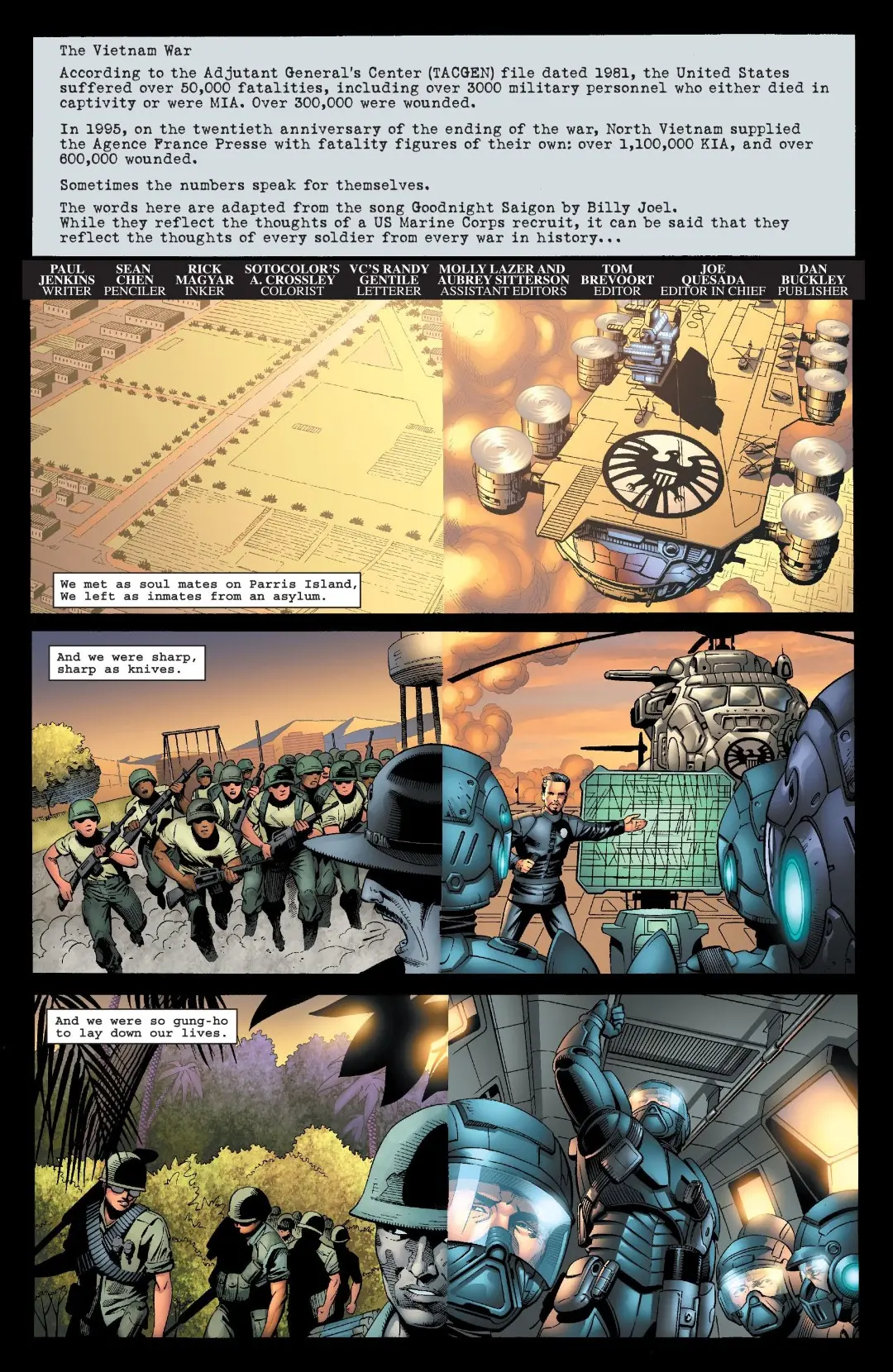
The issue also features a poignant interlude titled “Correspondence,” which juxtaposes the fictional Marvel Civil War with real-life war correspondence from conflicts such as World War I. The segment includes letters from soldiers, journalists, and civilians caught in the crossfire of actual wars, drawing powerful parallels between the superhero conflict and the tragedies of human history. This meta-narrative device elevates Civil War: Front Line Issue 4 (2006) beyond standard comic book fare, grounding the fictional violence in the very real costs of war. It reminds readers that the questions posed by the Registration Act, about safety versus freedom, about the rights of individuals versus the needs of the state, are not merely comic book fantasies but issues that have haunted humanity for centuries.
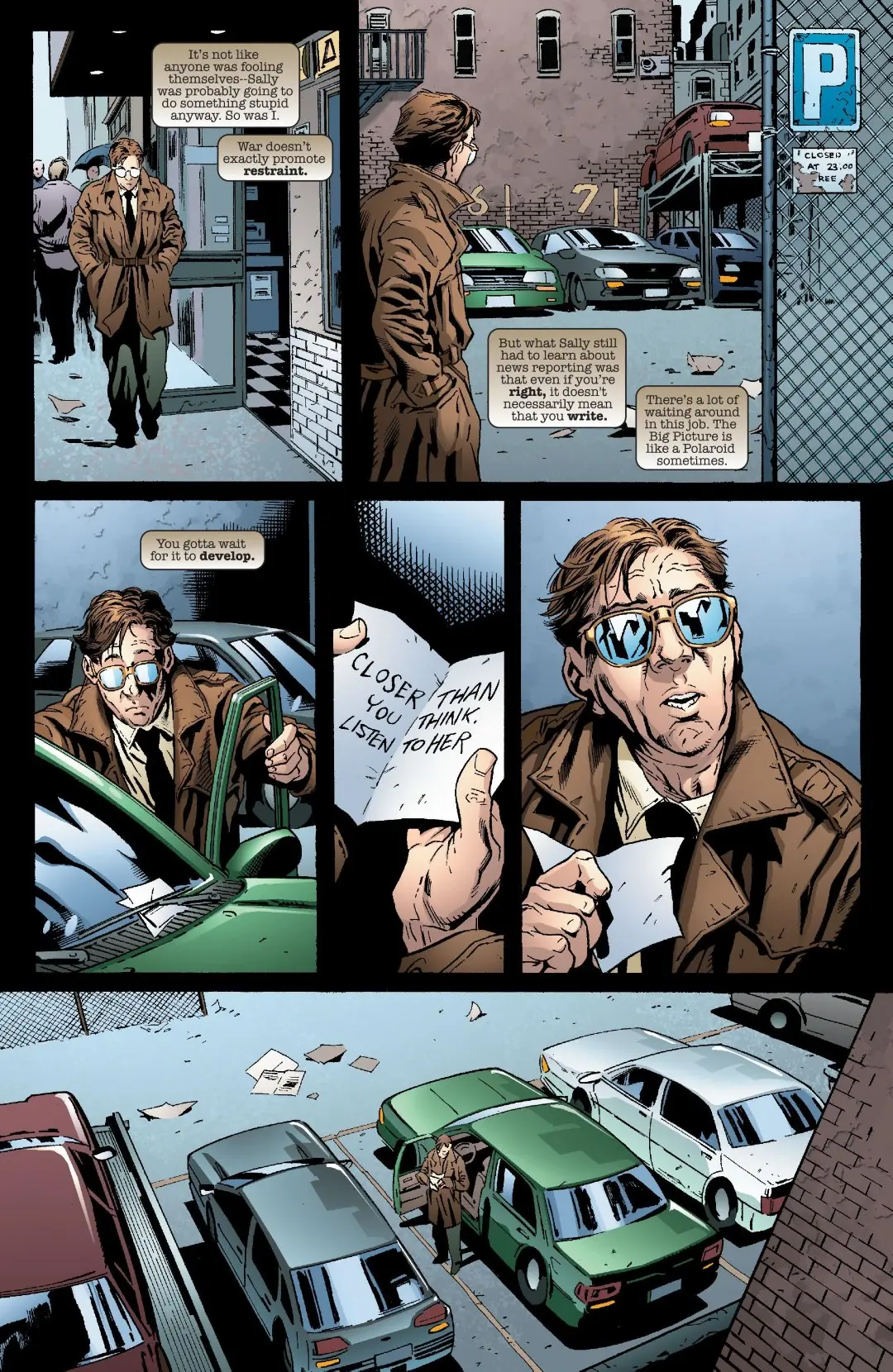
As the issue hurtles toward its conclusion, both Urich and Sally Floyd find themselves at crossroads that will define the rest of their careers. Sally, having narrowly escaped the S.H.I.E.L.D. raid, realizes that she can no longer remain a passive observer. She makes a decision that will place her directly in the path of danger, choosing to use her writing as a weapon rather than a shield. Urich, in contrast, decides to bury the most explosive part of his investigation, recognizing that some truths are too dangerous to publish in the middle of a war. His choice is pragmatic but haunting, a betrayal of the journalistic principles that have defined his life. The contrast between their decisions captures the central tension of Civil War: Front Line Issue 4 (2006): whether to fight or to survive, whether to expose the truth or to protect the innocent from its consequences.
The final pages of Civil War: Front Line Issue 4 (2006) set the stage for the concluding chapter of the series. Robbie Baldwin, bleeding and broken in his cell, whispers a prayer that he does not expect to be answered. Sally Floyd types her column with trembling fingers, knowing that the words may be her last. Ben Urich stares at the ceiling of his apartment, haunted by the ghost of a story he chose not to tell. The closing image is a splash page of the Daily Bugle newsroom, empty and dark, a monument to a profession that is slowly being silenced by the war. It is a powerful, melancholic ending that promises no easy answers, only the recognition that some wounds cannot be healed by the conclusion of a single issue. Civil War: Front Line Issue 4 (2006) is a masterclass in serialized storytelling, proving that the most devastating battles are not fought with fists but with choices, and that the greatest heroes are sometimes the ones who simply refuse to look away.
Civil War: Front Line Issue 4 (2006) Read Free Online














Read Free Comics Online of all comics character on this website with very high-quality images on google free.
Leave a Reply