Civil War: Front Line Issue 5 (2006)
Publisher: Marvel
Read Free Comics Online of Civil War: Front Line Issue 5 (2006) Read Free Online with very high-quality images on google without any cost, Read Free Marvel comics online at Read Free comics Online.
Scroll down to read free comics online.
Read Next Issue
Civil War: Front Line Issue 5 (2006) Read Free Marvel Comics Online
Civil War: Front Line Issue 5 (2006) opens with a weight that feels almost unbearable, the kind of heaviness that settles into bones after weeks of watching a world tear itself apart. The veteran reporter, a man who has covered street-level crime and superhuman disasters for decades, sits alone in his apartment. The blinds are drawn against a city that no longer makes sense. His notebook, filled with the names of sources who have gone silent and theories that have led nowhere, lies open on the table. He has always believed that the truth would win, but now, in the quiet of his own home, he wonders whether some truths are not meant to be found. This moment of doubt is the emotional core of Civil War: Front Line Issue 5 (2006), a chapter that forces every character to confront the possibility that the war may cost them everything they are.
The young columnist, whose fiery prose has made her a target, finds herself trapped in a room that has no windows. The government agents who arrested her have offered no charges, no phone calls, no explanation. The silence is her only companion, and it is louder than any explosion she has ever witnessed. She replays every article she has written, every source she has promised to protect, every risk she has taken in pursuit of the truth. The walls of her cell feel closer with each passing hour, and she begins to understand that Civil War: Front Line Issue 5 (2006) is not just about the battle between heroes but about the war against those who refuse to remain silent. Her isolation becomes a mirror, reflecting the fate of anyone who dares to ask questions that those in power do not want answered.
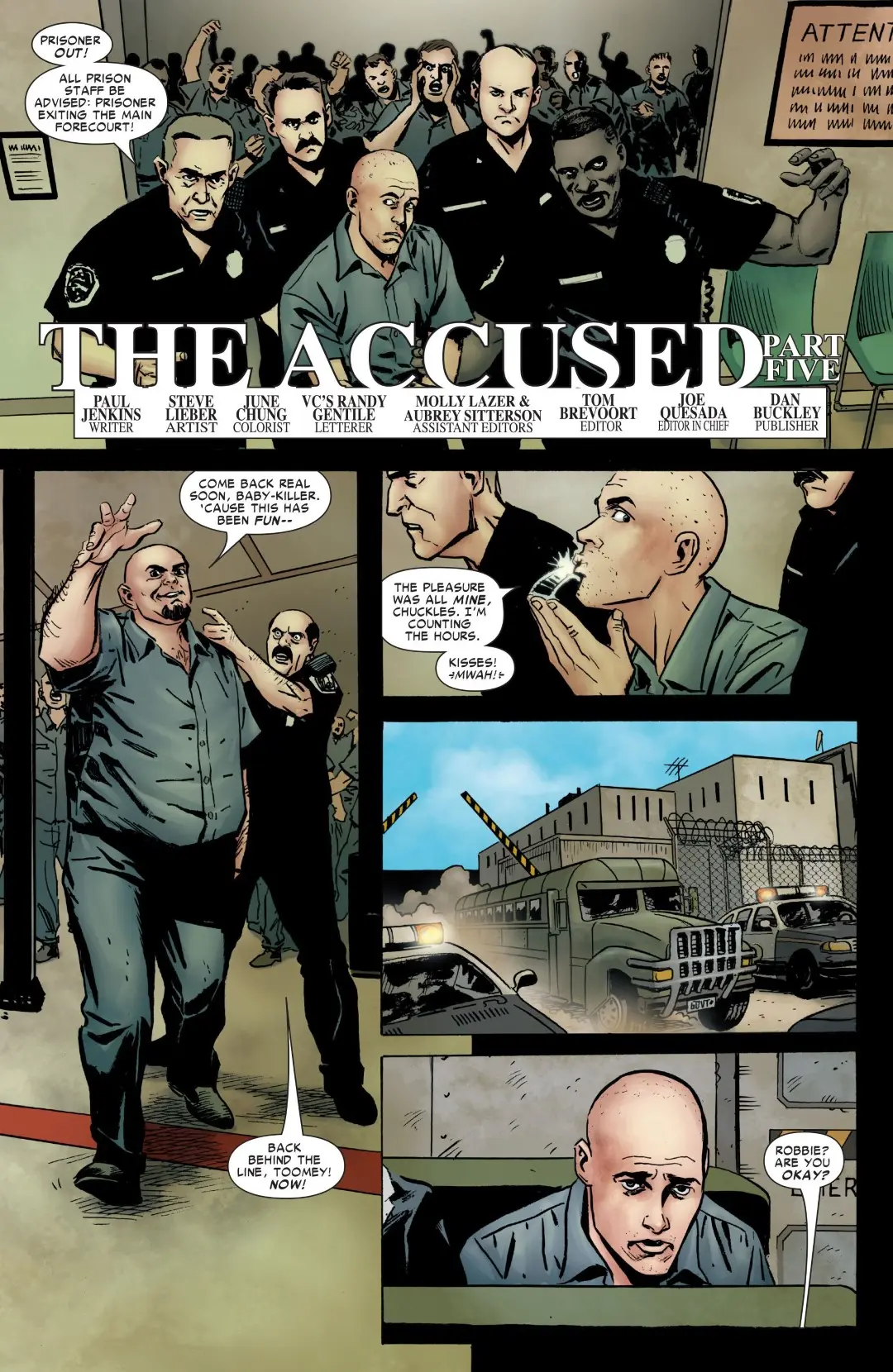
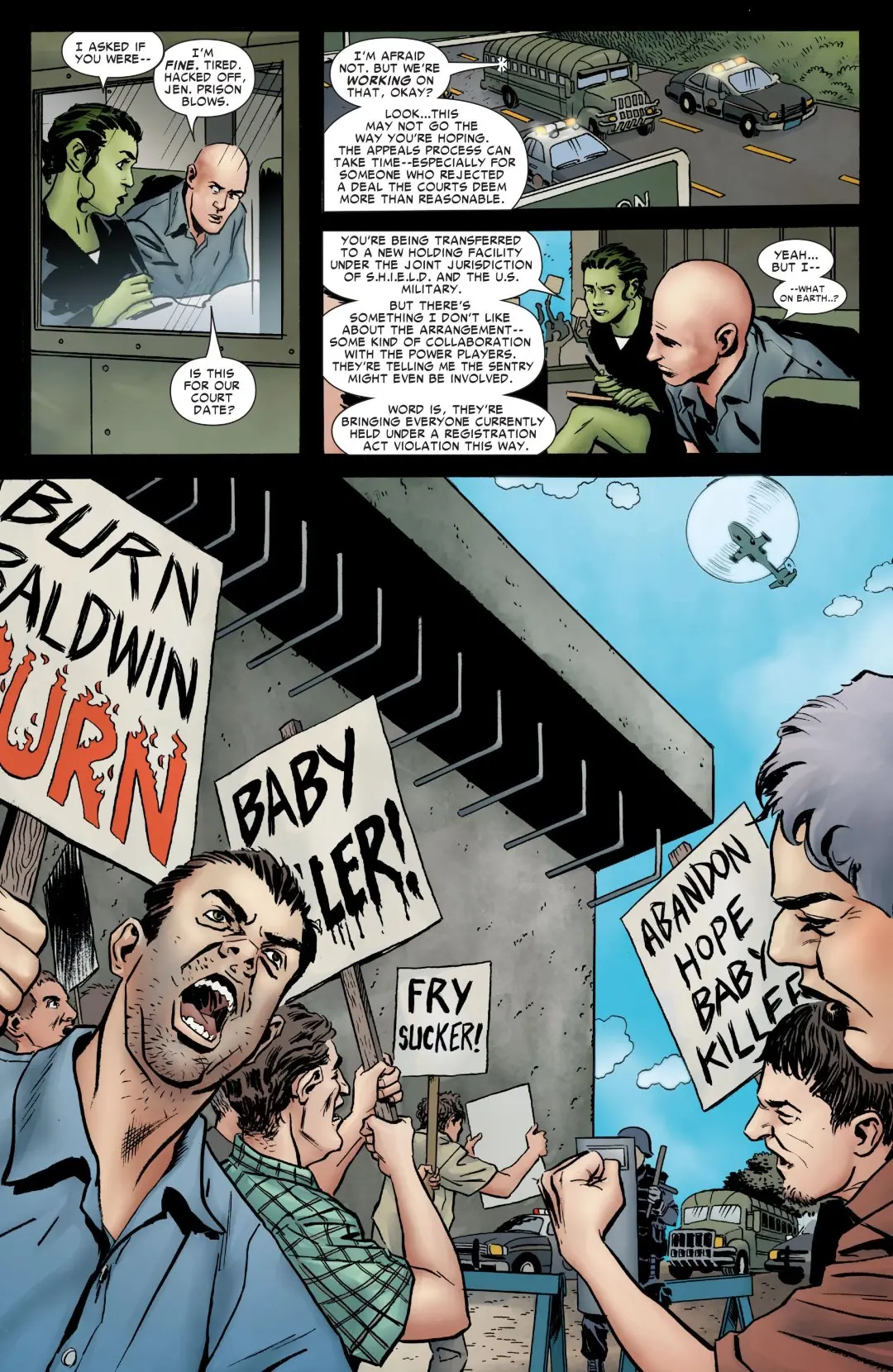
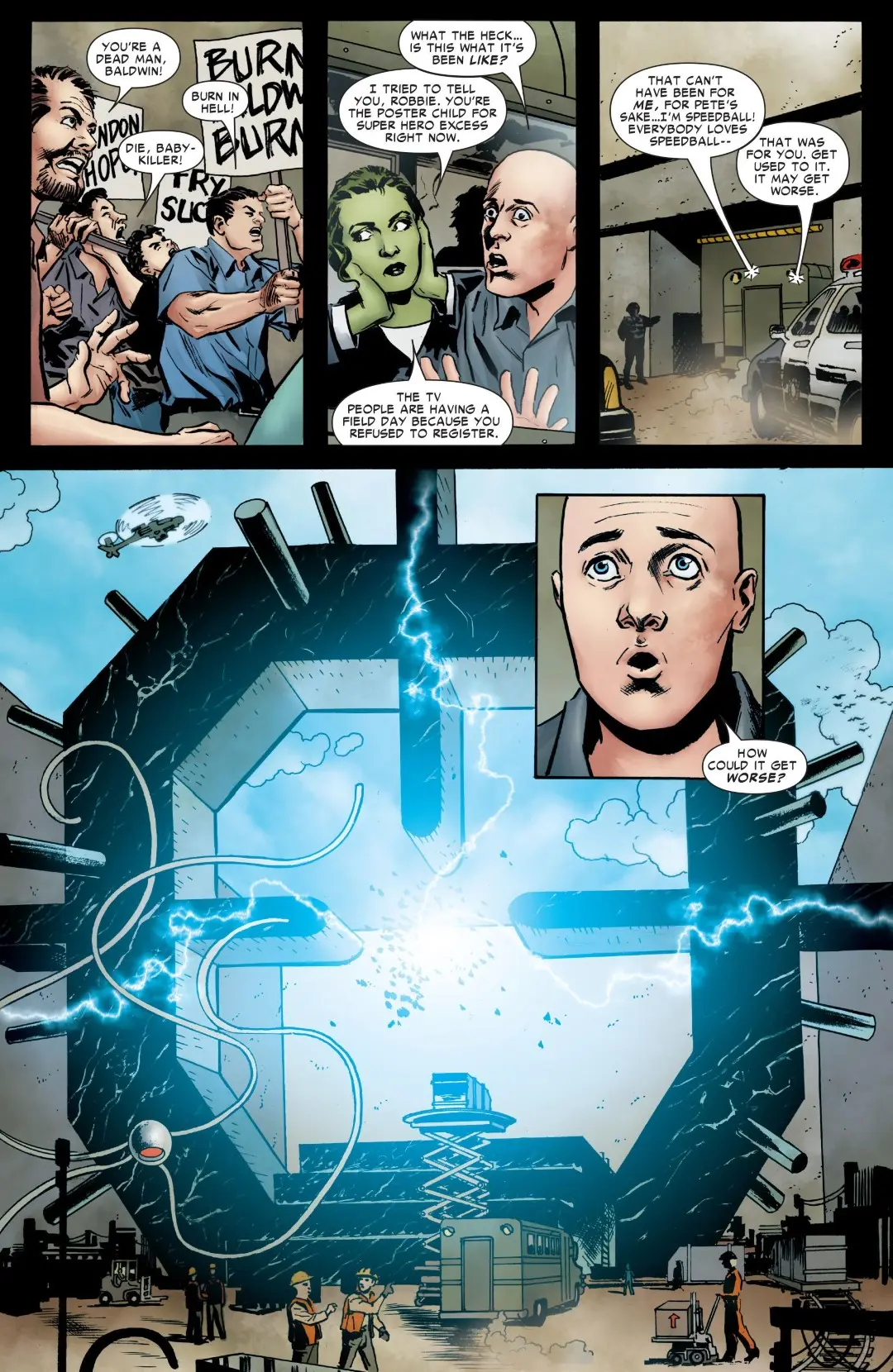
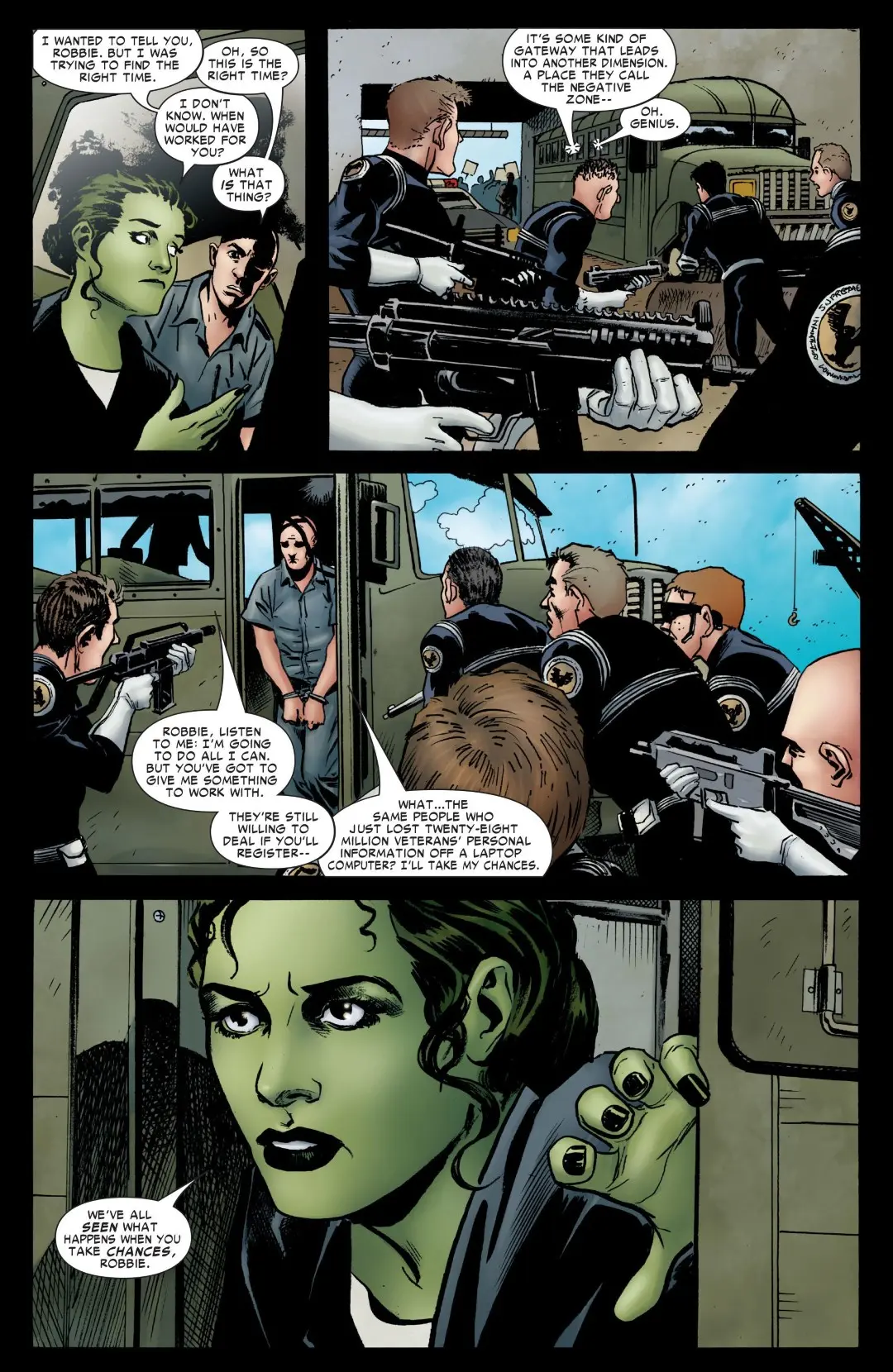
Meanwhile, the imprisoned survivor of the disaster that started everything has been transferred to a facility that exists in a place that should not exist. The walls are a blinding white, there are no clocks, and the only measure of time is the meals that appear through a slot in the door. He has been told that this is for his own protection, but he knows the truth. He is being hidden because he is a witness, because he saw what happened, because his testimony could unravel the carefully constructed narrative that justifies the entire war. Civil War: Front Line Issue 5 (2006) uses his isolation to explore the terrifying possibility that justice is not about finding the truth but about controlling who gets to speak it.
Back in the city, the veteran reporter receives a visitor: an old friend who has watched the war from the sidelines, horrified but unwilling to take sides. They sit in a diner that has not changed in decades, the same cracked vinyl, the same bitter coffee. The friend asks why he does not simply walk away, why he continues to chase a story that is clearly destroying him. The reporter has no easy answer. He speaks of a promise he made to himself when he was young, that the truth matters even when no one wants to hear it. This conversation in Civil War: Front Line Issue 5 (2006) captures the central dilemma of journalism in wartime: whether to fight for truth at the cost of everything, or to survive by looking away.
The young columnist finally receives a visitor. A government official, dressed in a suit that fits too perfectly, offers her a deal. Sign a document promising to abandon her investigation, delete her notes, and forget everything she has learned, and she will be released within the hour. Refuse, and she will remain in that windowless room indefinitely. She looks at the paper, at the official seal, at the blank line where her signature would go. She thinks of her colleagues who have already signed similar documents, who have traded their integrity for their freedom. She thinks of the readers who have thanked her for telling the truth. And then she thinks of the silence. Civil War: Front Line Issue 5 (2006) forces her to choose between safety and principle, and the weight of that choice is almost too heavy to bear.
The imprisoned survivor discovers that he is not alone in the white facility. There are others, people whose names he does not know, whose crimes he cannot guess. They speak in whispers, afraid that the walls have ears. One of them tells him that this place was built to hold anyone who knows too much, that it exists outside the law, that no one who enters is ever seen again. This revelation in Civil War: Front Line Issue 5 (2006) transforms the facility from a prison into a tomb, and the survivor realizes that the war is not about registration or safety. It is about control. And those who resist control are being erased.
The veteran reporter, unable to reach his imprisoned colleague and unable to publish his findings, makes a decision that will haunt him forever. He buries the most damaging evidence, the proof that the Stamford disaster was not an accident but a provocation designed to justify the Registration Act. He tells himself that he is protecting the innocent, that the truth would cause more harm than good, that some secrets are worth keeping. But deep down, he knows that he is simply afraid. Civil War: Front Line Issue 5 (2006) shows that fear is the most powerful weapon of all, and that even the bravest among us can be broken by the threat of losing everything.
The issue closes with a series of quiet, devastating images. The young columnist, still in her cell, stares at the blank wall, her signature nowhere to be found. The imprisoned survivor, still in the white facility, whispers a prayer that no one hears. The veteran reporter, still in his apartment, looks at his notebook and then closes it, the truth buried inside. And the war continues outside, indifferent to the lives it has destroyed. Civil War: Front Line Issue 5 (2006) offers no easy resolution, no heroic last-minute rescue, no triumphant return of justice. Instead, it offers something more honest: the recognition that some wars are not won, only survived, and that the survivors carry scars that never fully heal. This penultimate chapter sets the stage for a finale that promises to ask the hardest question of all: whether the truth, once buried, can ever truly be recovered.
Civil War: Front Line Issue 5 (2006) Read Free Online





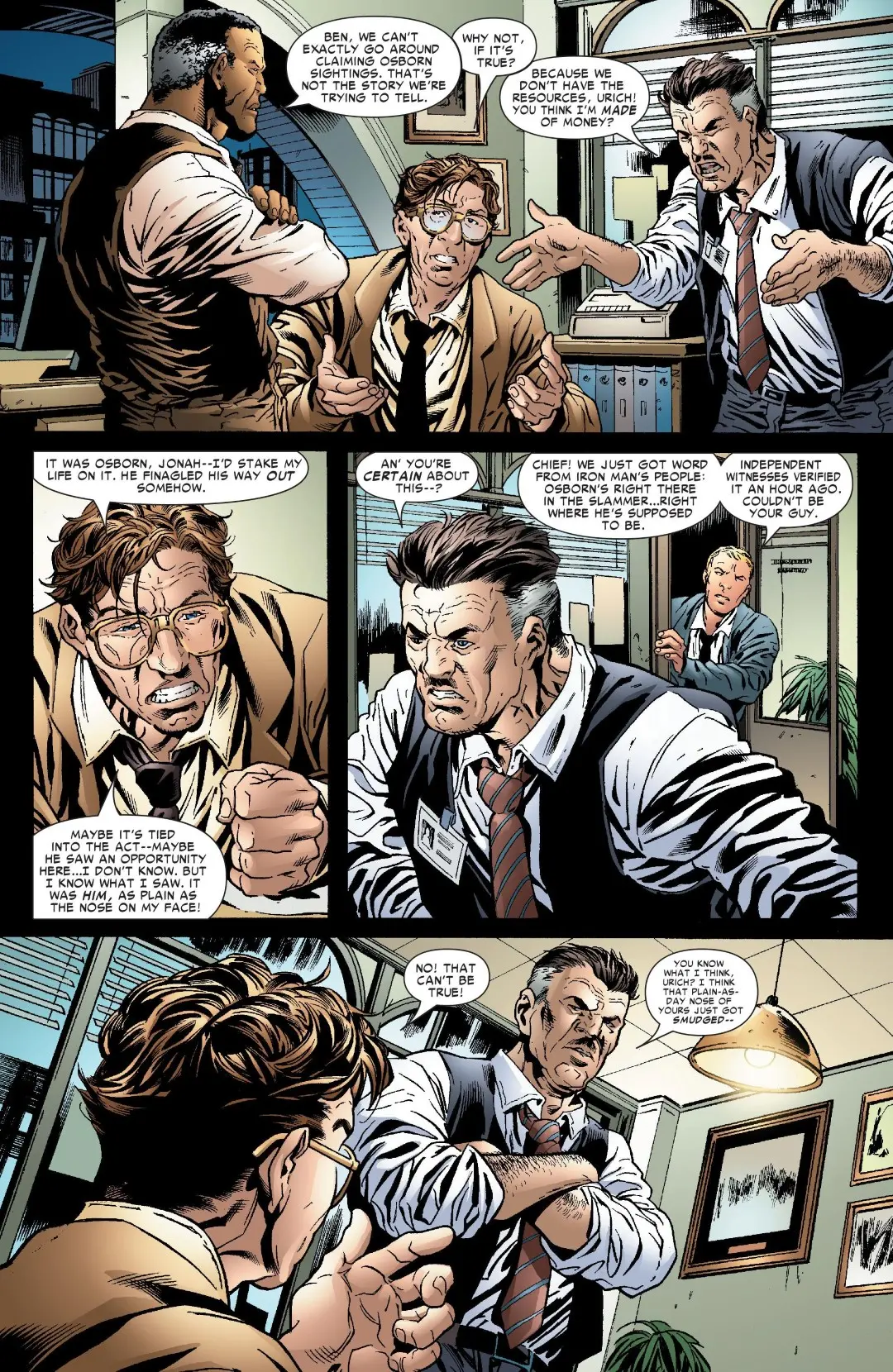
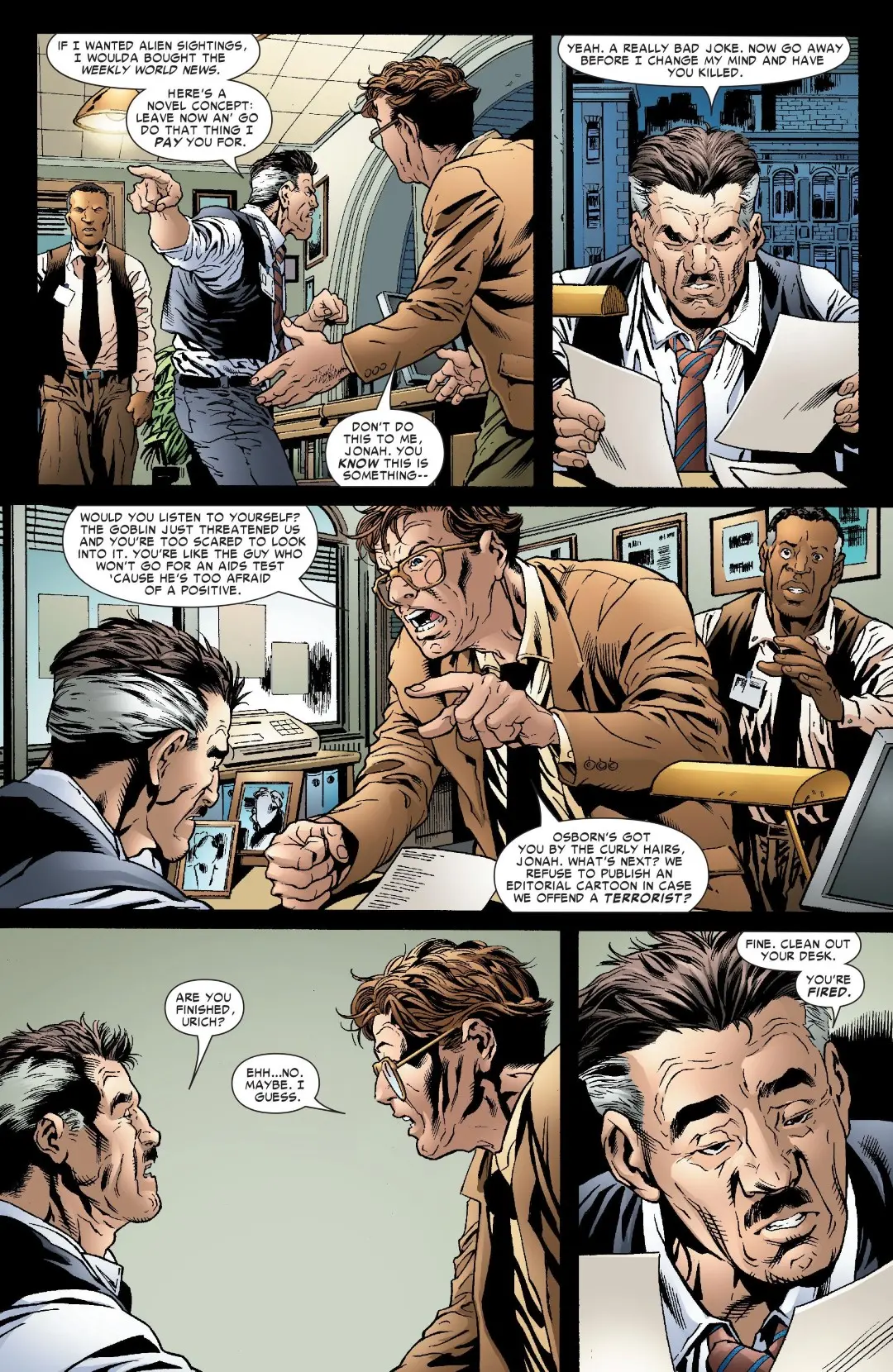
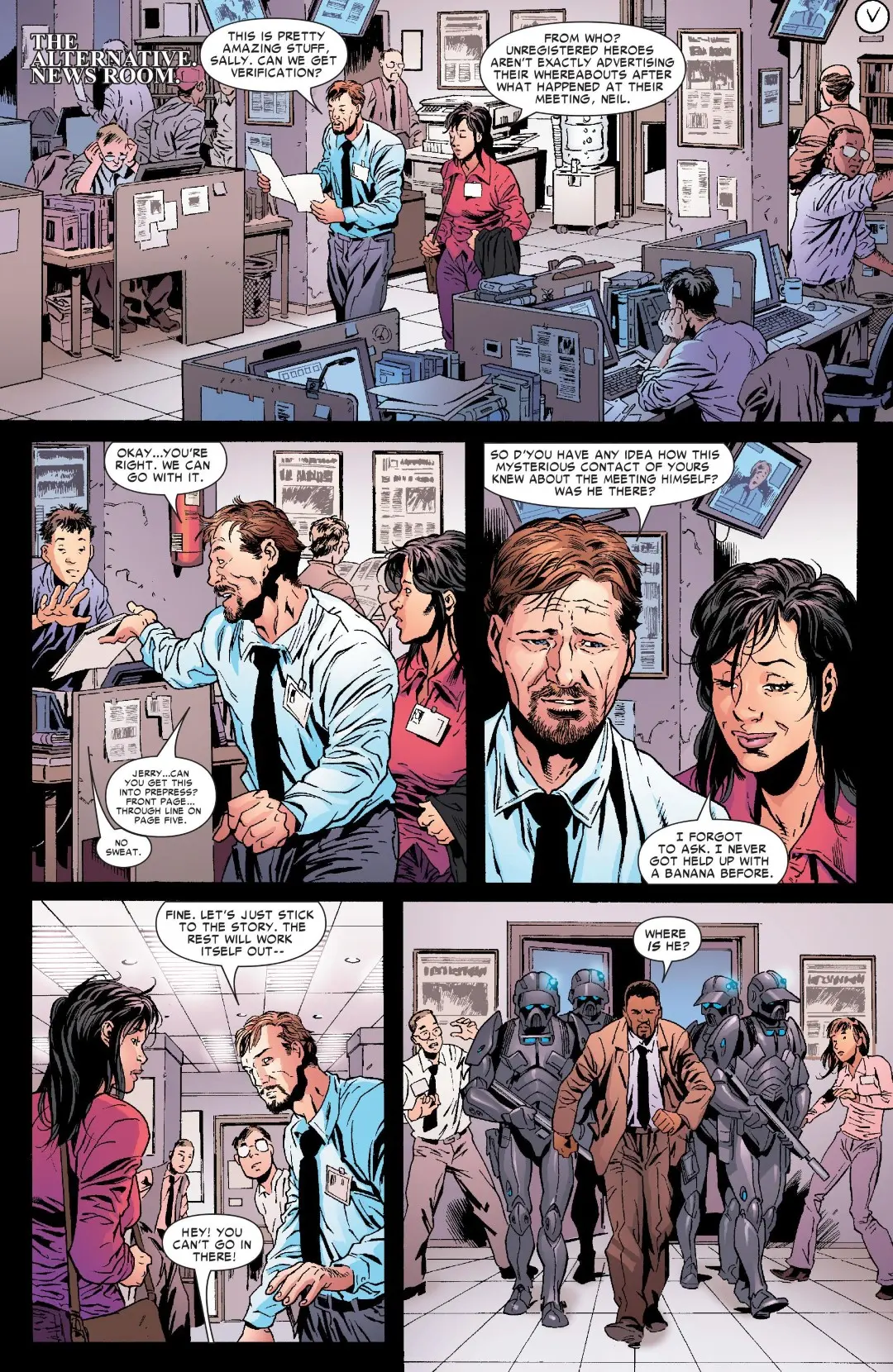

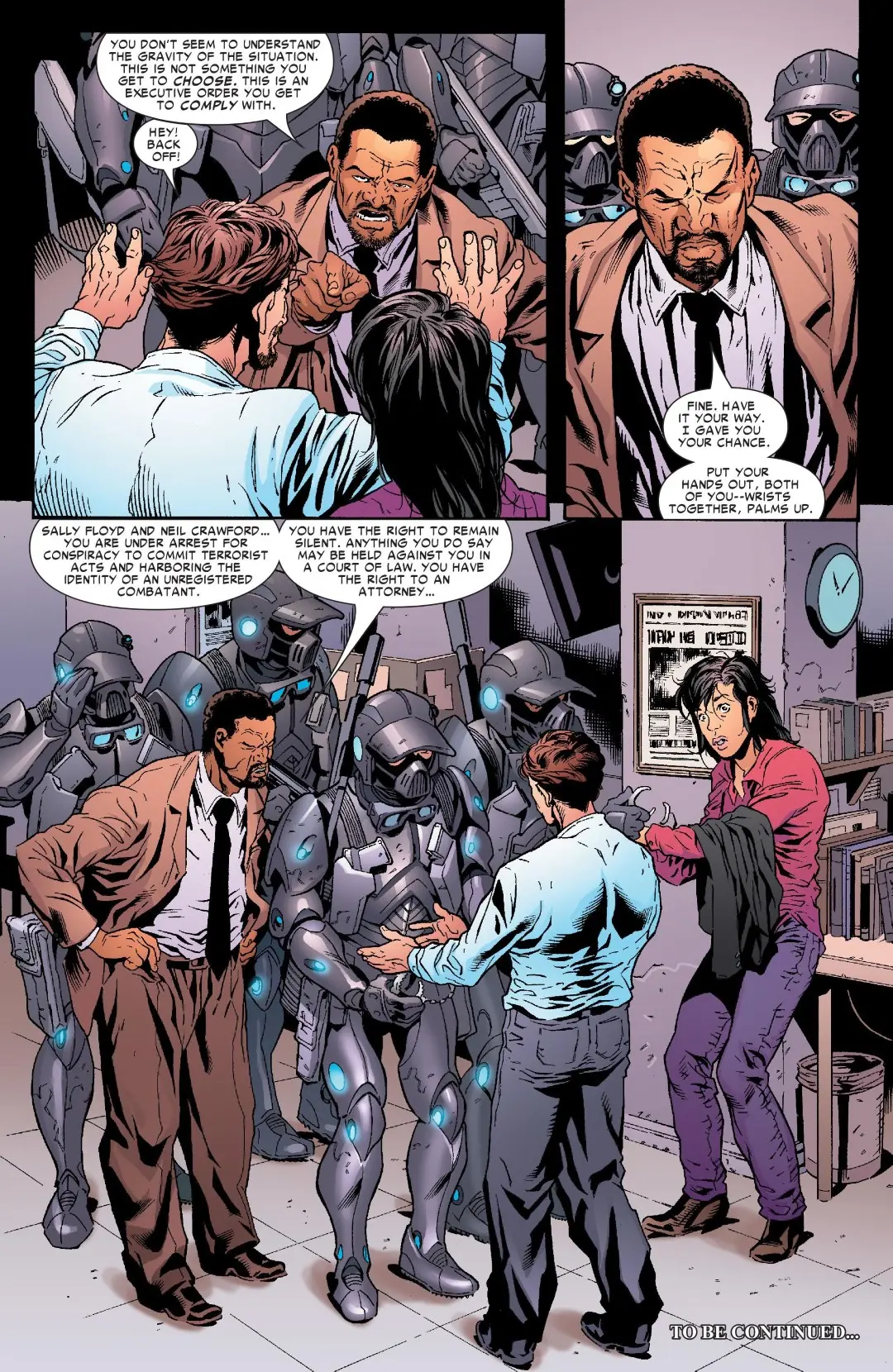





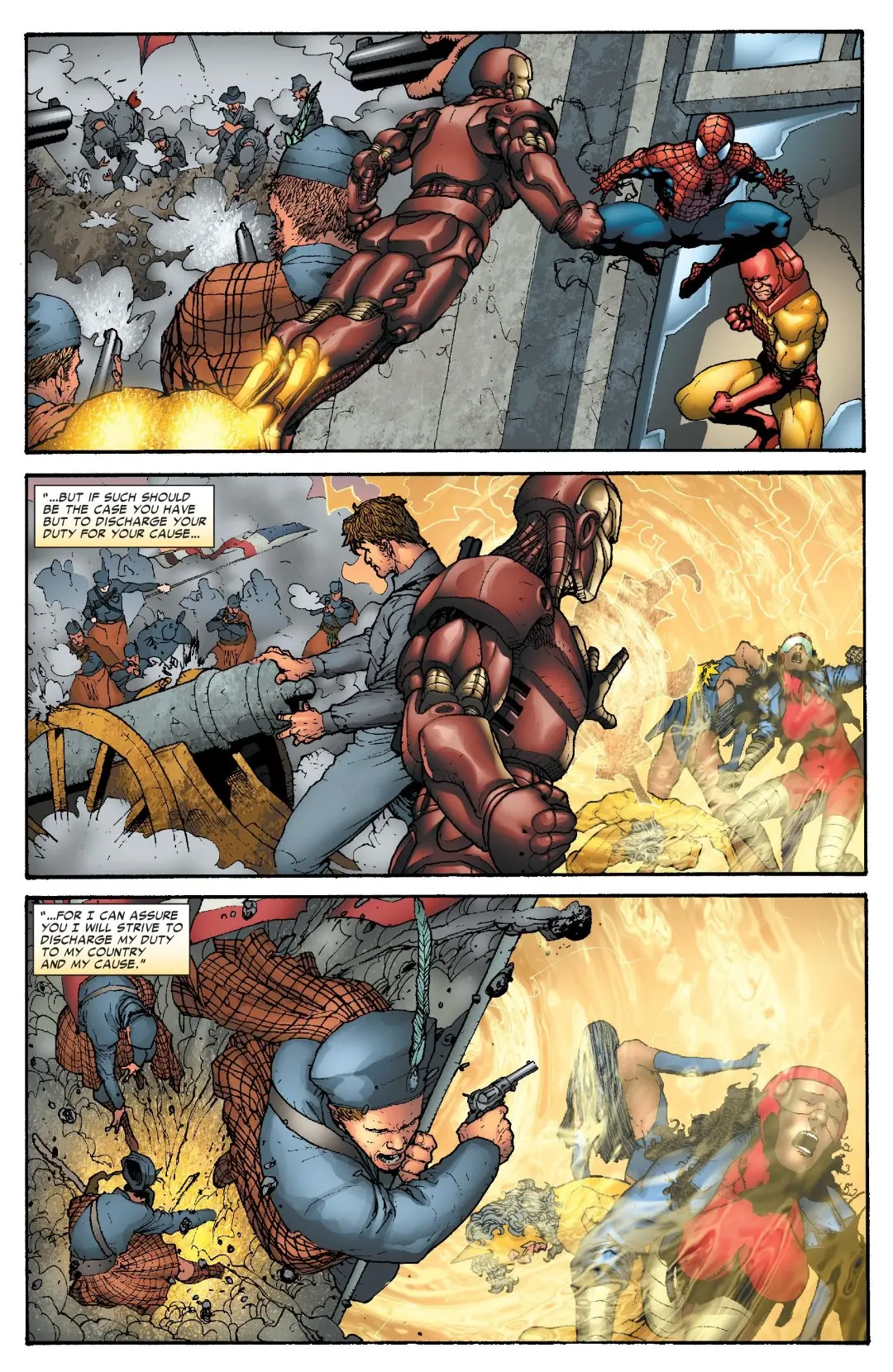

Read Free Comics Online of all comics character on this website with very high-quality images on google free.
Leave a Reply