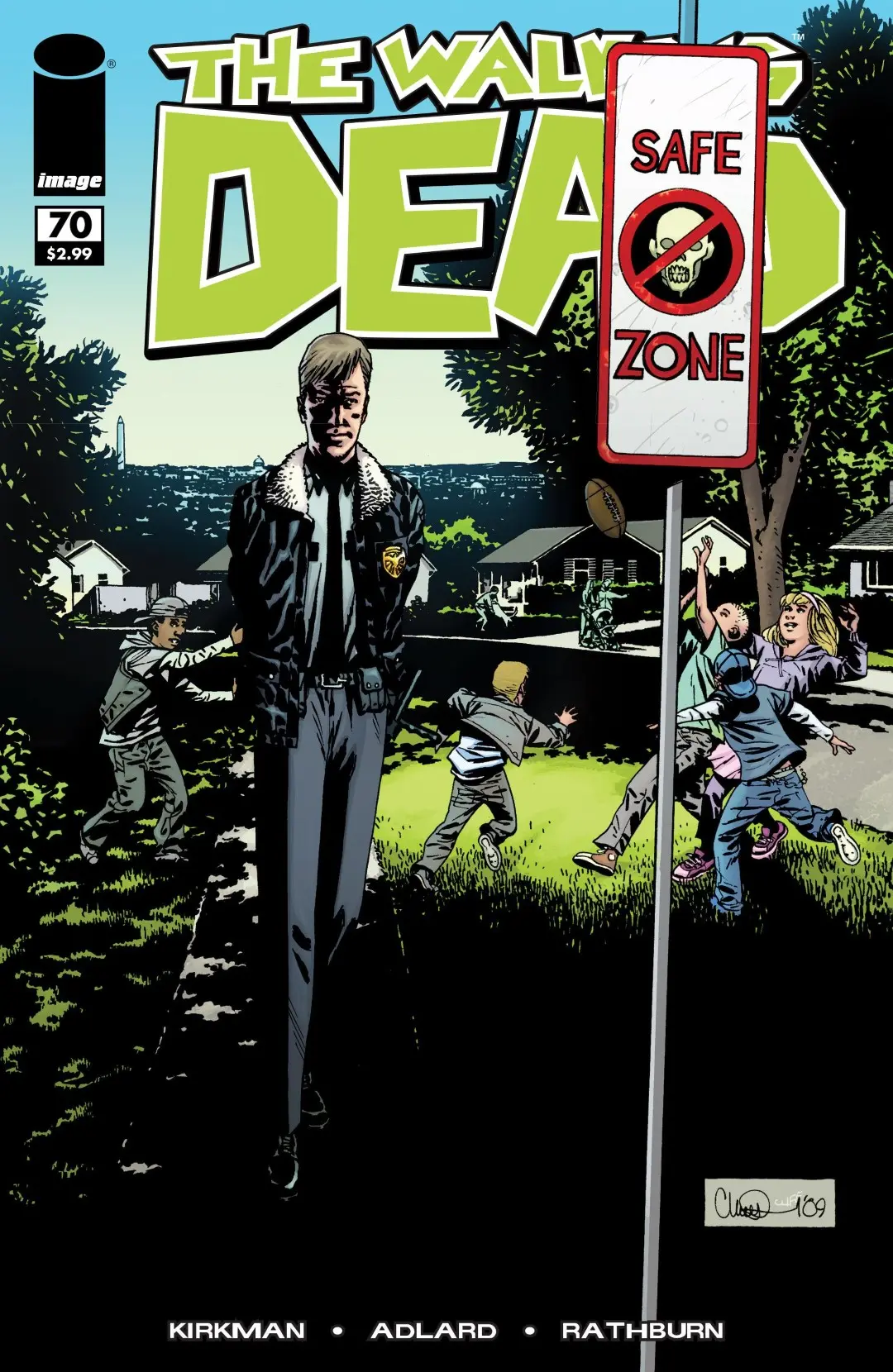
The Walking Dead Issue 70 (2010)
Publisher: Image Comics
Read Free Comics Online of The Walking Dead Issue 70 (2010) Read Free Online with very high-quality images on google without any cost, Read Free Image comics online at Read Free comics Online.
Scroll down to read free comics online.
The Walking Dead Issue 70 (2010) Read Free Image Comics Online
The narrative codebase drops into a high-friction societal diagnostic phase as the Life Among Them campaign boots up its fifth sequential operational sector. Released to retail stands on May 19, 2010, The Walking Dead Issue 70 (2010) processes the deeper, structural friction that generates when hardened field assets attempt to interface with a civilian population running on an outdated, pre-apocalypse data script. Written under the continuous, hard-boiled creative mapping of Robert Kirkman and brought to visual life through the ink-heavy, visceral monochrome strokes of Charlie Adlard, this details-rich installment logs the rapid, internal destabilization of a community whose domestic routines are entirely unpatched against the brutal metrics of the outside world.
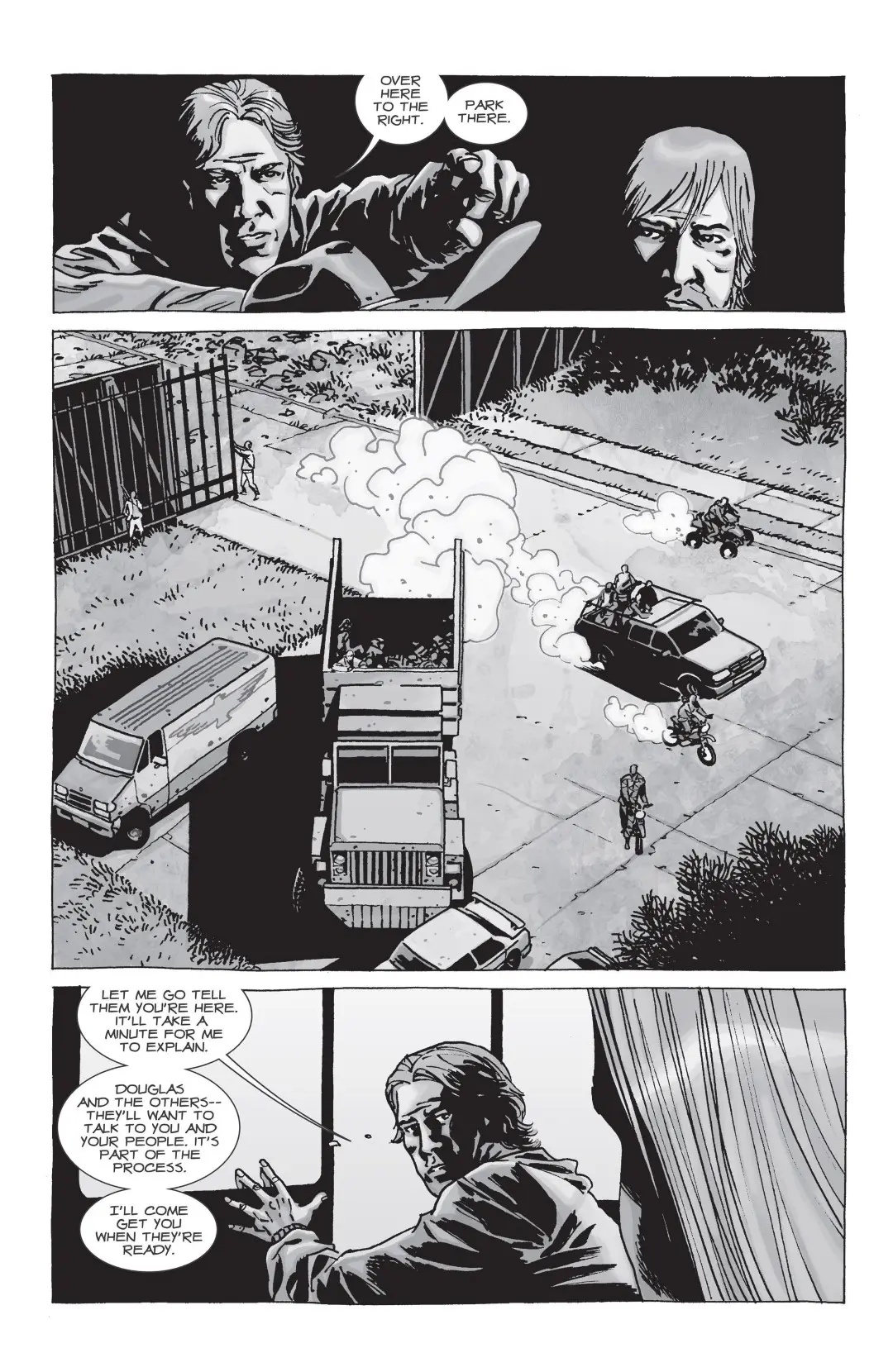
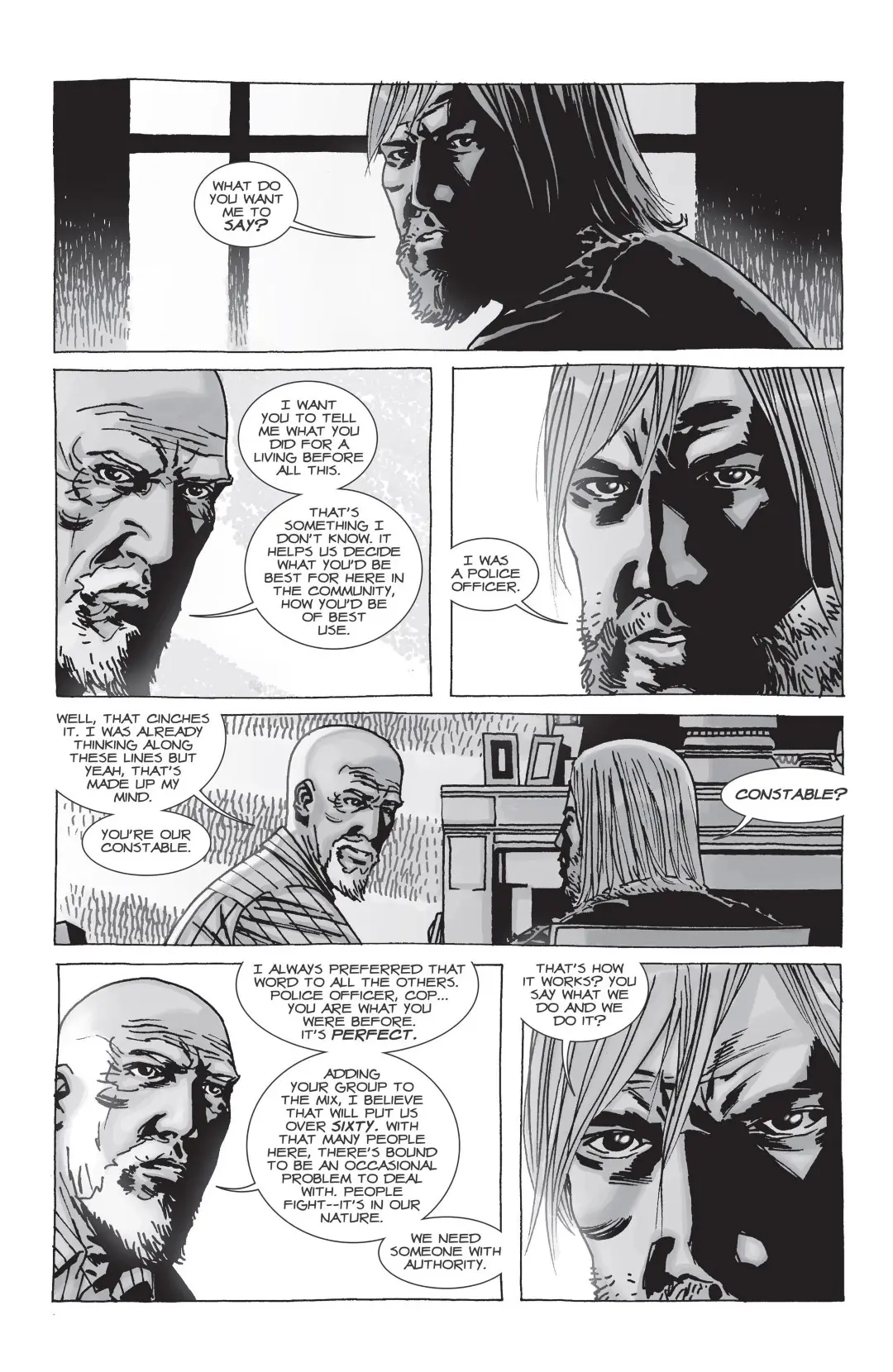
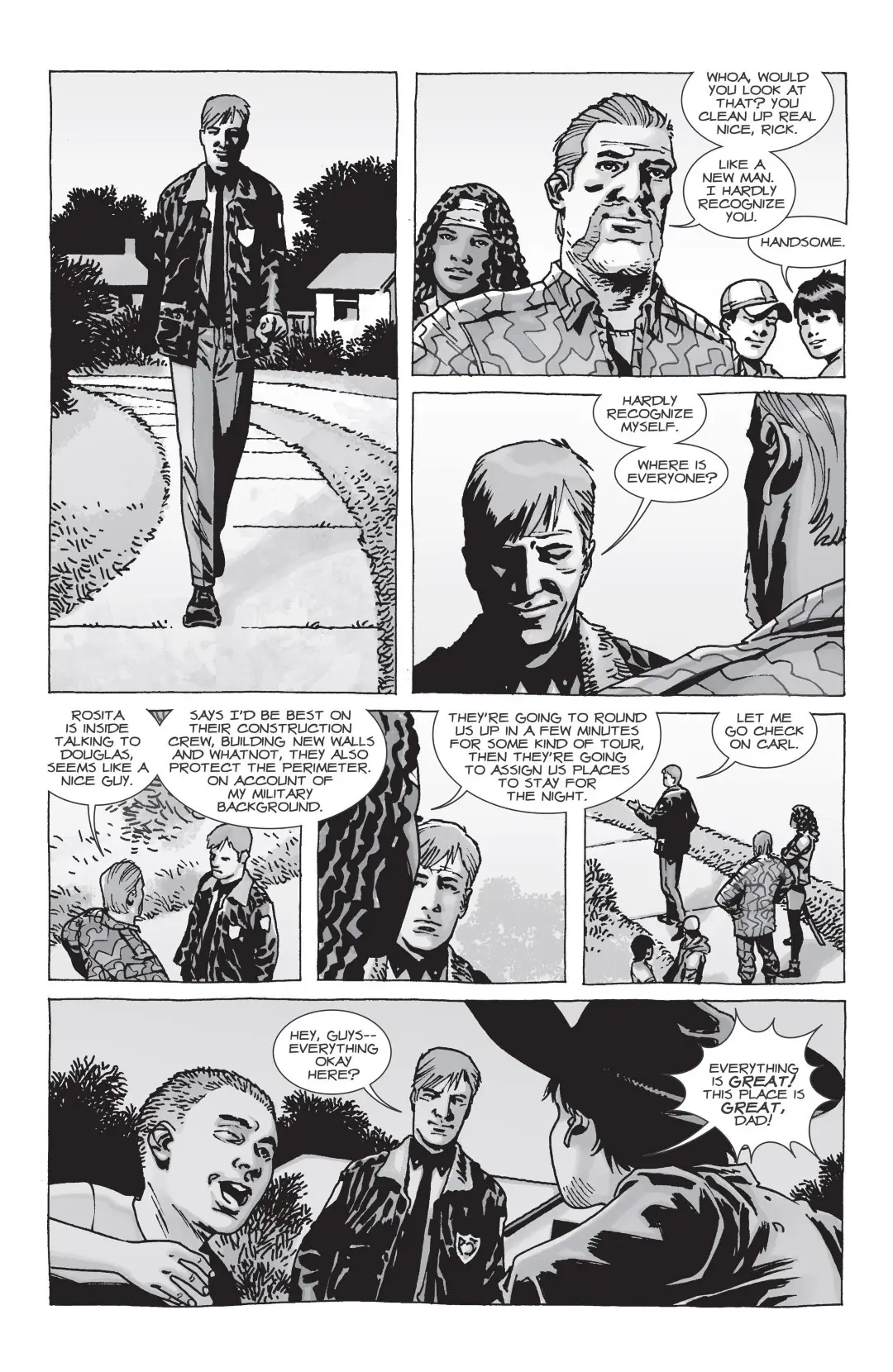
The primary mechanical driver of The Walking Dead Issue 70 (2010) centers on a “Social Directory Integration, Resource Allocation, and Perimeter Surveillance Loop.” The internal tracking registries log a slow, burning runtime spike inside the panel grids as Douglas Monroe officially initializes the workforce deployment phase for the prison survivors. Moving away from localized isolation, the core assets are assigned strategic administrative roles within the Alexandria mainframe: Glenn Rhee is integrated into the high-risk supply-scouting directory alongside Heath, Michonne is assigned to work alongside Rick Grimes as an official community Constable, and Sergeant Abraham Ford is deployed to head the construction crew responsible for expanding the community’s massive steel perimeter walls.
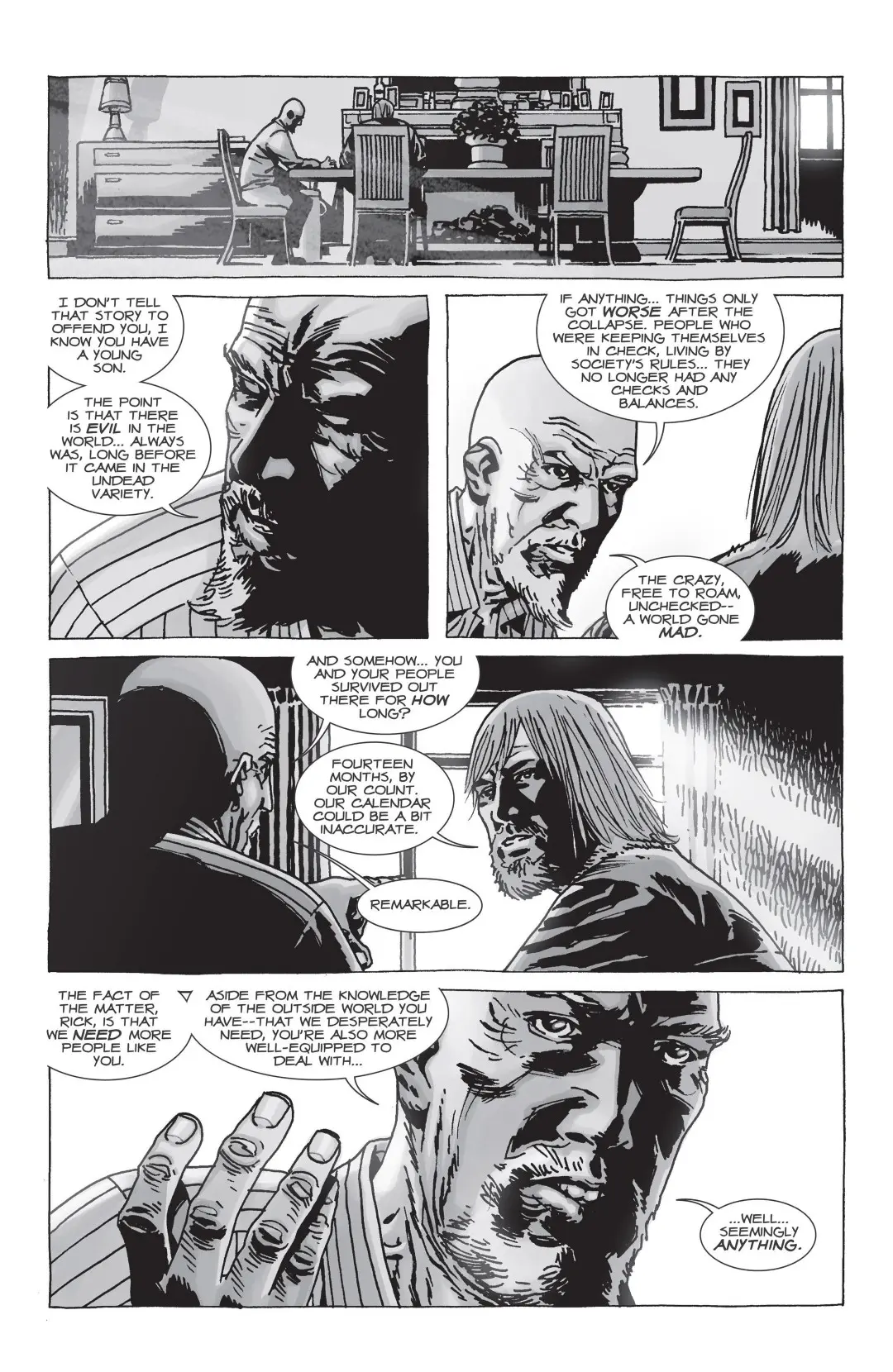
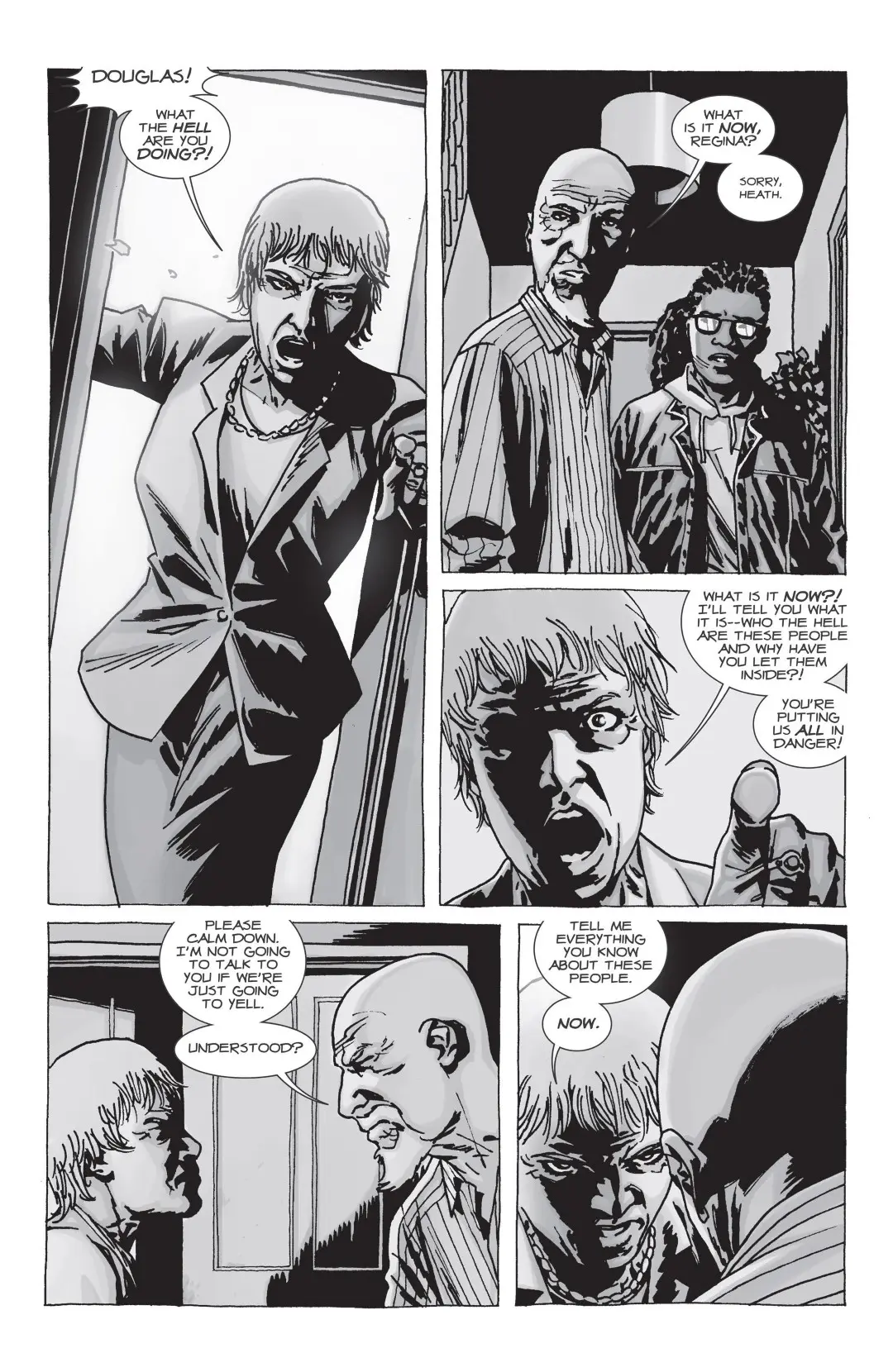
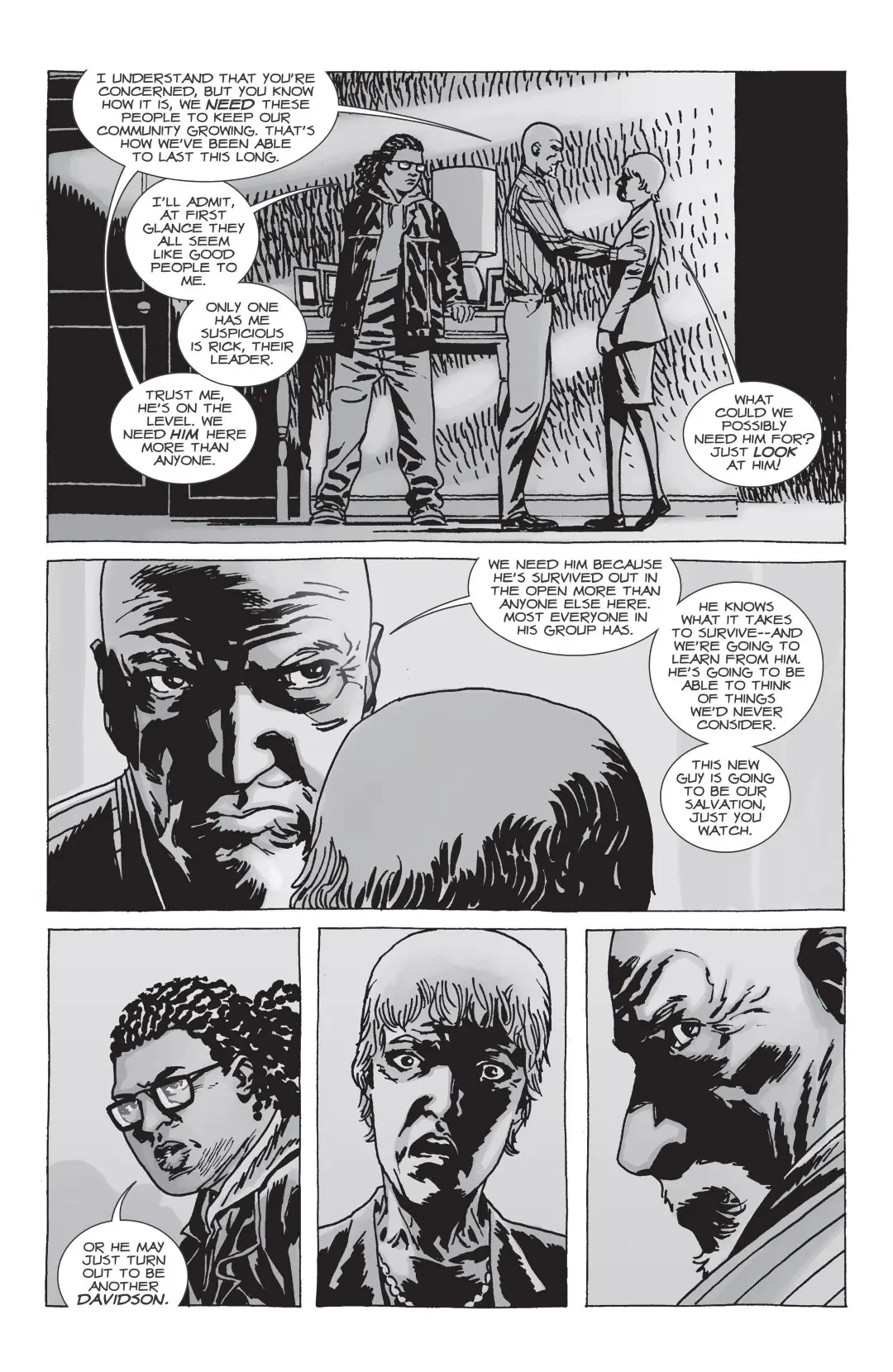
Transitioning from this labor deployment to a display of “Severe Psychological Mismatch and Cultural Shock,” the secondary tracking loops of The Walking Dead Issue 70 (2010) monitor an unbuffered collapse of shared communication protocols. The panel grids document a jarring, high-friction sequence where the original Alexandria resident directory hosts a welcoming gathering for Rick’s cell. Surrounded by casual conversations about old-world luxury files, domestic hobbies, and mundane neighborhood politics, the prison survivors experience a profound, internal data corruption. Having just formatted a cannibalistic regime in the wilderness and buried their loved ones in frozen mud, the survivors find the civilian population’s absolute oblivion to be a terrifying, system-threatening anomaly.
Imagine standing in a brightly lit, clean living room in The Walking Dead Issue 70 (2010), a drink in your hand while civilian assets laugh and discuss neighborhood gossip, realizing with absolute, bone-chilling clarity that these people have never seen a child execute another child, have never tasted an enemy’s blood to stay alive, and are operating with a defensive safe buffer of pure, blissful ignorance that leaves them entirely vulnerable to an immediate systemic wipeout. This issue masterfully shifts the dramatic velocity of the mid-2010 lore, demonstrating that the deepest chasm in the apocalypse isn’t between the living and the dead, but between those who have synchronized with the hyper-savage wilderness and those who are desperately clinging to a ghost simulation of civilization.
Meanwhile, deep-clearance internal diagnostics shift focus to a highly volatile sub-routine developing within Rick’s lawman tracking loop. While performing standard Constable reconnaissance inside the residential sectors, Rick’s scanning arrays pick up escalating domestic data corruption within the Anderson family unit. Close-quarters observations of Jessie Anderson and her son Ron reveal severe behavioral anomalies that point directly to systemic physical abuse executed by her husband, Pete Anderson, Alexandria’s primary medical asset. This realization triggers a major conflict inside Rick’s operational programming: the old-world lawman routine demands a diplomatic, institutional intervention, but his hardened, primal survival code dictates an immediate, kinetic formatting of the threat matrix.
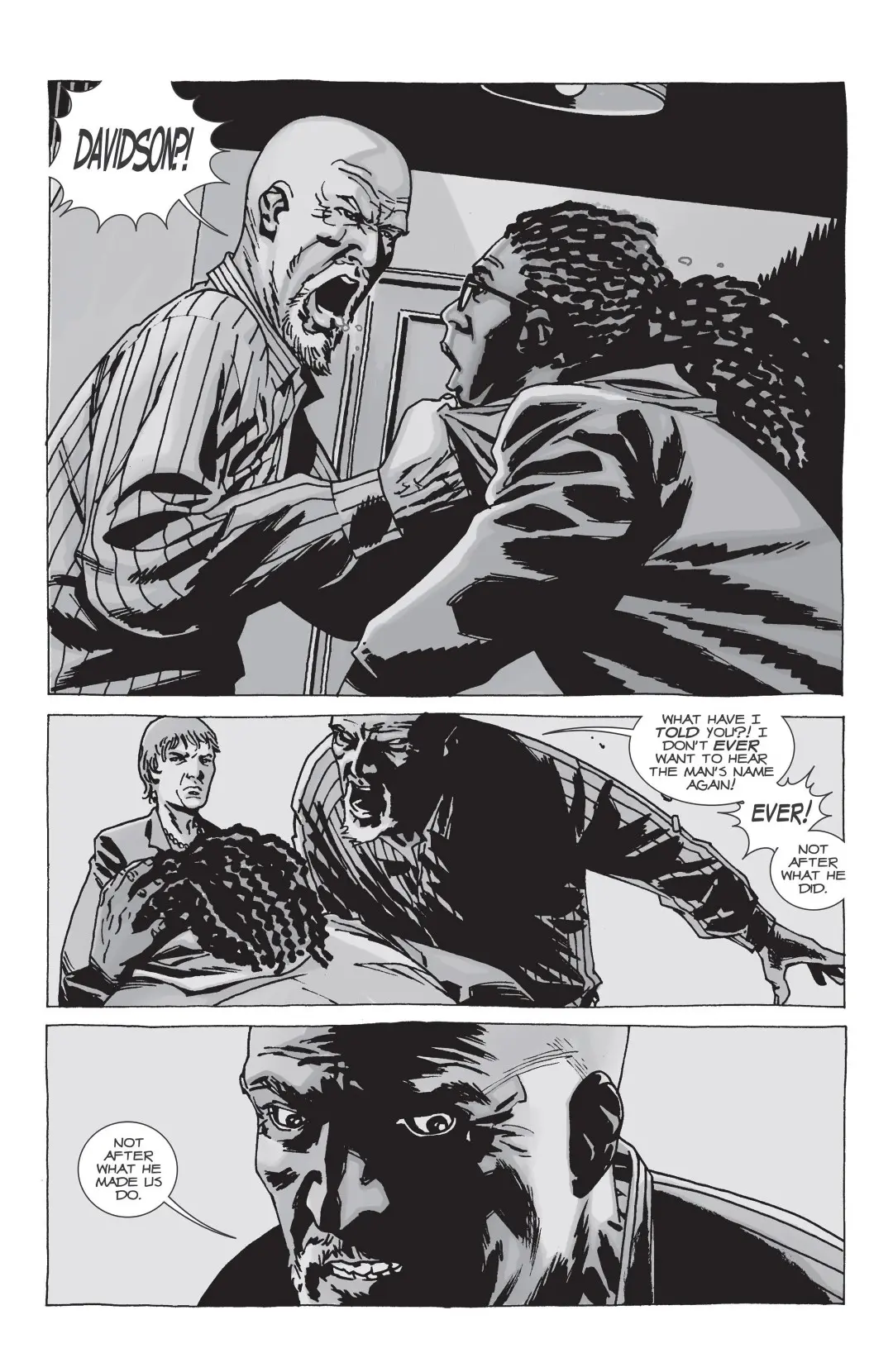
The artistic department delivers another absolute masterclass in rich, high-contrast monochrome framing and hyper-expressive character trauma throughout The Walking Dead Issue 70 (2010), with Charlie Adlard optimizing the visual real estate to handle the extreme emotional weight of the scene. The formatting flawlessly utilizes the black-and-white layouts, using the stark, open backgrounds of a suburban cocktail party to emphasize the tense, rigid, and profoundly out-of-place physical postures of Rick, Michonne, and Carl. Adlard’s illustrations steer the reader’s eye straight into the heart of the structural and personal trauma, masterfully capturing the hollow, shell-shocked glare lining the faces of the veteran survivors and the heavy, suffocating grey atmosphere of a sanctuary that is running a dangerous countdown toward a domestic explosion.
The script hits its definitive terminal shutdown sequence as this historic seventieth layer of the survival odyssey archives, leaving the narrative codebase locked onto an irreversible, high-voltage alert trajectory heading straight into a brutal civil collision. Kirkman utilizes this landmark milestone inside The Walking Dead Issue 70 (2010) to permanently format the group’s remaining emotional safety margins, ensuring that the characters are pushed past the absolute edge of a cataclysmic physical and psychological crash. With the tactical data files fully archived, the workforce parameters established, and the domestic abuse files actively processing, the volume terminates its runtime with the active monitoring lines flashing a dangerous, permanent crimson.
The Walking Dead Issue 70 (2010) Read Free Image Comics Online







Read Free Comics Online of all comics character on this website with very high-quality images on google free.


Leave a Reply