The Walking Dead Issue 4 (2004)
Publisher: Image Comics
Read Free Comics Online of The Walking Dead Issue 4 (2004) Read Free Online with very high-quality images on google without any cost, Read Free Image comics online at Read Free comics Online.
Scroll down to read free comics online.
The Walking Dead Issue 4 (2004) Read Free Image Comics Online
The tactical execution shift moves directly into the line of fire as the survival operations log boots up its fourth chronological sector. Released to comic distribution networks on January 14, 2004, The Walking Dead Issue 4 (2004) drives the narrative straight into a high-risk urban infiltration and resource acquisition phase. Written under the continuous tight architecture of Robert Kirkman and brought to visual life through the raw, ink-heavy layouts of Charlie Adlard, this details-rich installment maps the precise seconds where the survivor group’s acute ammunition deficit forces an all-out offensive run directly into the mouth of a compromised metropolis.
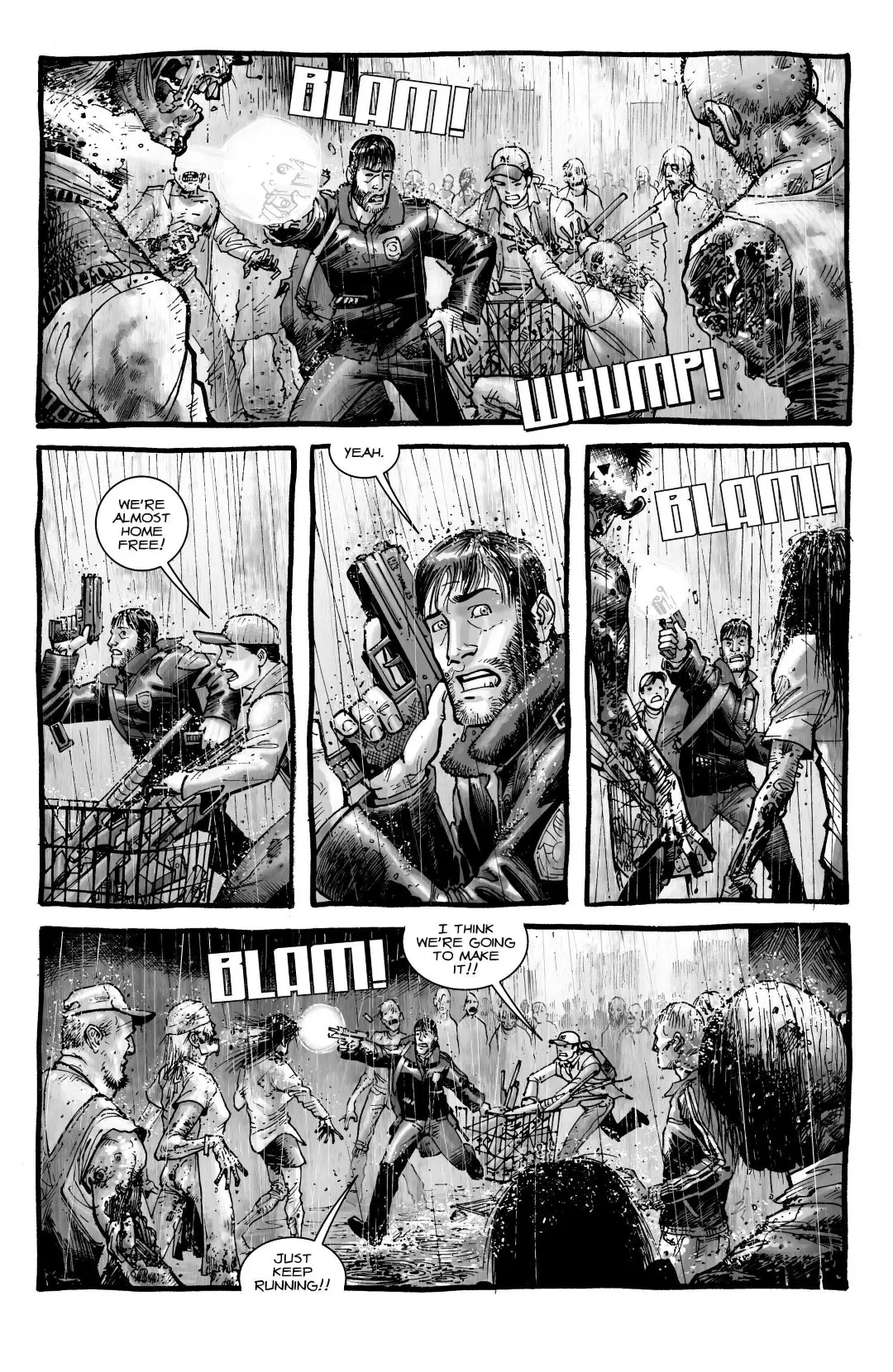
The primary mechanical driver of The Walking Dead Issue 4 (2004) centers on a high-stakes, maximum-danger “Urban Camouflage, Scouting, and Gun Store Retrieval Loop.” To bypass the massive, flesh-eating processing networks filling the streets of Atlanta, Rick Grimes and Glenn must manual override standard human visibility parameters. Utilizing a grotesque but highly logical stealth script, they harvest the biological fluids and tissue of a downed walker asset, coating their clothes to mimic the scent signature of the undead. The tracking loops log an incredibly tense runtime inside the panel grid of The Walking Dead Issue 4 (2004) as the duo walks shoulder-to-shoulder with the shambling horde, testing their psychological firewalls to the absolute breaking point as they navigate toward a downtown gun store.
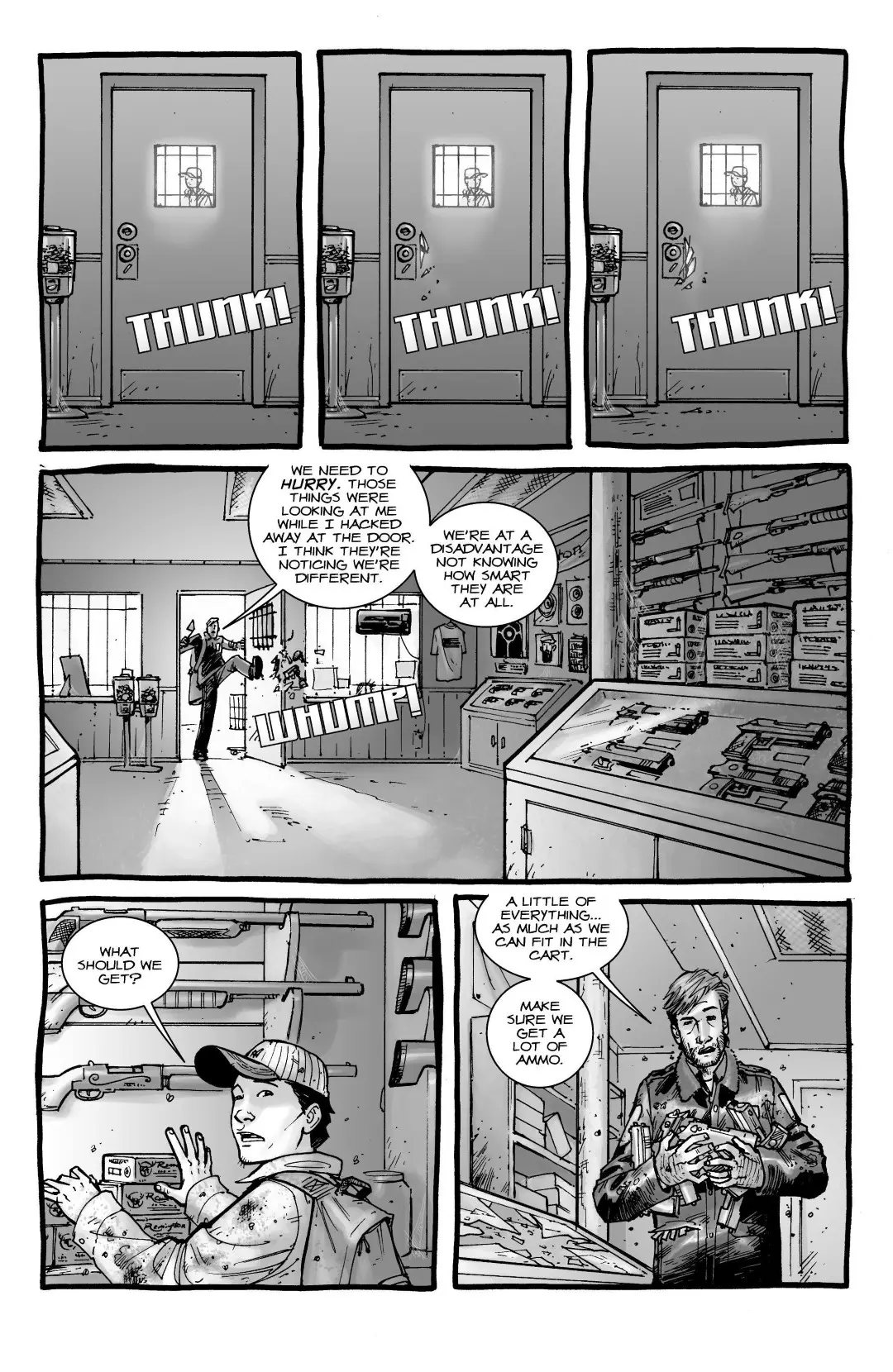
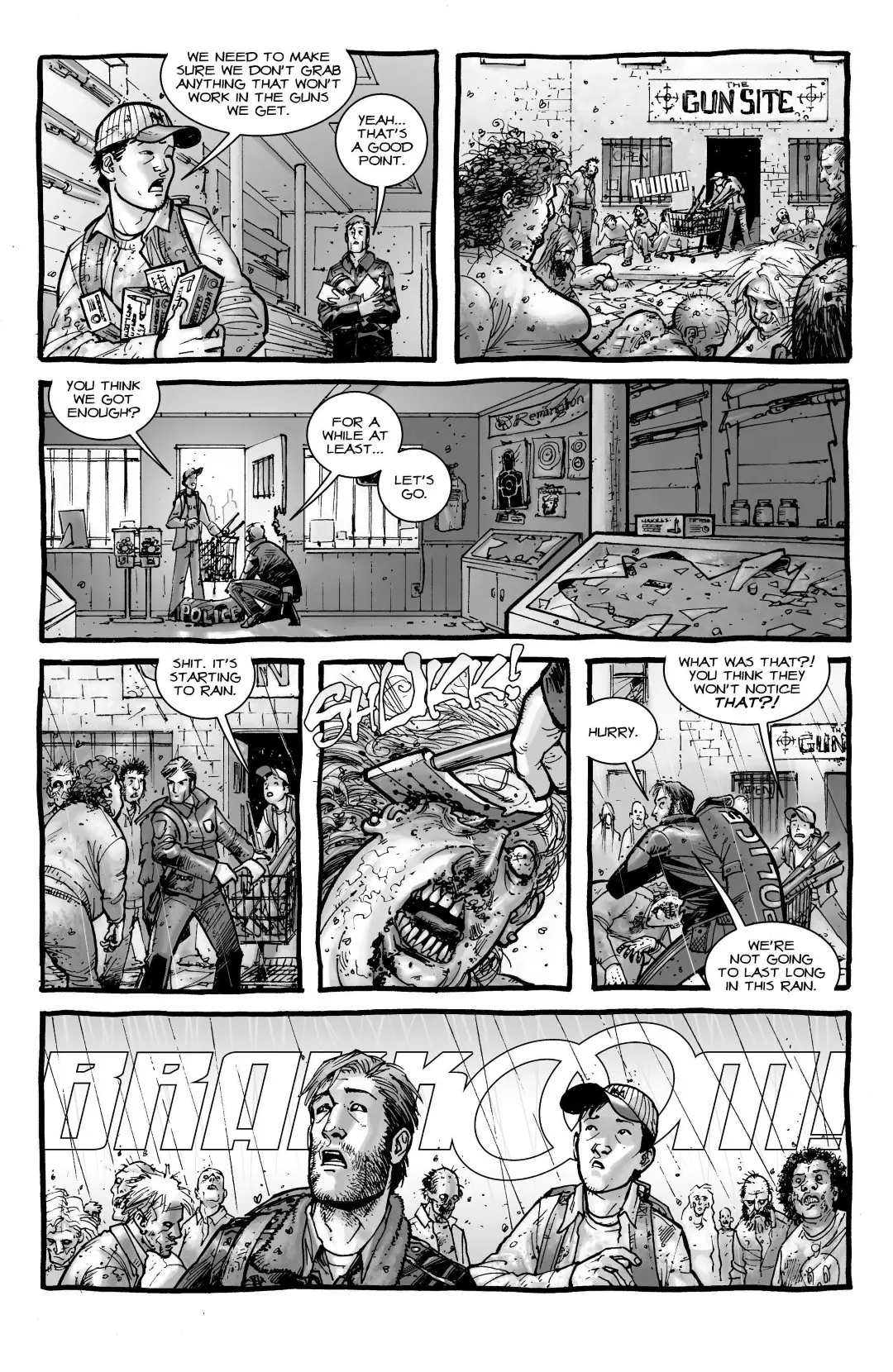
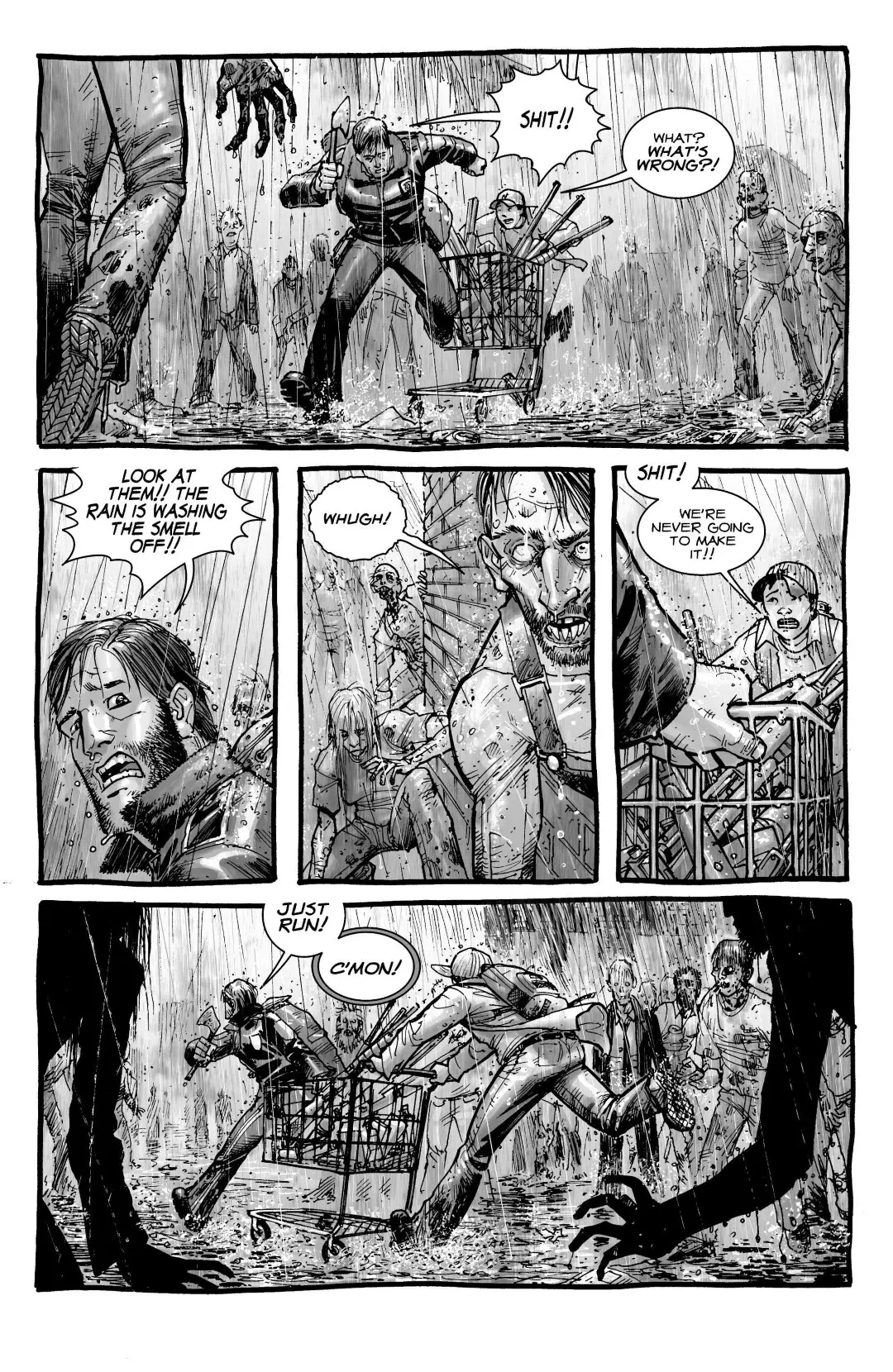
Transitioning from this claustrophobic street walk to a display of “Tactical Retrieval and Environmental Security Failures,” the secondary tracking loops of The Walking Dead Issue 4 (2004) monitor the sudden breakdown of their stealth camouflage. Just as Rick and Glenn successfully breach the armory directory—packing duffel bags with high-velocity firearms and ammunition—a sudden rainstorm begins formatting their scent buffers, washing away the camouflage and triggering an immediate, high-alert hunting algorithm across the surrounding walker swarm. Throughout the gripping pages of The Walking Dead Issue 4 (2004), the narrative tracks a frantic, lungs-burning extraction routine as they fight their way back to the camp perimeter before the horde can completely delete their position files.
Imagine standing in a downpour in downtown Atlanta in The Walking Dead Issue 4 (2004), the dead suddenly snapping their heads toward you as your olfactory disguise liquefies and runs off your jacket, your spider-sense—rather, your raw human adrenaline—surging as thousands of rotting jaws begin closing in on your exit coordinates. This issue masterfully dials up the physical velocity and suspense of the 2004 lore, proving that when you drop into a maximum-density dead zone, your survival requires a perfect alignment of clinical detachment, rapid pathfinding, and immediate mechanical fire support.
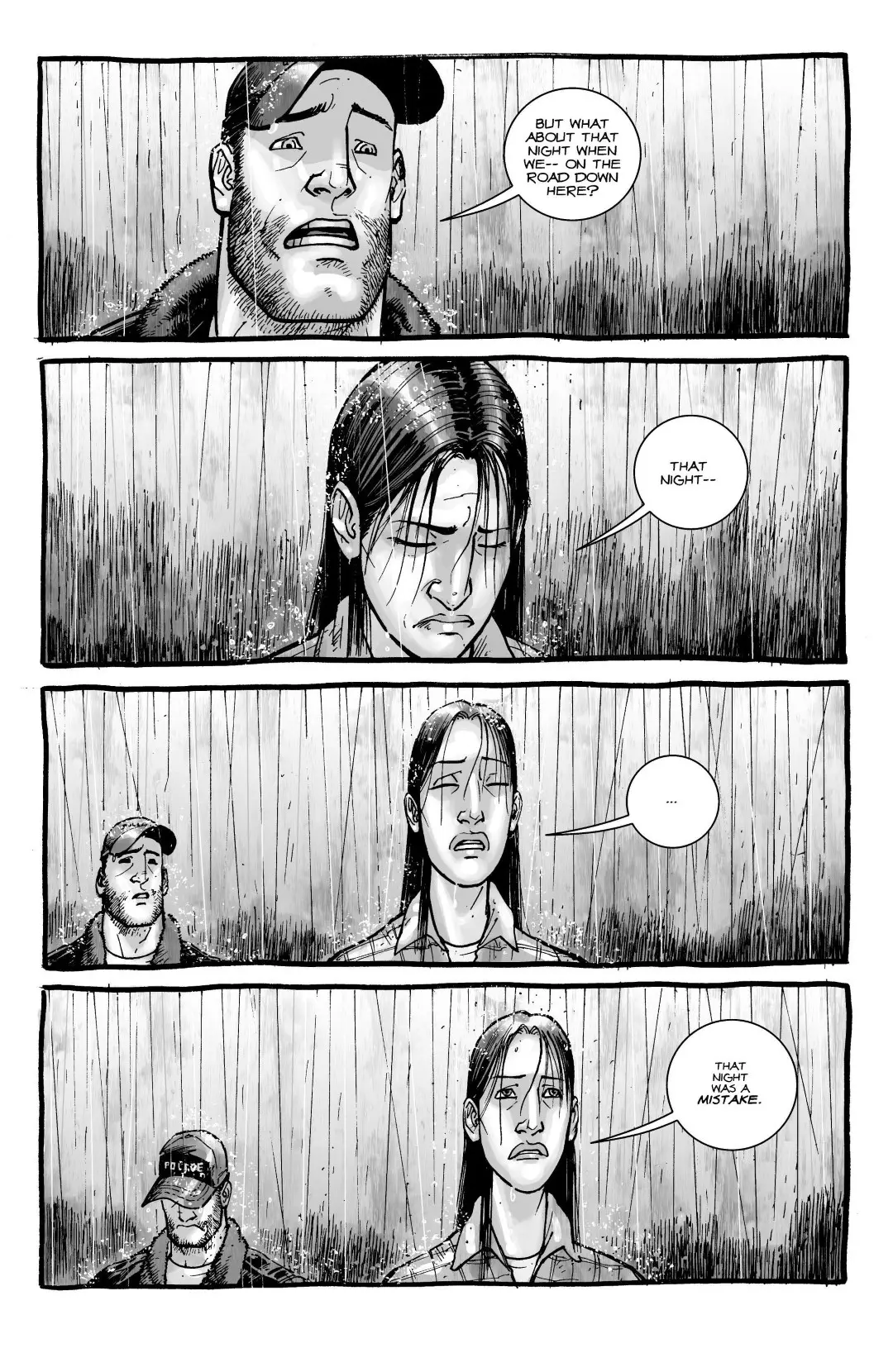
Meanwhile, deep-clearance internal diagnostics shift focus to the tracking loops monitoring the camp’s defense upgrade back at the quarry. With Rick and Glenn successfully returning with the weapons stash, the group initializes a crucial firepower synchronization script. The narrative panel grids track Rick as he distributes the firearms, establishing a makeshift training loop to teach the civilian assets—including Lori, Shane, Dale, and the young women—how to discharge, clear, and aim the weapons. This necessary security patch creates an immediate, heavy friction line with Shane, whose rigid tactical doctrine views the introduction of firearms to the untrained civilians as a critical data corruption to his tightly controlled safety perimeter.
The artistic department delivers an absolute masterclass in heavy monochrome shadow play and visceral kinetic framing throughout The Walking Dead Issue 4 (2004), with Charlie Adlard optimizing the visual real estate to capture the sheer psychological terror of walking among the dead. The formatting flawlessly utilizes the black-and-white layouts inside The Walking Dead Issue 4 (2004), contrasting the rain-streaked, towering concrete geometry of abandoned Atlanta against the splattered, organic horror of the walker disguises. Adlard’s illustrations steer the reader’s eye straight into the heart of the expanding trauma, masterfully capturing the cold, dead eyes of the passing ghouls, the frantic, shadow-drenched escape velocity of the final alleyway sprints, and the heavy, ominous weight of the newly acquired iron distributed around the campfire.
The script hits its definitive terminal shutdown sequence as this fourth layer of the survival crucible successfully archives, leaving the narrative codebase locked onto an irreversible, high-voltage trajectory heading straight into the camp’s impending perimeter breach. Kirkman utilizes this high-velocity milestone inside The Walking Dead Issue 4 (2004) to permanently shred any remaining illusions of strategic distance from the undead, ensuring that while the group now possesses the mechanical hardware to fight, the noise of their newly compiled weapons training has quietly broadcasted their exact coordinates to the surrounding woods. To trace the precise visual logs of this historic survival transition before the next defensive firewall collapses, fans consistently turn to the archived volumes of this legendary print run.
Analyzing the core components of this chapter, the narrative effectively transforms a desperate scavenging run into an explosive catalyst for structural tribal change, proving that when the primary source files of an old world are weaponized for survival, the internal balance of power will inevitably face an unyielding restructuring. With the tactical data files of The Walking Dead Issue 4 (2004) fully archived, the newly armed civilian directories operating at high emotional temperatures, and the background tracking arrays registering a steady movement of threats closing in through the dark, the volume terminates its runtime with the active monitoring lines flashing a dangerous, permanent crimson. The temporary preparation buffers have officially hit absolute zero, the primary conflict vectors have cross-referenced, and the entire storytelling mainframe of The Walking Dead Issue 4 (2004) is rushing toward its ultimate final execution phase.
The Walking Dead Issue 4 (2004) Read Free Image Comics Online








Read Free Comics Online of all comics character on this website with very high-quality images on google free.



Leave a Reply