The Walking Dead Issue 131 (2014)
Publisher: Image Comics
Read Free Comics Online of The Walking Dead Issue 131 (2014) Read Free Online with very high-quality images on google without any cost, Read Free Image comics online at Read Free comics Online.
Scroll down to read free comics online.
The Walking Dead Issue 131 (2014) Read Free Image Comics Online
The Walking Dead Issue 131 (2014)
Issue Date: September 10, 2014
















The Walking Dead Issue 131 (2014) Read Free Image Comics Online
Image Comics expands the intricate boundaries of its reconstructed world, delivering a beautifully humanized, slow-burning installment that readers can follow on Read Free Comics Online right alongside their physical archives. The Walking Dead Issue 131 (2014), carrying forward the A New Beginning narrative path, takes a deep dive into the unique challenges of the Hilltop community as it welcomes a new generation. Written with exceptional psychological depth by Robert Kirkman and brought to life through the raw, shadow-drenched lines of Charlie Adlard and Stefano Gaudiano, this September 2014 release highlights the exhausting work of maintaining a civilized society when the scars of the old world refuse to fade completely.
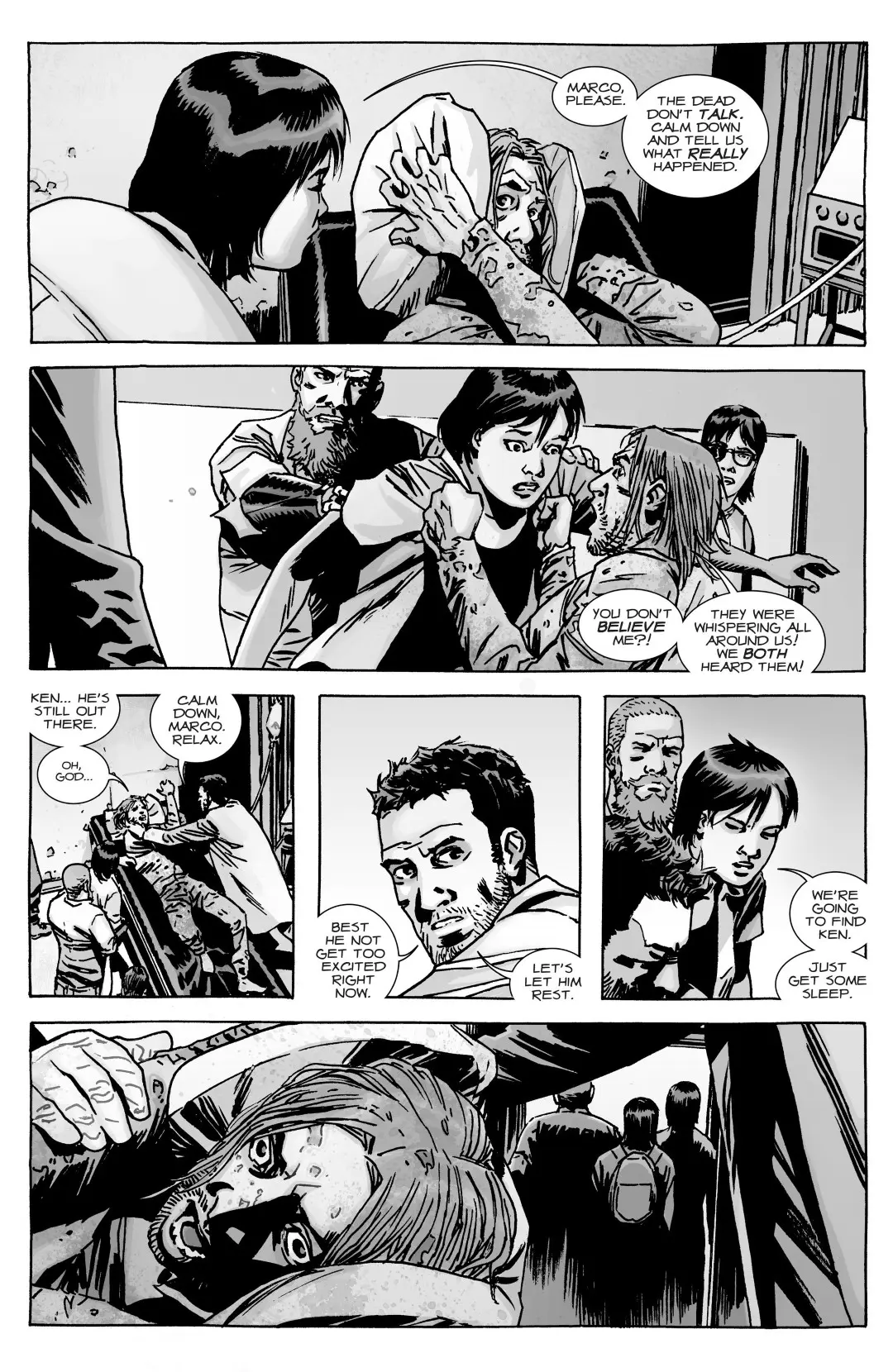
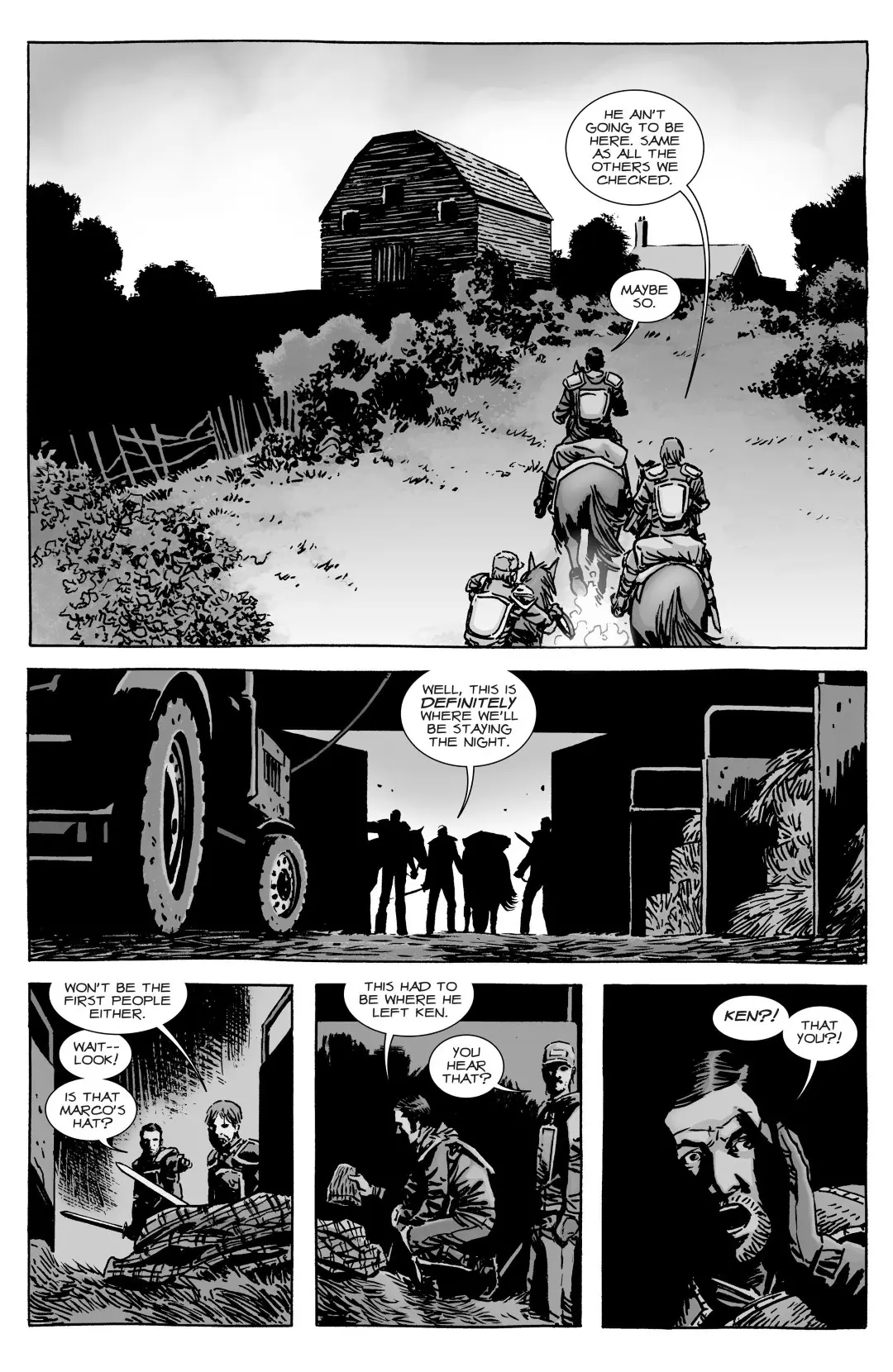
The narrative engine of this hundred-and-thirty-first installment deals directly with the friction of transition and the search for individual identity after years of collective trauma. The central plot of The Walking Dead Issue 131 (2014) follows Carl Grimes as he settles into his brand-new operational routine at the Hilltop under the guidance of the master blacksmith, Earl Sutton. Stepping away from his father’s massive shadow in Alexandria, Carl attempts to forge a quiet, grounded future for himself through manual labor. The script treats this transition with incredible realism, showcasing Carl’s determination to learn a real-world trade while dealing with the awkward, everyday social dynamics of a community that still views him as the legendary son of Rick Grimes.
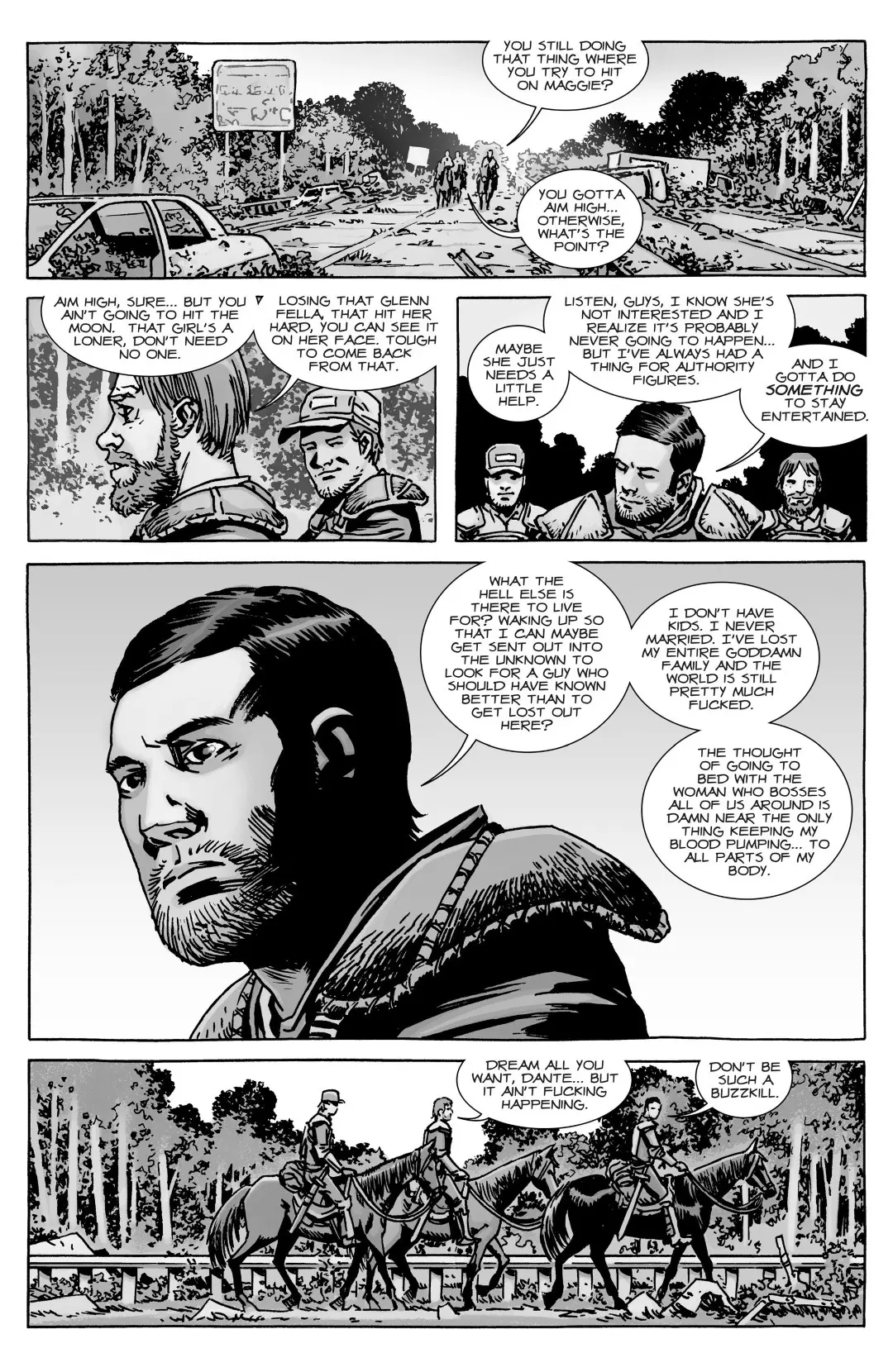
As the daylight illuminates the bustling, agrarian layout of the Hilltop, the story turns its focus toward Maggie Greene as she handles the complex domestic logistics of her presidency. Managing a thriving settlement means dealing with human nature, and Maggie finds herself resolving petty internal disputes and overseeing trade distribution networks rather than fighting off external threats. Her conversations carry an immense, humanized weight, showcasing a leader who has successfully updated her framework from battlefield survival to civil administration. However, the emotional toll of her leadership becomes painfully clear during a quiet visit to the grave of her late husband, Glenn, reminding readers that the ultimate price of their hard-won peace is carried in the quiet spaces of personal grief.
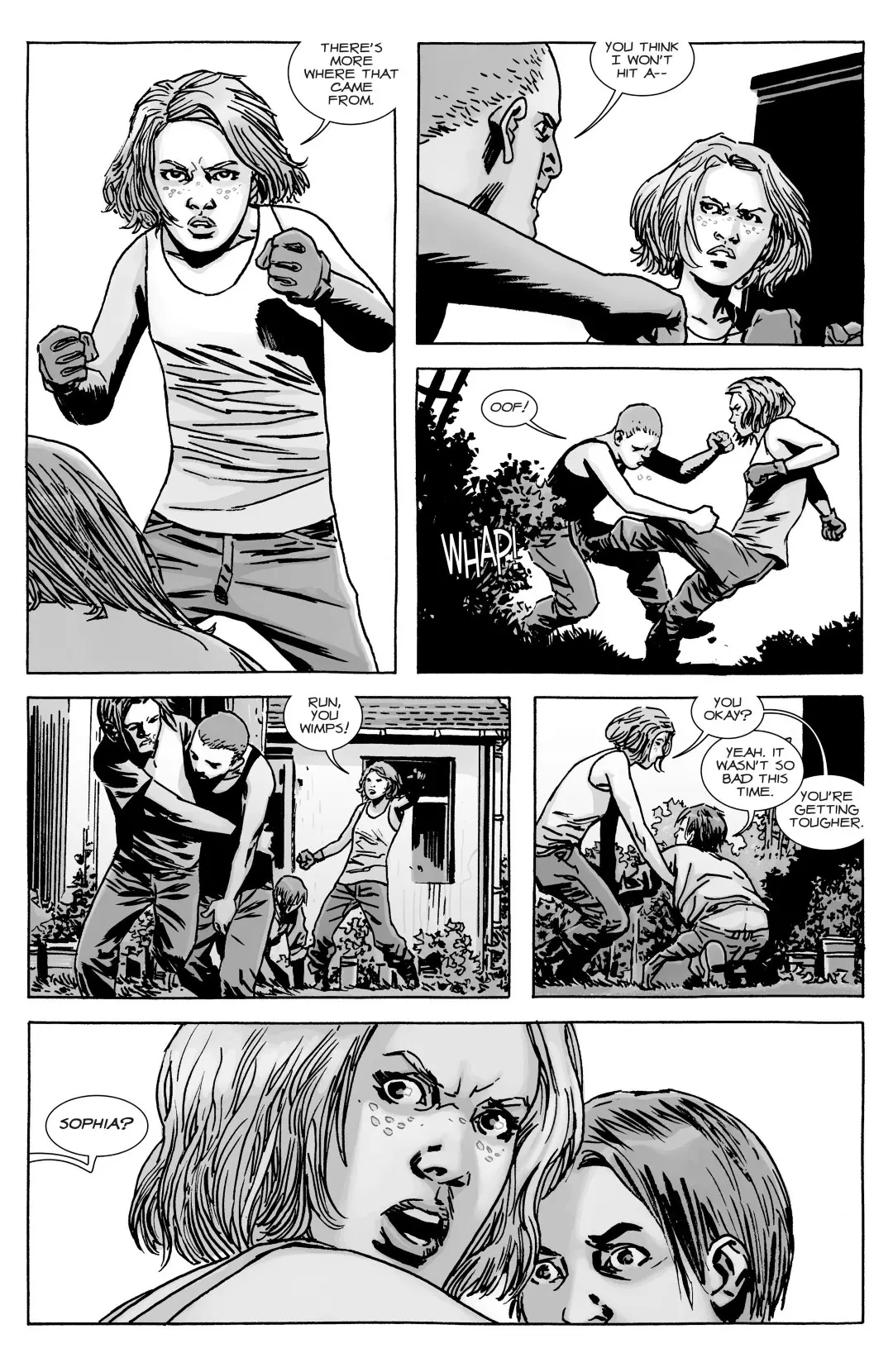
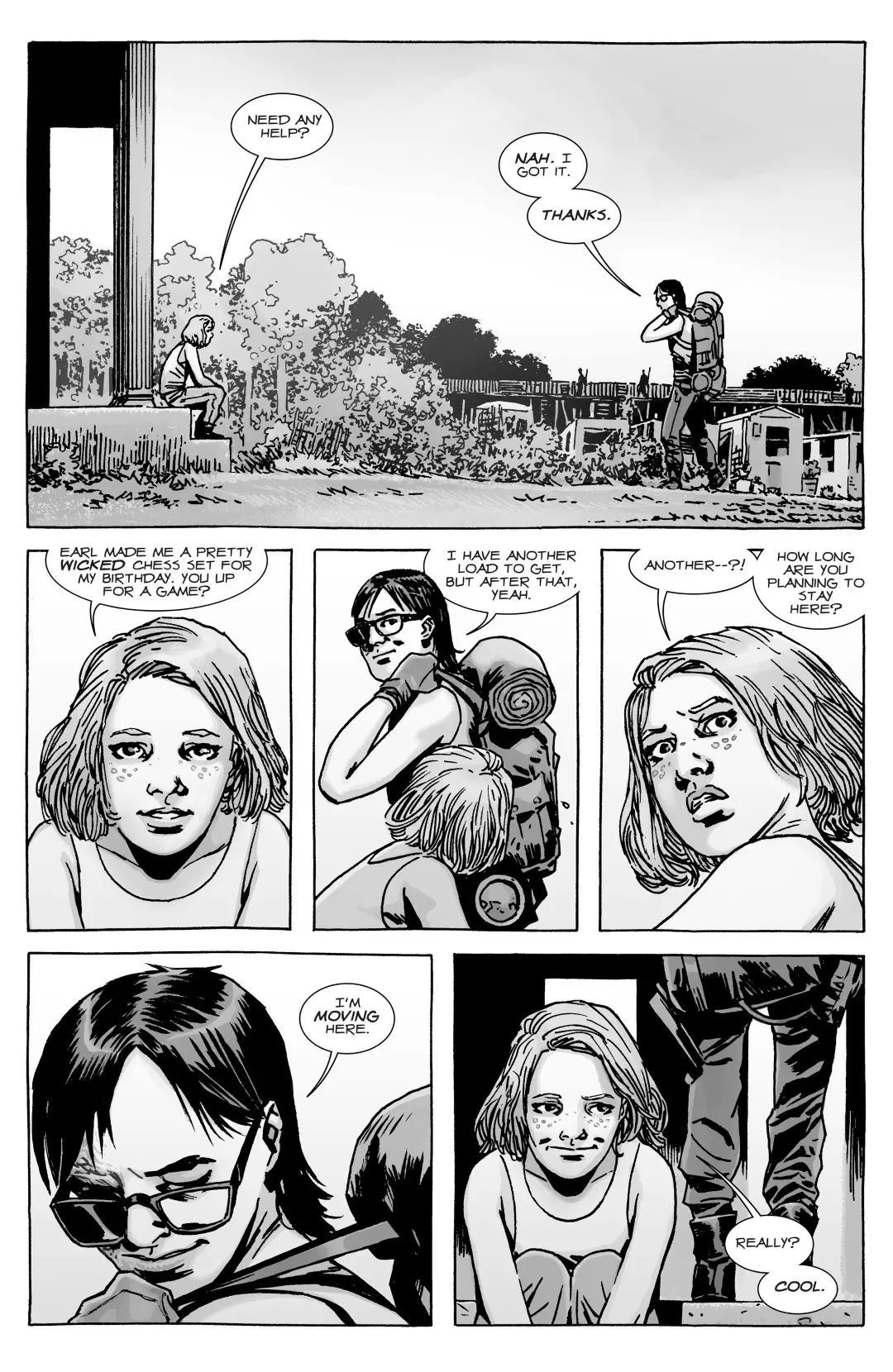
The true strategic weight of The Walking Dead Issue 131 (2014) hits a compelling bottleneck when Carl interacts deeper with the local youth, leading to an exceptionally revealing encounter with a young woman named Sophia. Having grown up together through the worst horrors of the apocalypse, their shared history serves as a powerful mirror for their current emotional states. Sophia’s presence challenges Carl to evaluate his own defensive scripts and isolation routines, forcing an unvoiced conversation about what it means to actually live a life rather than just surviving day to day. The creative team masterfully alters the dramatic frequency of the lore here, proving that the quiet struggles of growing up, forming connections, and finding a purpose are just as challenging as any physical war against the dead.
Imagine standing on the wooden walkways of the Hilltop inside the hopeful panels of The Walking Dead Issue 131 (2014), watching the smoke rise from a blacksmith’s forge while a massive community works together to build a future, all while knowing that the wilderness beyond the walls is slowly changing. You realize with absolute clarity that the minor shortcuts and survival scripts these characters clutched are being replaced by the steady, unyielding rhythm of an organized society, making their quiet domestic milestones feel incredibly profound and bittersweet. The pacing of this chapter is beautifully deliberate, demonstrating that Kirkman’s primary narrative strength relies entirely on long-form character development and realistic human behavior rather than empty action spectacle.
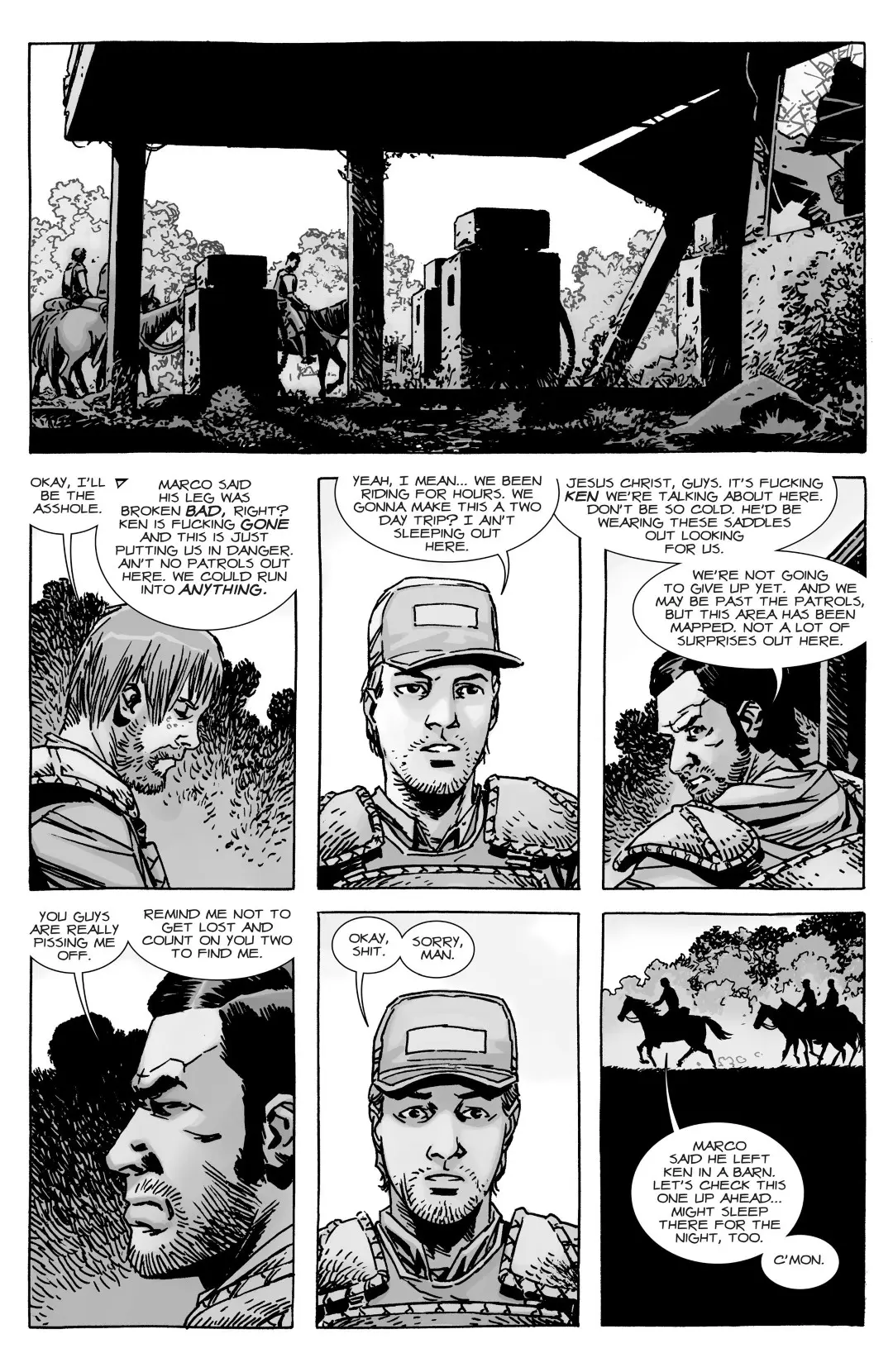
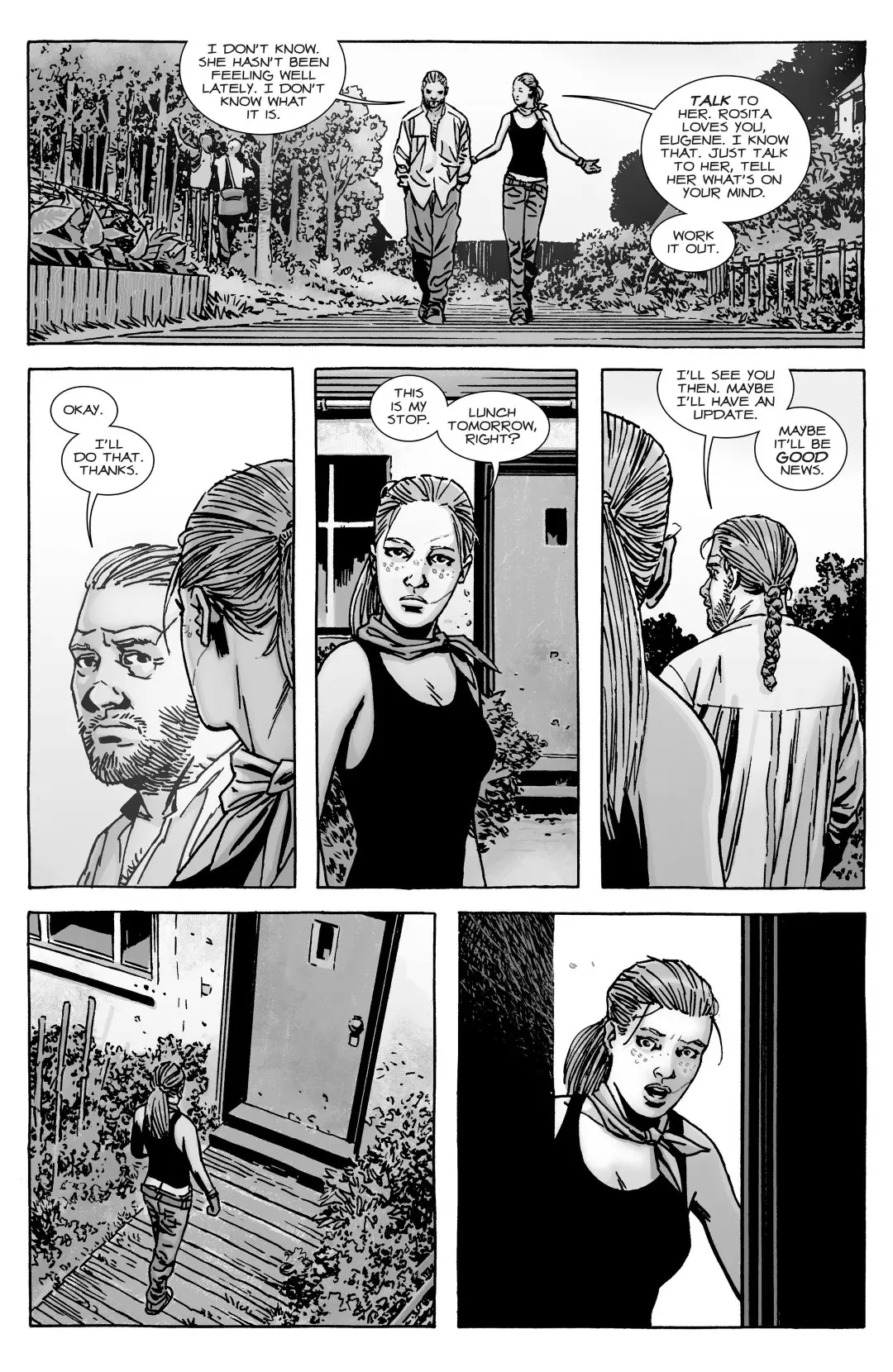
The artistic department delivers a stunning masterclass in high-contrast monochrome layouts, utilizing the visual real estate to emphasize the sharp contrast between industrial labor and domestic life. Within the pages of The Walking Dead Issue 131 (2014), Charlie Adlard’s detail-heavy line work and Cliff Rathburn’s deep gray tones create a heavy, somber atmosphere that beautifully captures the heat of the forge and the weathered lines of wisdom aging Earl Sutton’s face. The illustrations guide the reader’s eye seamlessly through the shifting expressions on Carl’s face—moving from guarded isolation to a quiet, tentative sense of accomplishment as he completes his first day of work. Every panel feels weighted with systemic anticipation, illustrating how the shadows of the past continue to shape the open daylight of the present.
The editorial core utilizes the final pages to permanently format the outer boundaries of a rising mystery, ensuring that the slow-burning suspense stays locked onto an irreversible high-tension alert status. The closing sequence of The Walking Dead Issue 131 (2014) leaves the narrative codebase running on maximum anticipation as a routine scouting patrol out in the wilderness intercepts an unsettling anomaly that suggests the rules of the road are about to be completely rewritten. With the choices narrowing down to a high-risk configuration of trust and the immediate internal security protocols of the communities quietly threatened by an unseen variable, the issue terminates its runtime with an unparalleled sense of systemic anticipation. This hundred-and-thirty-first milestone functions as an unskippable, foundational data file for anyone seeking to decode the complex, biting evolution of post-war graphic world-building.
For dedicated comic archivists and casual readers navigating the vast digital vaults of sequential art, tracking the specific thematic choices implemented within this transitional chapter offers an unmatched look at long-form serialized suspense. The flawless synthesis of the razor-sharp script and the kinetic, shadow-drenched visual architecture creates a perfect storm of narrative momentum that demands multiple analytical passes to fully comprehend. By focusing entirely on the quiet, devastating spaces of community building and adolescent growth, the issue drops a series of high-voltage hints regarding the severe, irreversible sacrifices that await the community as their borders continue to expand.
The interface remains entirely clear as this historic layer of the volume officially archives itself within the historical registries, leaving the active monitoring lines flashing with maximum anticipation for the next sequential upload as the boundaries of this fragile world continue to evolve.
Read Free Comics Online of all comics character on this website with very high-quality images on google free.



Leave a Reply