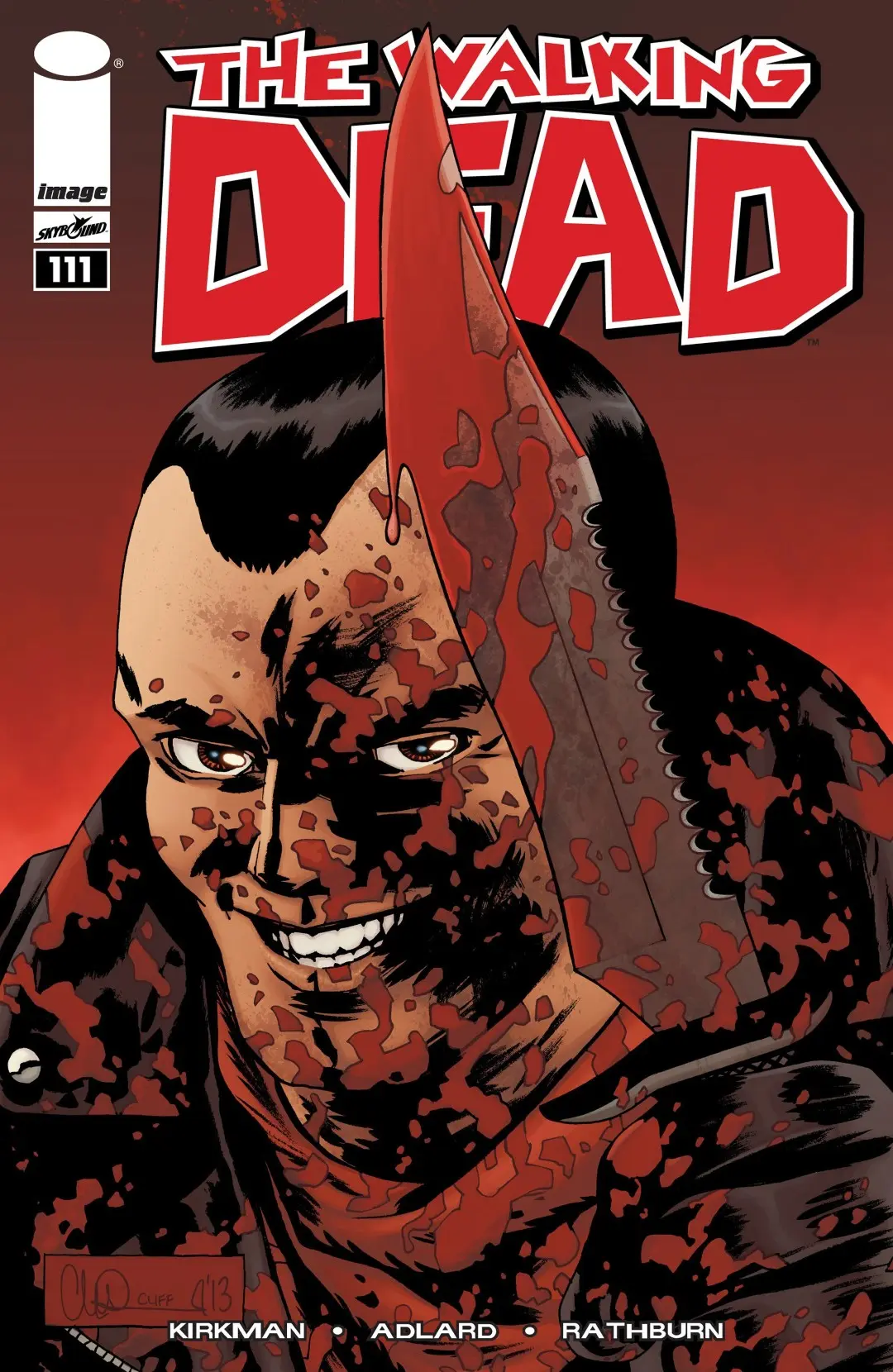
The Walking Dead Issue 111 (2013)
Publisher: Image Comics
Read Free Comics Online of The Walking Dead Issue 111 (2013) Read Free Online with very high-quality images on google without any cost, Read Free Image comics online at Read Free comics Online.
Scroll down to read free comics online.
The Walking Dead Issue 111 (2013) Read Free Image Comics Online
The primary mechanical driver of this extensive literary breakdown focuses directly on the claustrophobic, high-friction psychological territory that defined the immediate, cataclysmic aftermath of the Something to Fear story arc, forcing audiences to witness a broken community trying to salvage its remaining operational files. When tracking the most critical turning points in sequential art, The Walking Dead Issue 111 (2013) stands out as a stark, shock-laden masterpiece of political and internal subversion that accelerates the timeline toward a catastrophic structural reset. Written under the dark, methodical creative direction of Robert Kirkman and brought to visual life through the ink-heavy, visceral lines of Charlie Adlard, this specific installment chronicles a desperate, unbuffered transition phase where the entry fee for survival is paid in raw, internal betrayal. Releasing to retail stands on June 12, 2013, this crucial installation serves as an unyielding chronological anchor point within the zombie-survival database. For the dedicated community surrounding Read Free Comics Online, analyzing this landmark milestone provides an essential look at how the creative team manual overrides standard action tropes, replacing predictable retaliatory warfare with a heavy, suffocating atmosphere of domestic execution that leaves the reader completely shell-shocked.
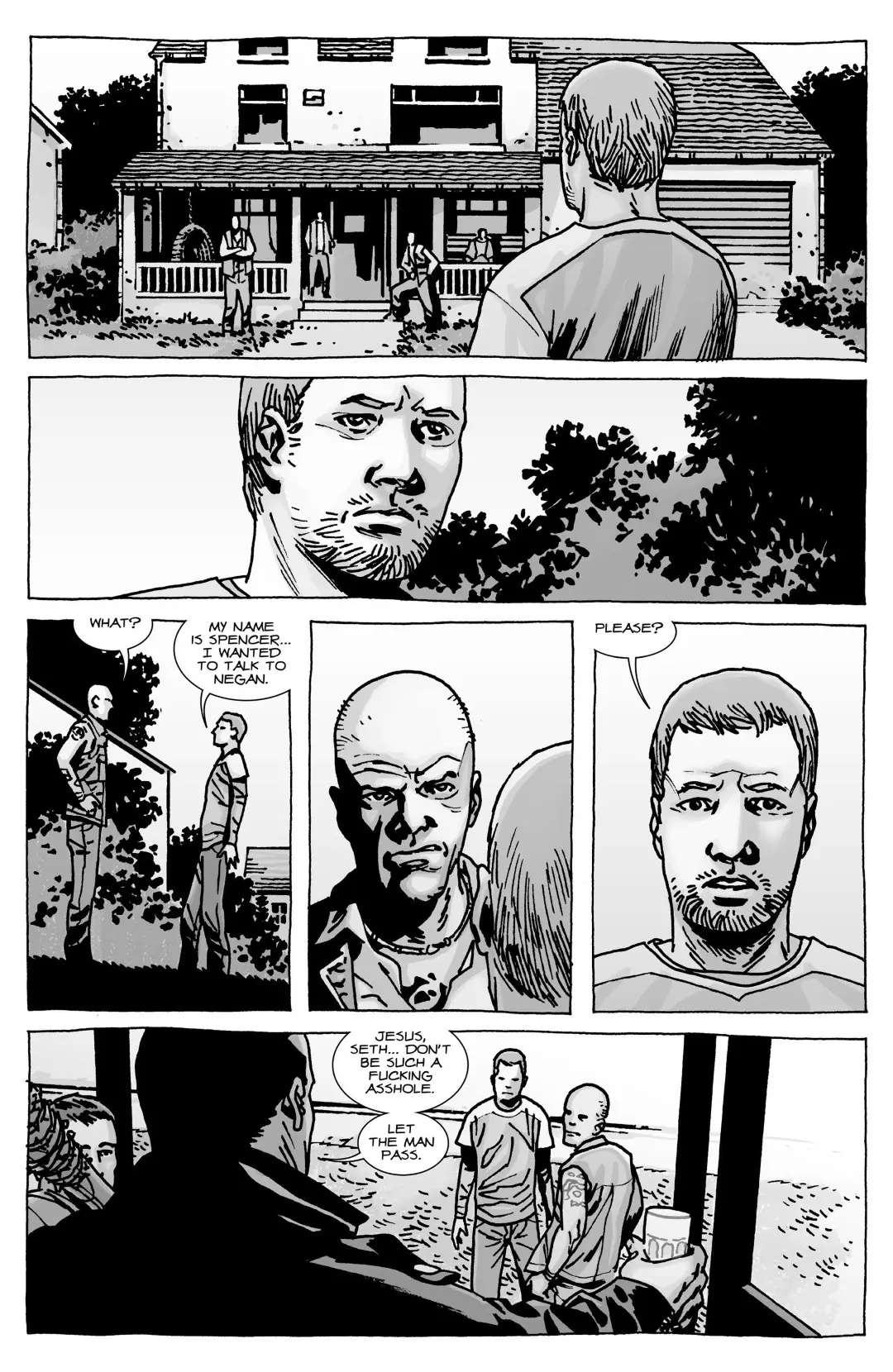
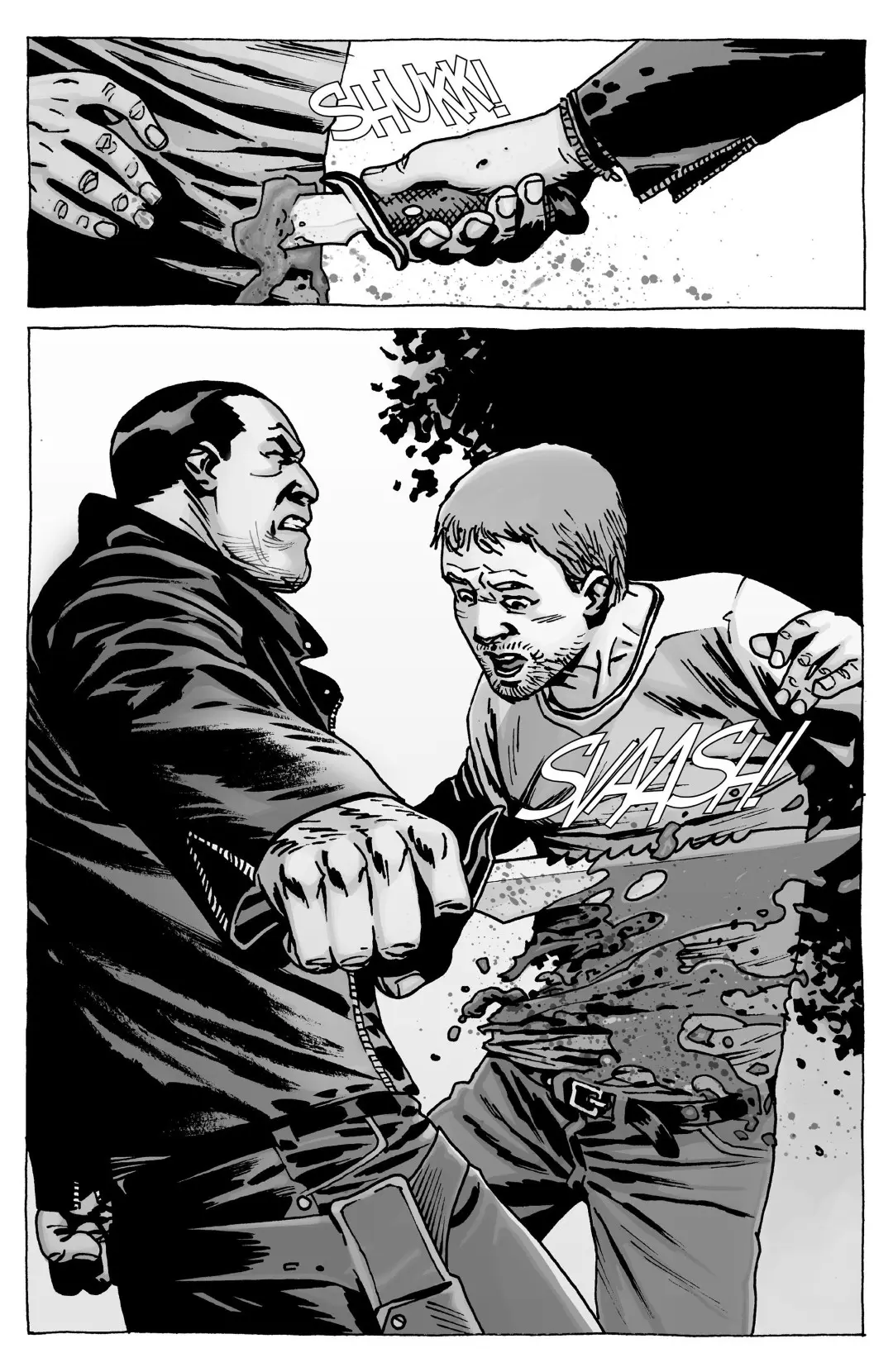
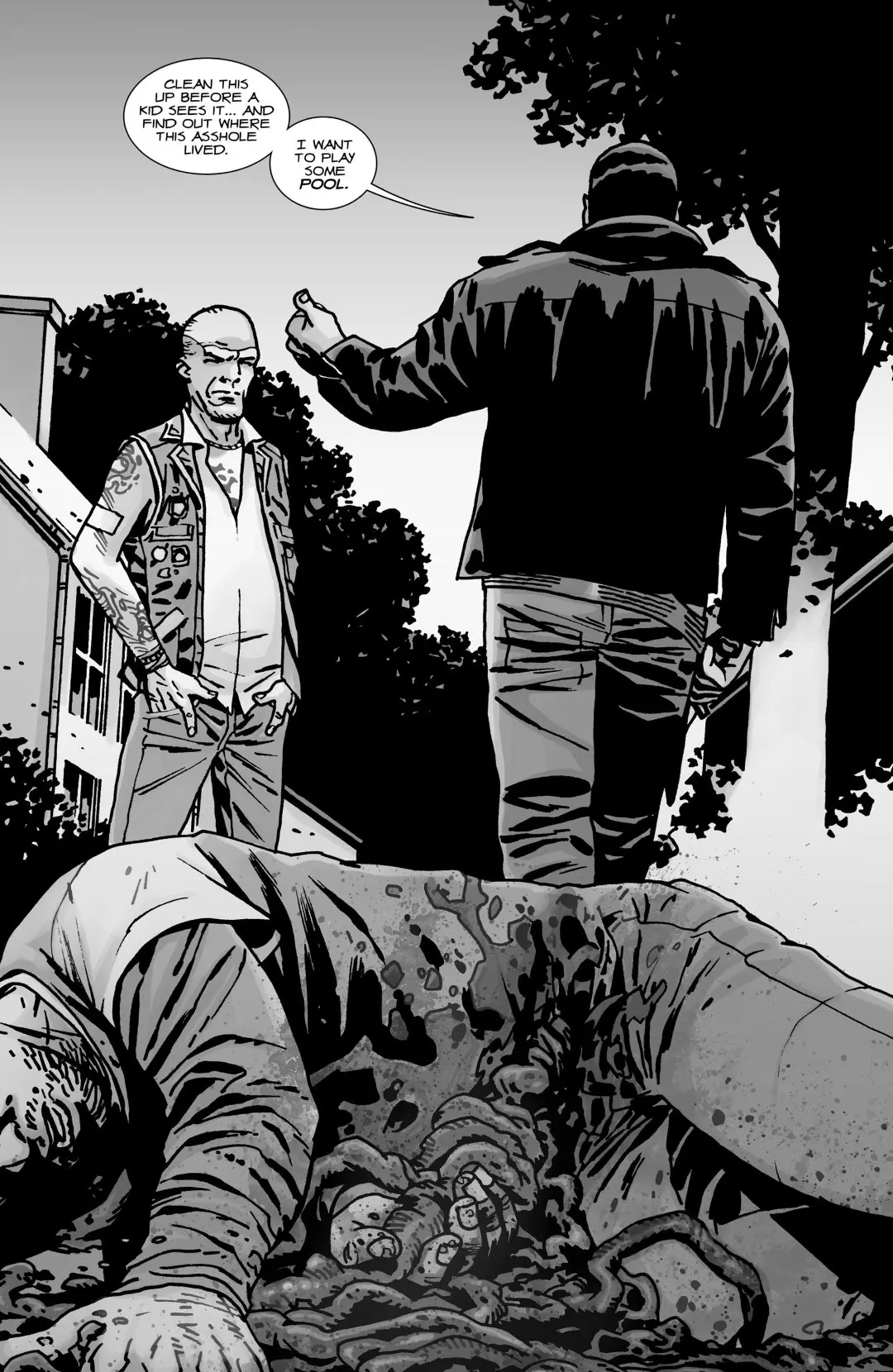
Transitioning smoothly from the structural baseline to the localized plot directories, the internal tracking registries within The Walking Dead Issue 111 (2013) log a severe, catastrophic runtime spike inside the panel borders as Rick Grimes operates entirely under a state of total structural collapse. The narrative engine traces a fatal structural error inside the Alexandria Safe-Zone while Rick is away conducting a high-security network synchronization script with hidden allies. Negan and his primary Savior raiding vanguard arrive early for an unscheduled perimeter inspection, finding a rogue local variable, Spencer Monroe, waiting to initialize an unauthorized command bypass. Seeking to completely format Rick’s leadership mainframe, Spencer requests a private conference with the tyrant, explicitly offering to assassinate Rick in exchange for being designated the community’s primary system administrator. Because Negan operates on an unyielding code of personal honor that rejects gutless manipulation, he manual overrides Spencer’s proposal, drawing a massive blade and executing a horrific disembowelment routine that spills Spencer’s internal data arrays onto the pavement in front of a horrified audience.
As the physical isolation intensifies within the secure confines of the agricultural outpost, the secondary processing loops of The Walking Dead Issue 111 (2013) initiate a deep, painful diagnostic run on the protagonist’s fractured leadership mainframe. Unlike typical zombie-horde confrontations where simple physical strength dictates the outcome of the battle, this agonizing installment shifts the conflict entirely to the ideological space of complete submission versus hopeless insurrection. The script records an exceptional accumulation of psychological pressure inside the panel grids as Rick stands before his remaining people, his hard-boiled warrior programming entirely stripped away, and commands them to drop all proactive combat scripts. This crushing disclosure triggers a series of profound strategic calculations that force the group to confront the haunting phantom code of their past isolation, laying bare the terrifying reality that Rick has officially chosen to fall in line under the Savior empire to keep their remaining life signatures from being permanently deleted.
The narrative velocity of the comic reaches a devastating, high-voltage bottleneck when the dialogue script transitions from a mere tactical debate into a literal leap of faith for Rick Grimes’ remaining humanity, establishing a permanent crossroads for the series’ long-term continuity. Readers analyzing the data stream on Read Free Comics Online will witness an absolute masterclass in character study as the text systematically tears down Rick’s hard-boiled armor to expose the cautious, vulnerable protector underneath. The issue documents an intense, high-friction debate where the core council members serve as a mirror, forcing Rick to weigh the calcified, unyielding weight of his historical paranoia against the impossible desire to format their survival scripts and build a real civilization. This psychological crisis forces the protagonist into a grueling calculation crunch, realizing that all their hardened combat expertise and tactical fortifications are entirely useless variables if they cannot securely integrate with an expanded human network.
Imagine standing on a dust-choked street inside the high-stakes panels of The Walking Dead Issue 111 (2013), the blinding sunlight illuminating the clean, artificial walls of your sanctuary while a complete stranger stands before you offering a pathway to trading outposts you never dreamed existed. You realize with absolute, bone-chilling clarity that the weapons you clutch are no longer just for fighting the dead, but the primary currency required to negotiate with the living, leaving you with no choice but to consider a total system update that might permanently compromise the security of your family. The creative team masterfully alters the dramatic frequency of the mid-2013 lore, proving that Rick’s most relentless and terrifying adversary isn’t the decaying walker vanguard raiding the fences, but the crushing, unyielding difficulty of learning how to trust another human being again.
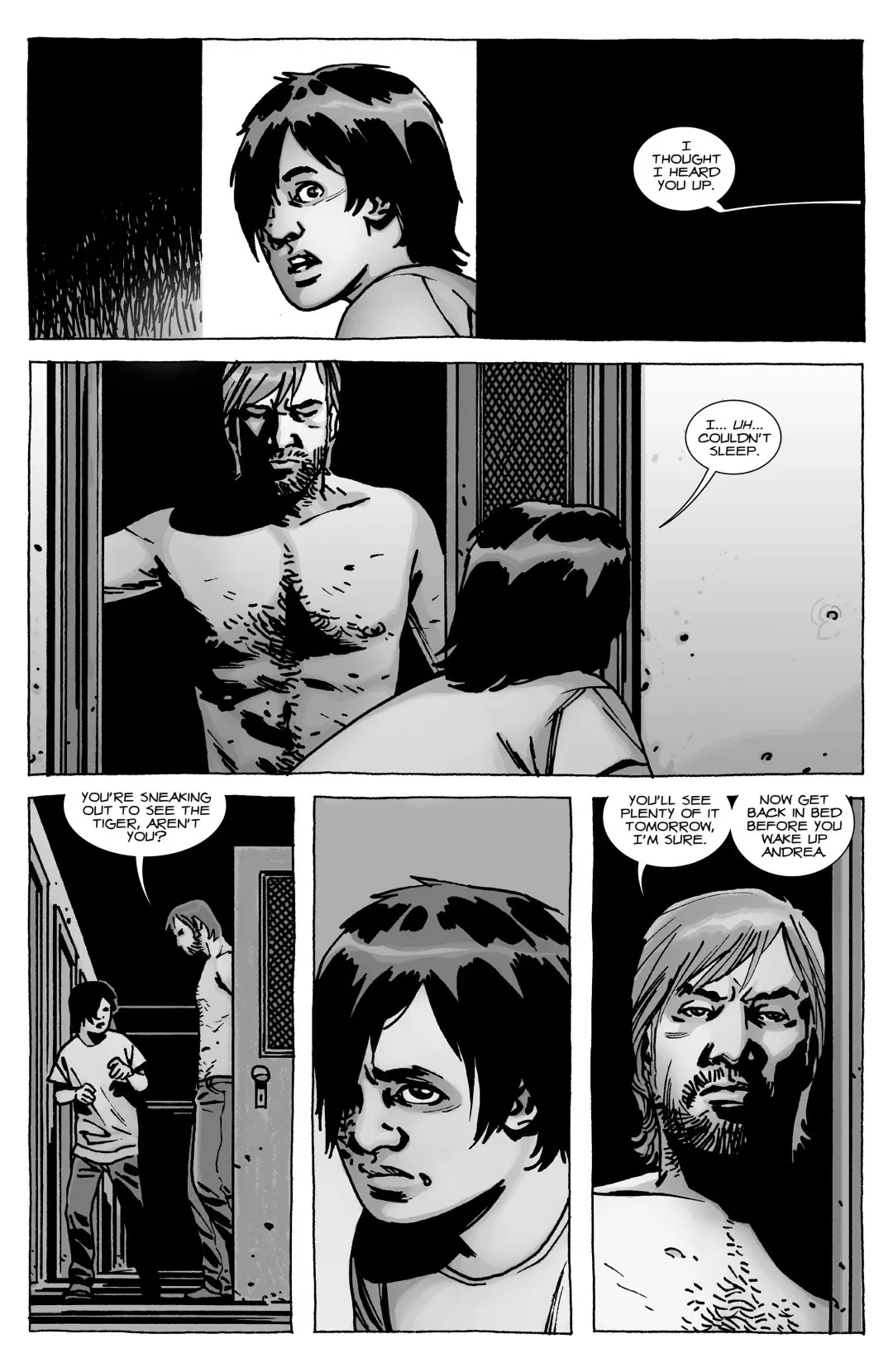
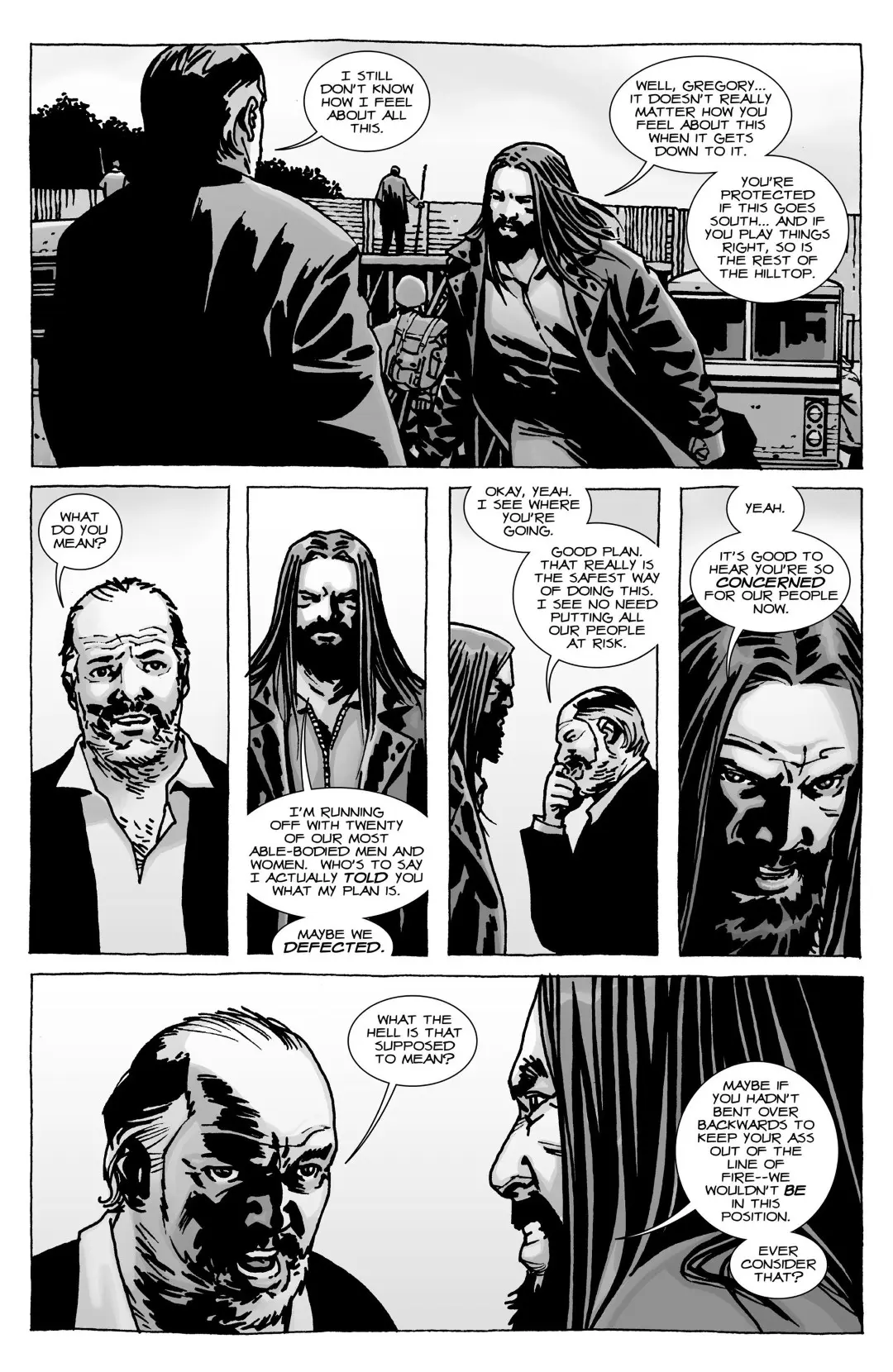
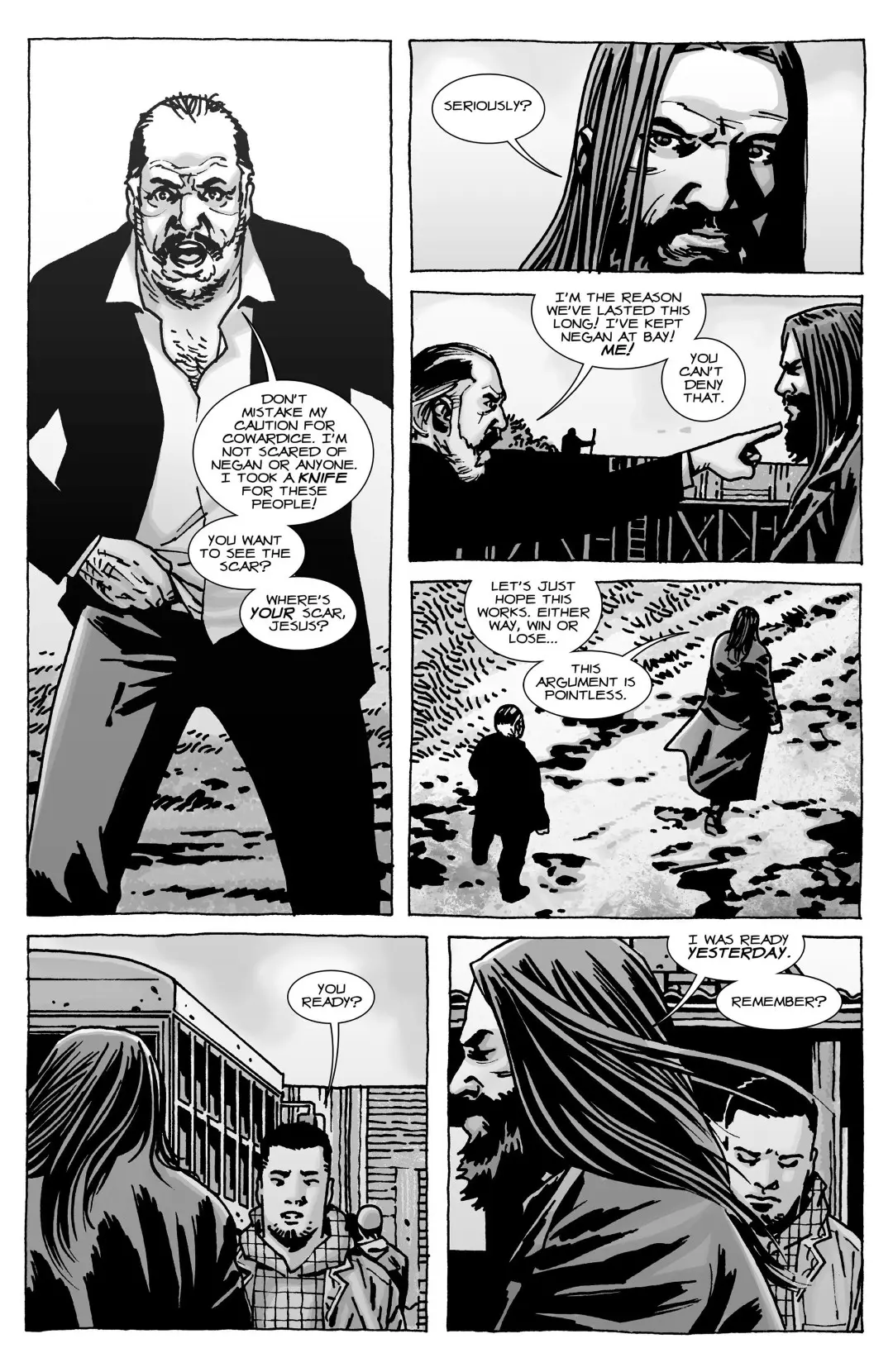
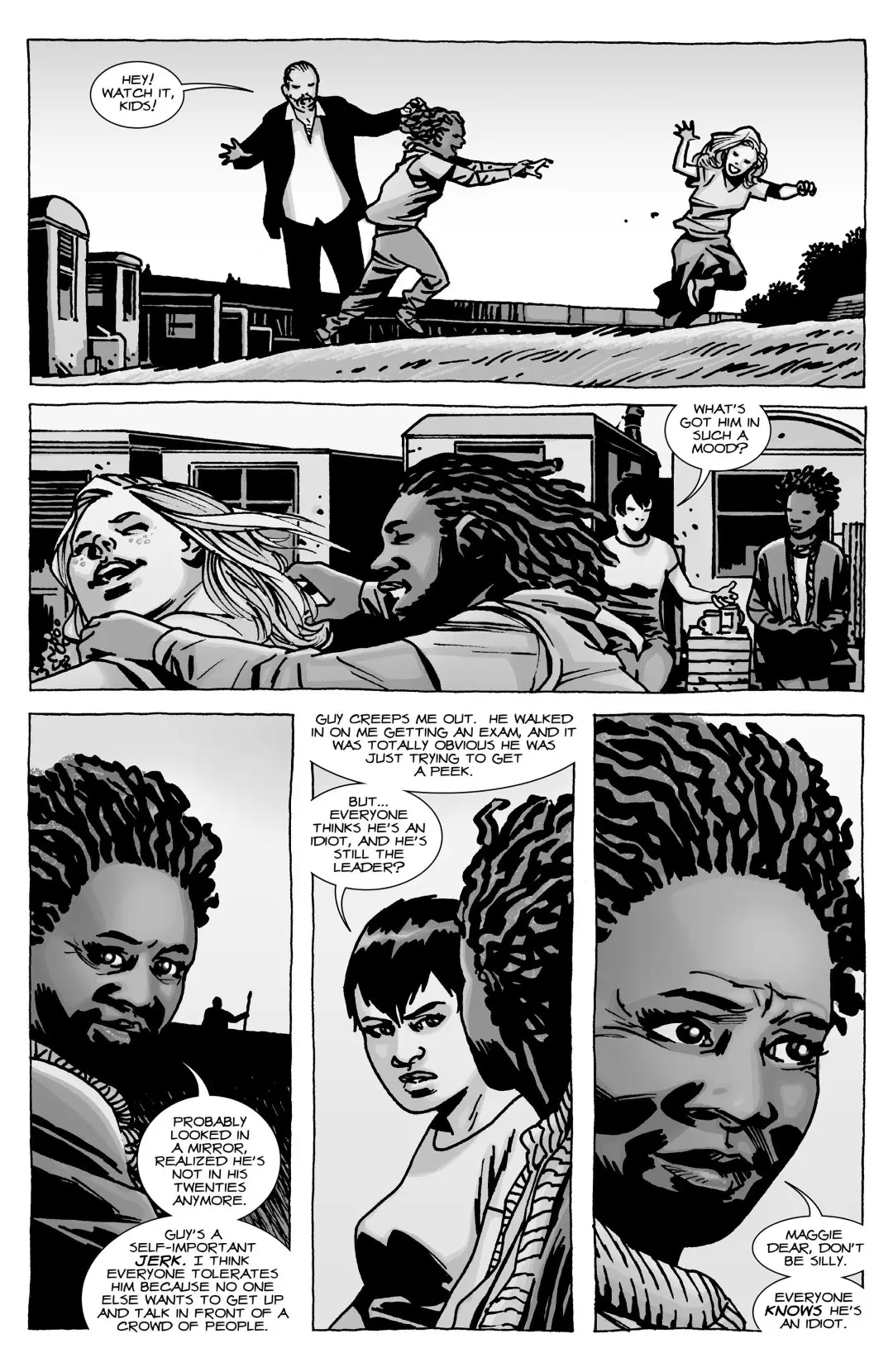
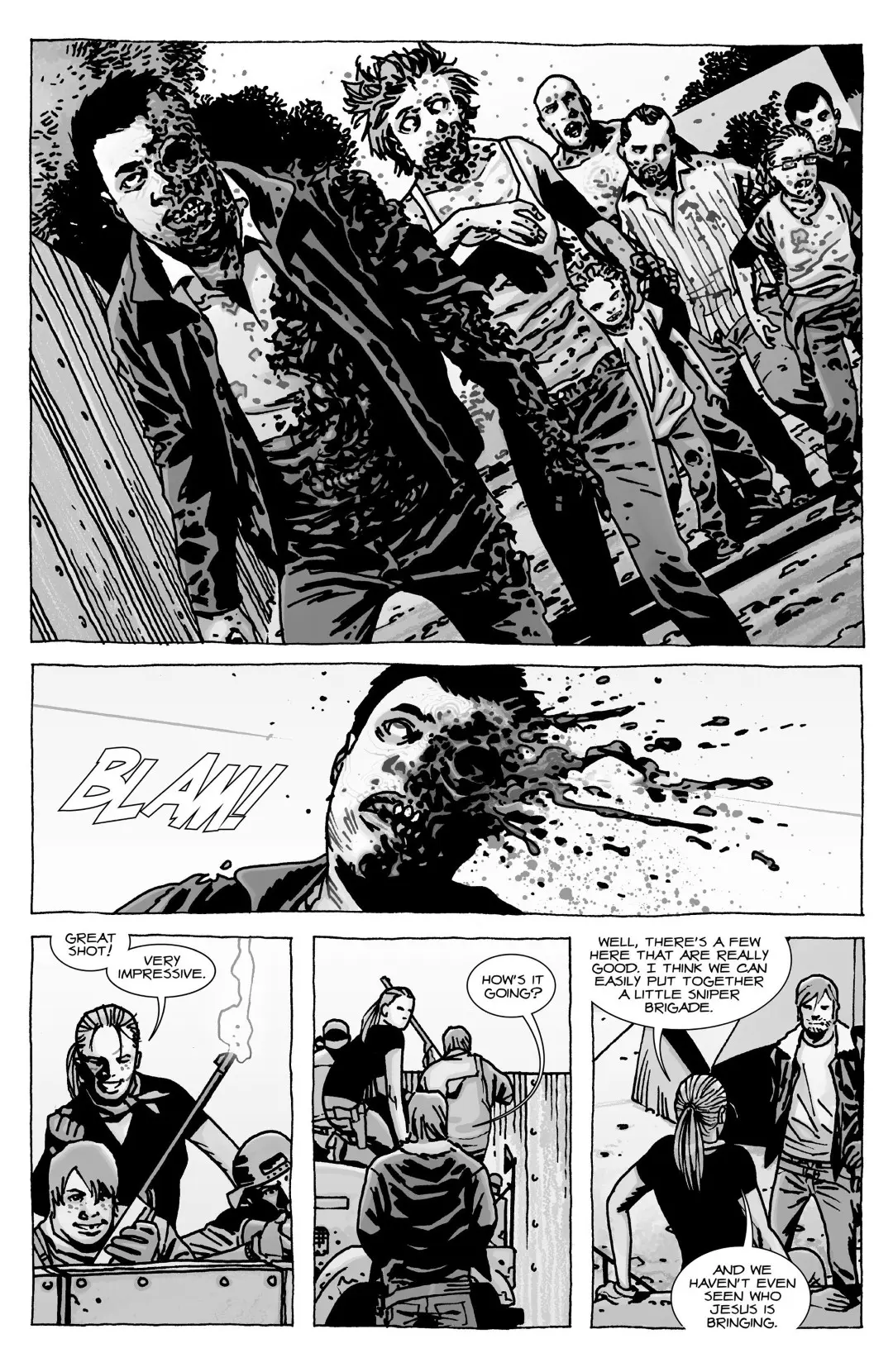
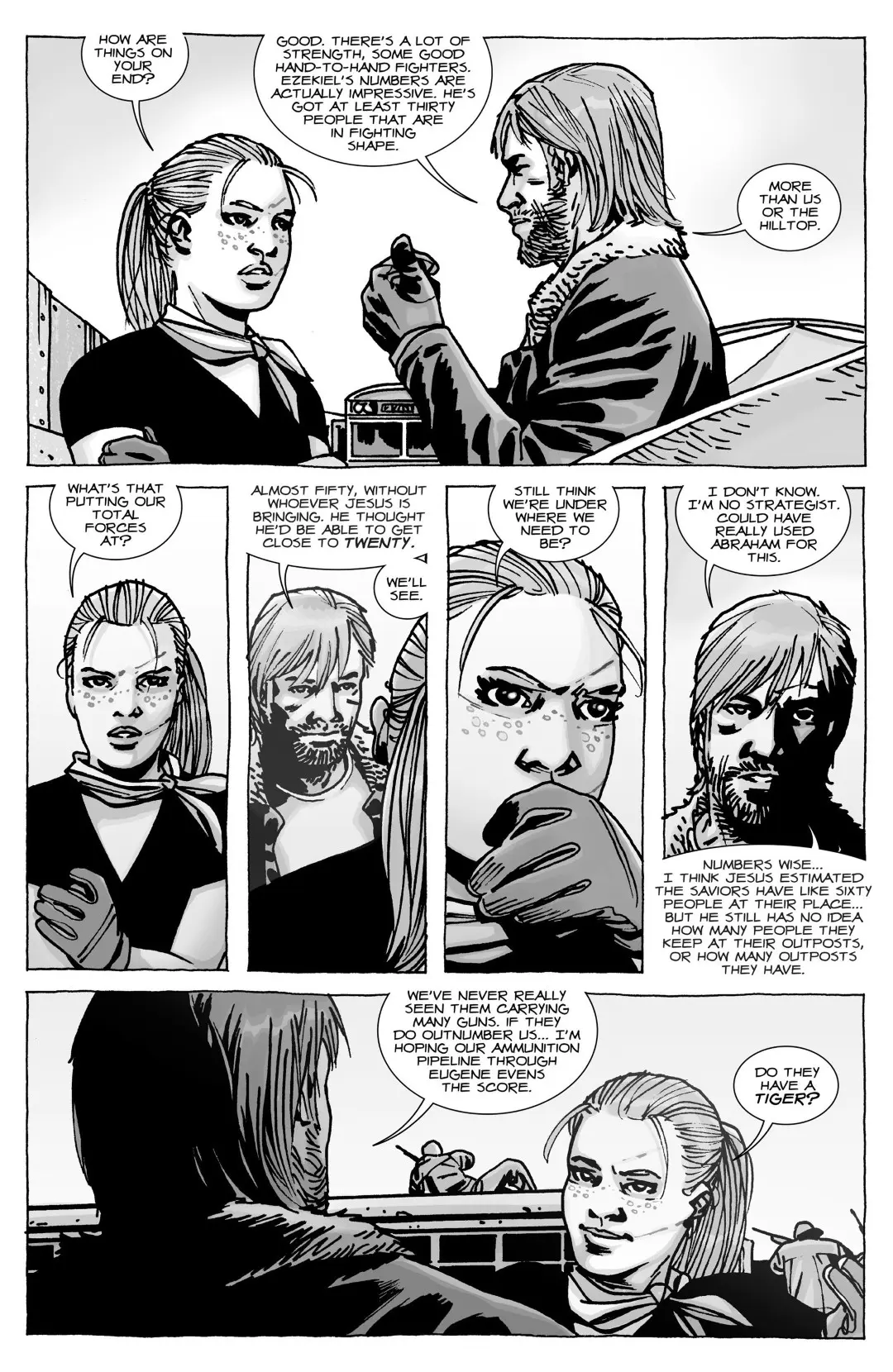
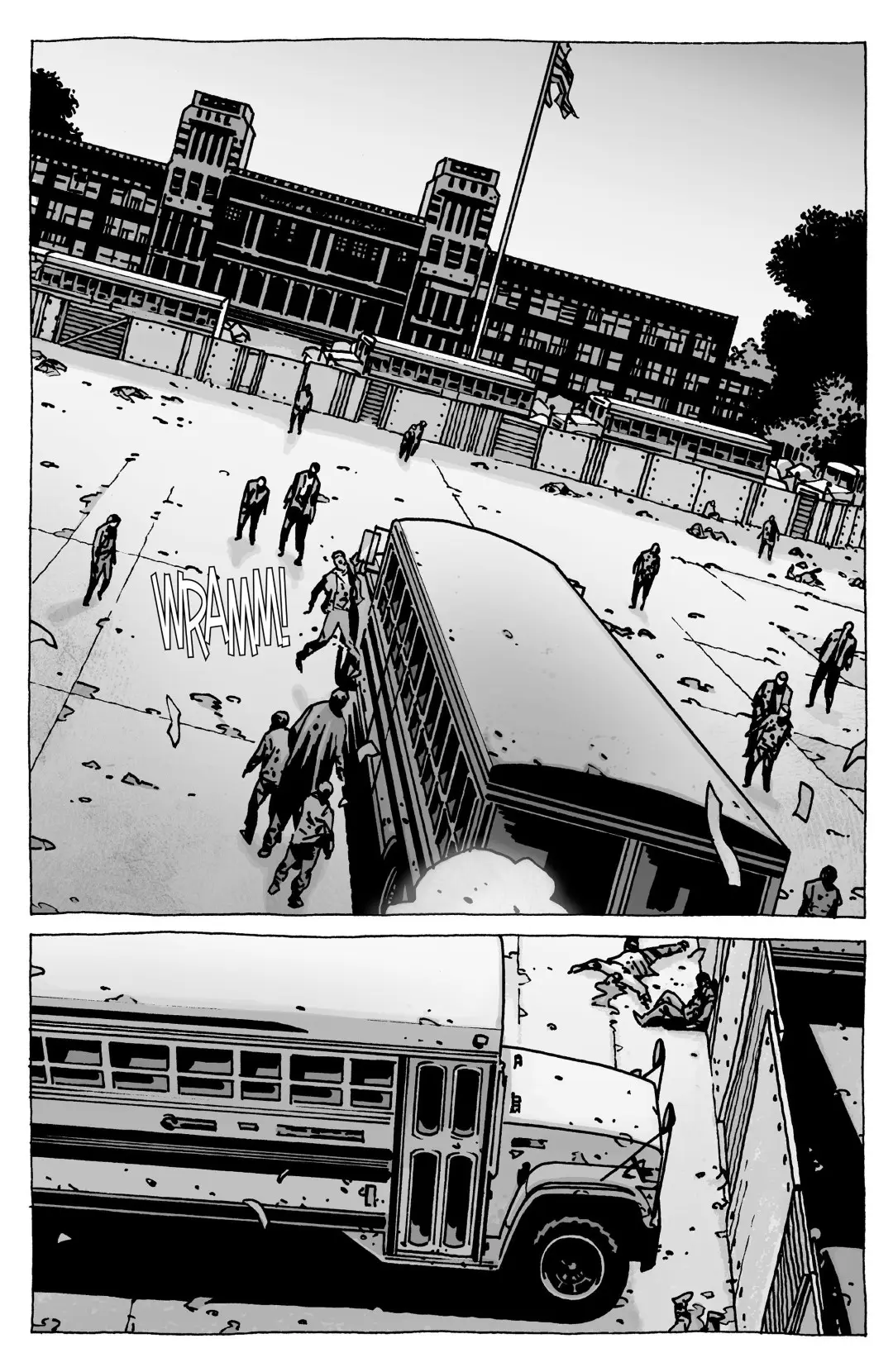
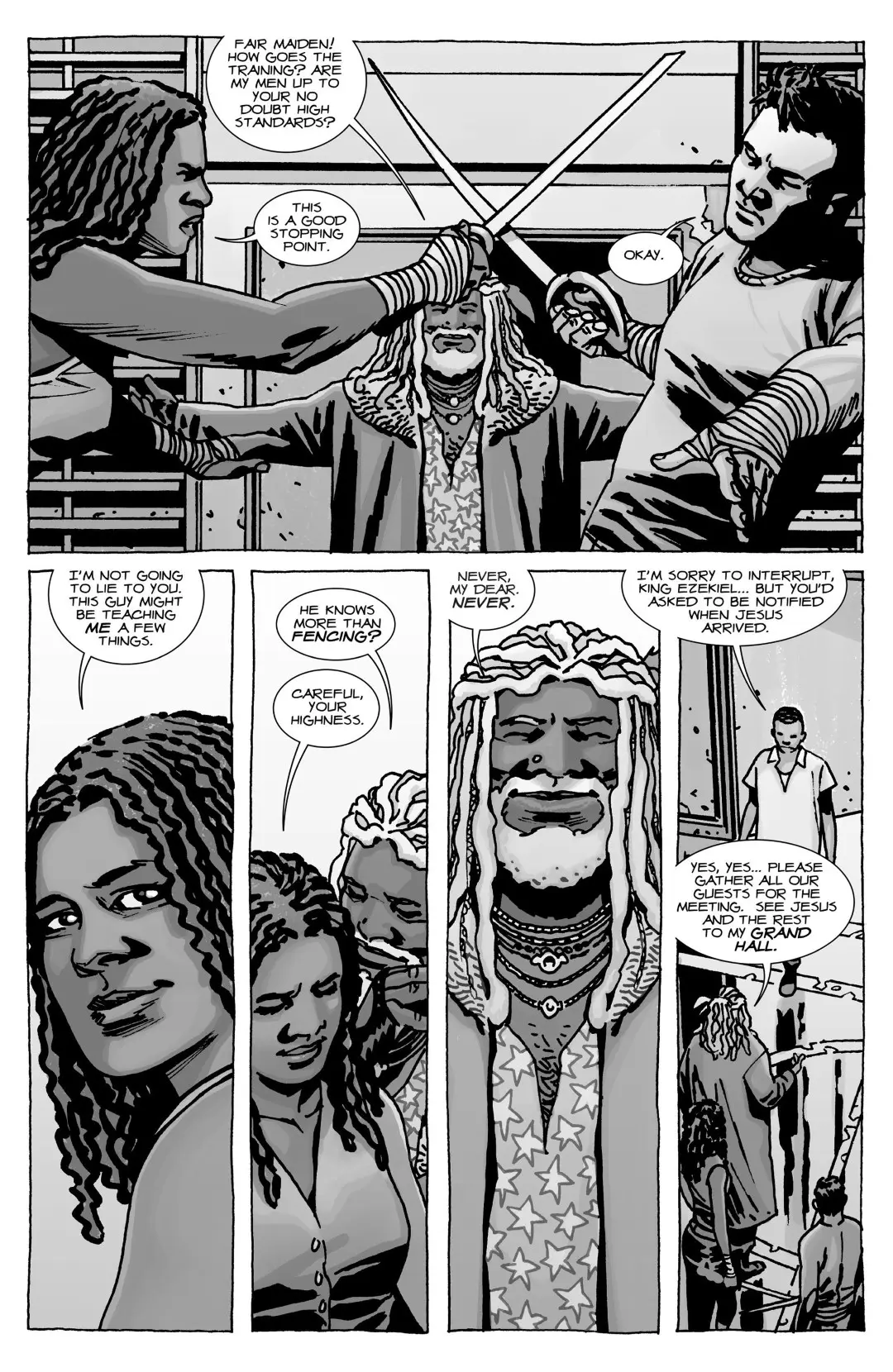
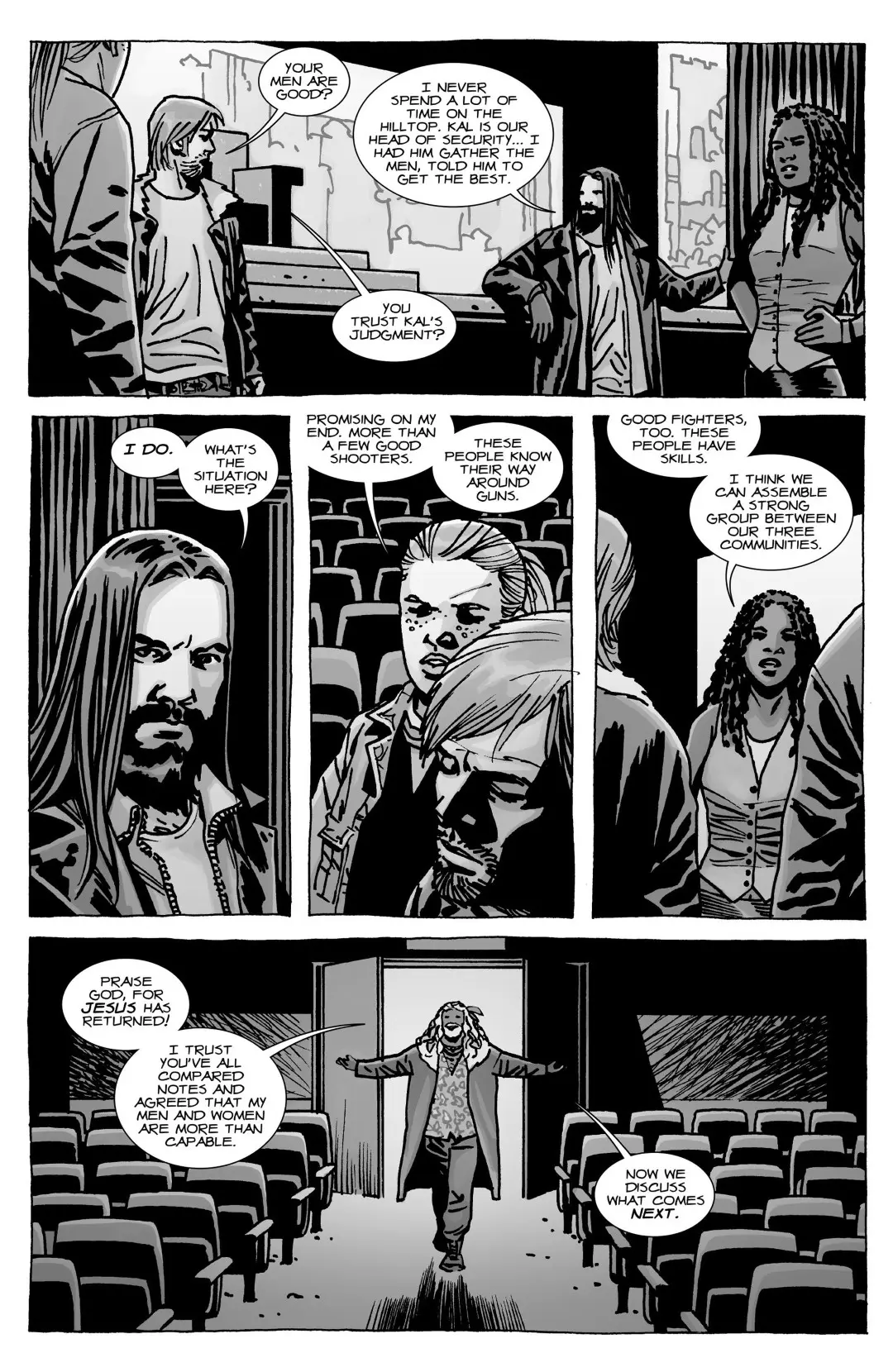
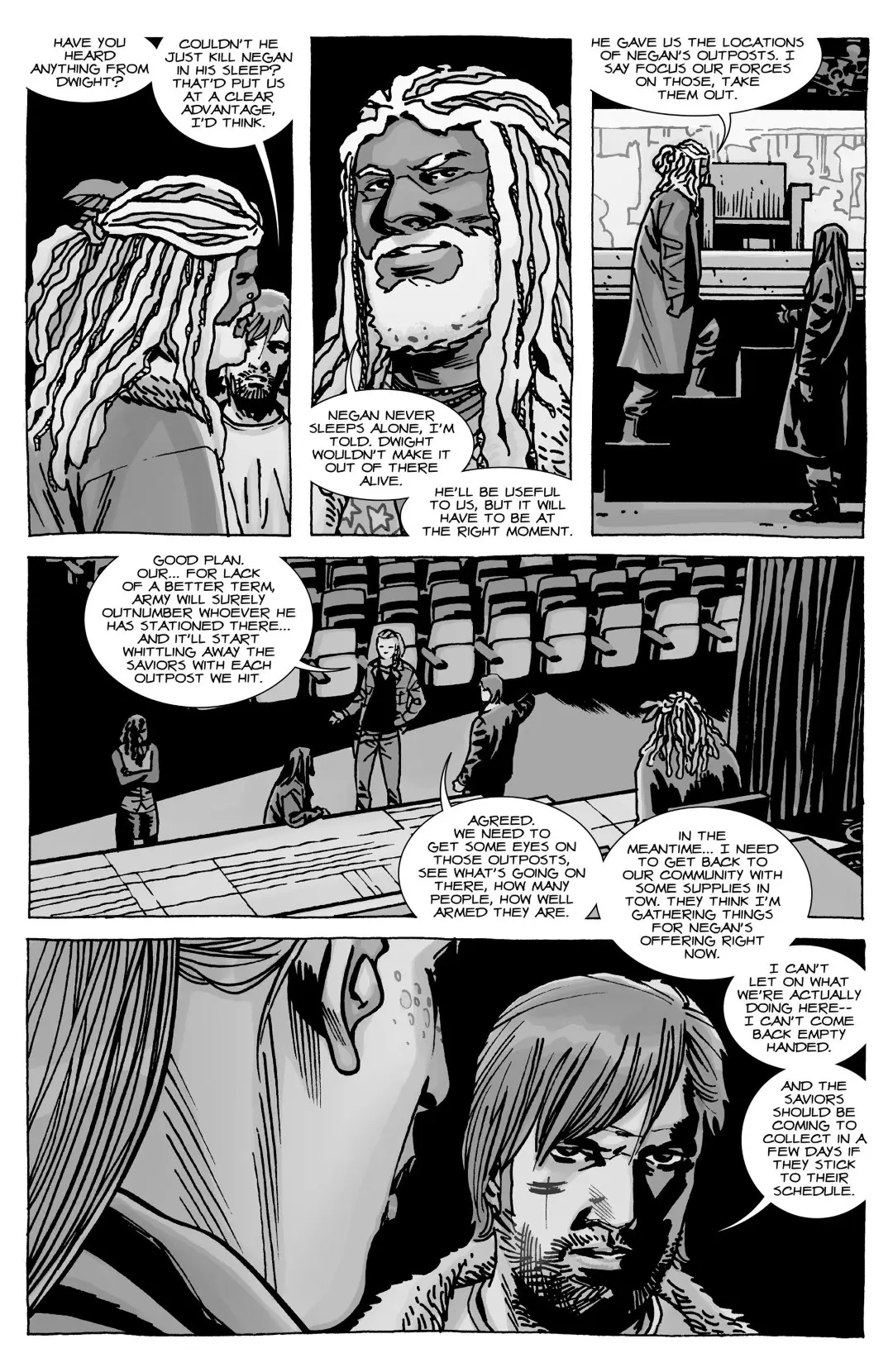
The artistic department delivers a legendary masterclass in high-contrast monochrome shading and claustrophobic geometric layouts throughout The Walking Dead Issue 111 (2013), optimizing the visual real estate to emphasize the profound tension between the characters. The visual rendering pipeline flawlessly utilizes the gritty, black-and-white aesthetics of the survival book, throwing subtle, sharp gray tones directly against deep, ink-heavy pools of absolute midnight black that define the shadows of the safe-zone interiors. Charlie Adlard’s illustrations guide the reader’s eye straight into the heart of the interpersonal drama, masterfully capturing the hollow, sweat-streaked lines of pure cognitive exhaustion aging Rick’s face as he stares down his prisoner. Every panel is choked with a heavy, somber atmosphere, beautifully illustrating that some historical narrative files are simply too tragic to ever be accompanied by traditional action spectacle.
The editorial core utilizes the final pages of The Walking Dead Issue 111 (2013) to permanently format the outer boundaries of the protagonist’s leadership strategy, ensuring that the entire narrative trajectory is pushed past the absolute edge of a cataclysmic societal expansion. The script hits a definitive terminal shutdown sequence as the tactical evaluations conclude, leaving the narrative codebase locked onto an irreversible, high-tension alert status heading straight into an intensive diplomatic expedition to the Hilltop Colony. With the tactical choices narrowing down to a high-risk reconnaissance run, the immediate internal security protocols shifting, and the overarching monitoring lines flashing a dangerous, permanent alert frequency, the issue terminates its runtime with an unparalleled sense of systemic anticipation. This milestone installation functions as an unskippable, foundational data file for anyone seeking to decode the complex, dark evolution of post-apocalyptic comic book world-building.
For dedicated comic archivists and casual readers navigating the vast digital vaults of Read Free Comics Online, tracking the specific thematic choices implemented within The Walking Dead Issue 111 (2013) offers an unmatched masterclass in long-form serialized drama. The flawless synthesis of Robert Kirkman’s razor-sharp, dialogue-driven script and the kinetic, shadow-drenched visual architecture creates a perfect storm of narrative momentum that demands multiple analytical passes to fully comprehend. By focusing entirely on the quiet, devastating spaces between traditional zombie encounters, the issue drops a series of high-voltage hints regarding the severe, irreversible sacrifices that await the community in the upcoming chapters of their lives. The result is a hyper-dense, profoundly humanized reading experience that permanently cements this issue’s place as a legendary, unyielding monument within the global publishing database.
The interface remains entirely clear as this historic one-hundred-and-eleventh layer of the classic volume officially archives itself within the historical registries, leaving the active monitoring lines flashing with maximum anticipation for the next sequential upload. The profound narrative footprint established by The Walking Dead Issue 111 (2013) guarantees that the upcoming character arcs will be forced to operate on a highly volatile, zero-trust baseline where the foundational rules of the survivor group must be completely re-evaluated. With the tactical data files fully secured and the emotional fallout of Rick’s desperate choices beginning to reshape the foundation of his remaining community, the master registry closes its processing loop. The terminal is now stable, the system files are perfectly synchronized, and the core mainframe stands completely prepared to boot up whichever legendary chronicle or tactical hero directory you choose to execute next.
The Walking Dead Issue 111 (2013) Read Free Image Comics Online











Read Free Comics Online of all comics character on this website with very high-quality images on google free.


Leave a Reply