The Walking Dead Issue 10 (2004)
Publisher: Image Comics
Read Free Comics Online of The Walking Dead Issue 10 (2004) Read Free Online with very high-quality images on google without any cost, Read Free Image comics online at Read Free comics Online.
Scroll down to read free comics online.
The Walking Dead Issue 10 (2004) Read Free Image Comics Online
The narrative mainframe undergoes an immediate data initialization sequence as the frantic race to save Carl Grimes breaches the outer perimeter of a pristine agricultural sanctuary. Released to retail comic distribution registries on September 29, 2004, The Walking Dead Issue 10 (2004) launches part four of the “Miles Behind Us” campaign. Written under the continuous tight architectural guidance of Robert Kirkman and brought to visual life through the raw, heavily texturized ink-work of Charlie Adlard, this details-rich installment records a massive operational shift inside the panels, tracking the exact seconds where the nomadic survivor directory intersects with a deeply conservative, isolated homestead network.
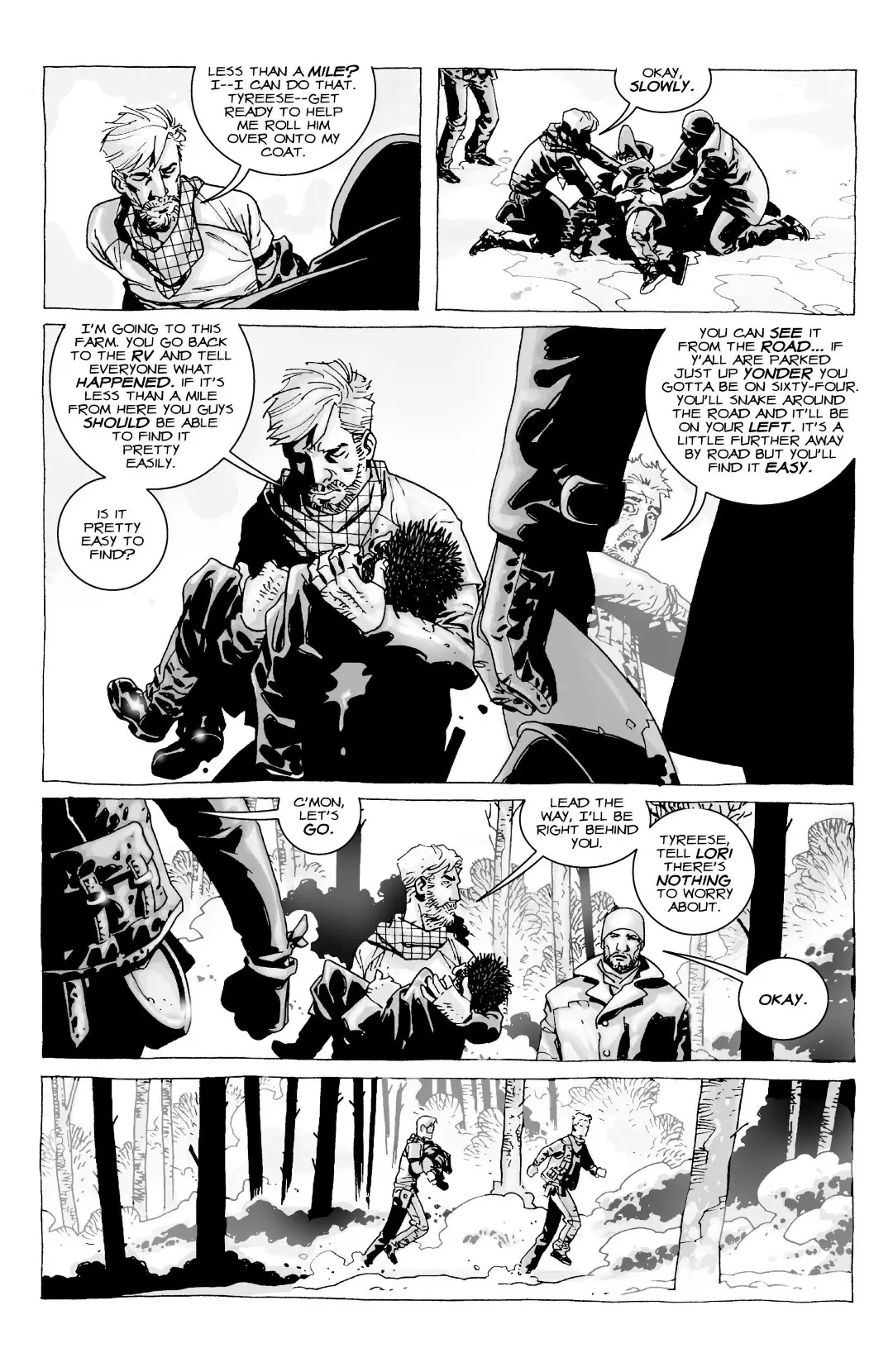
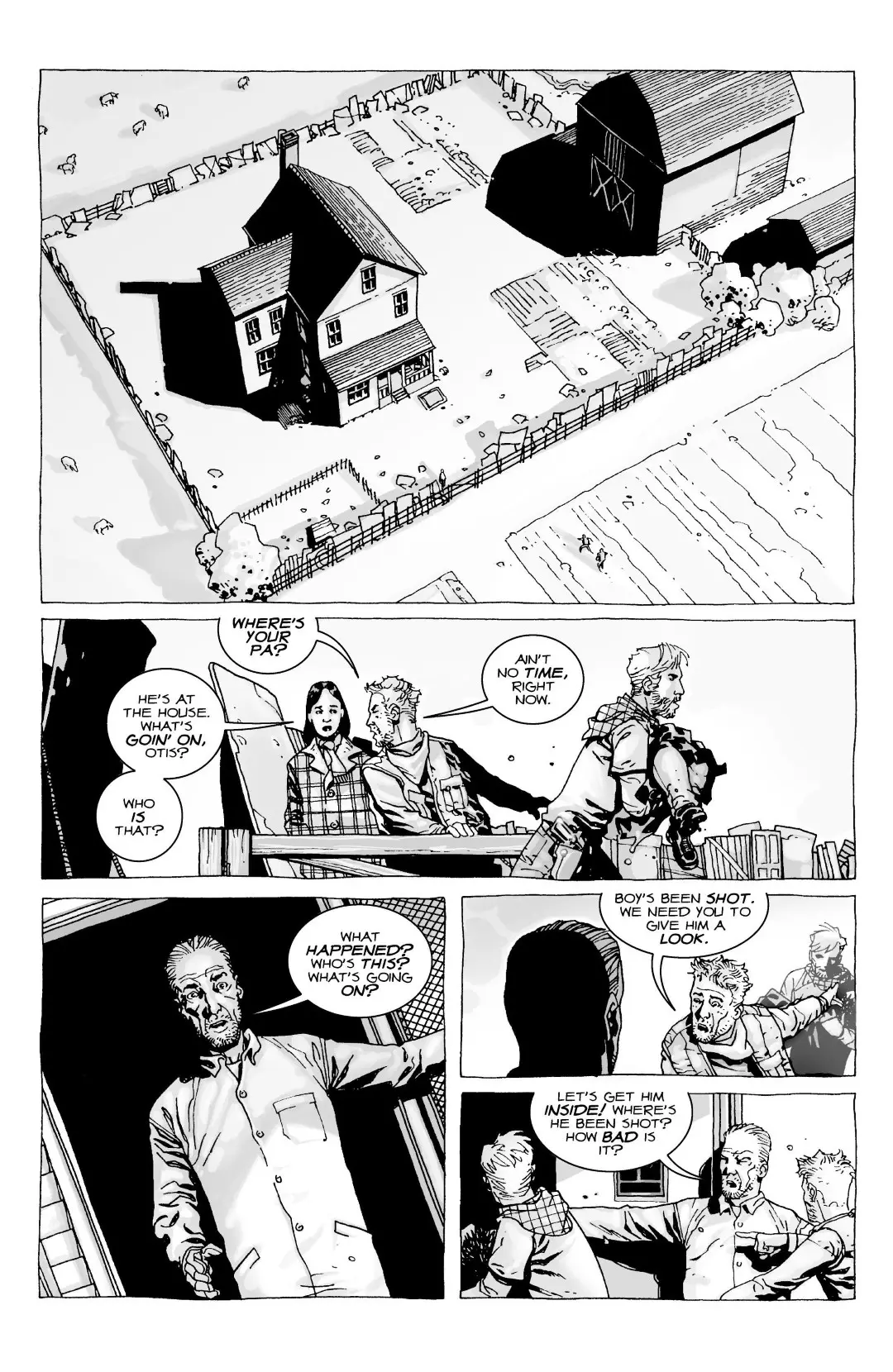
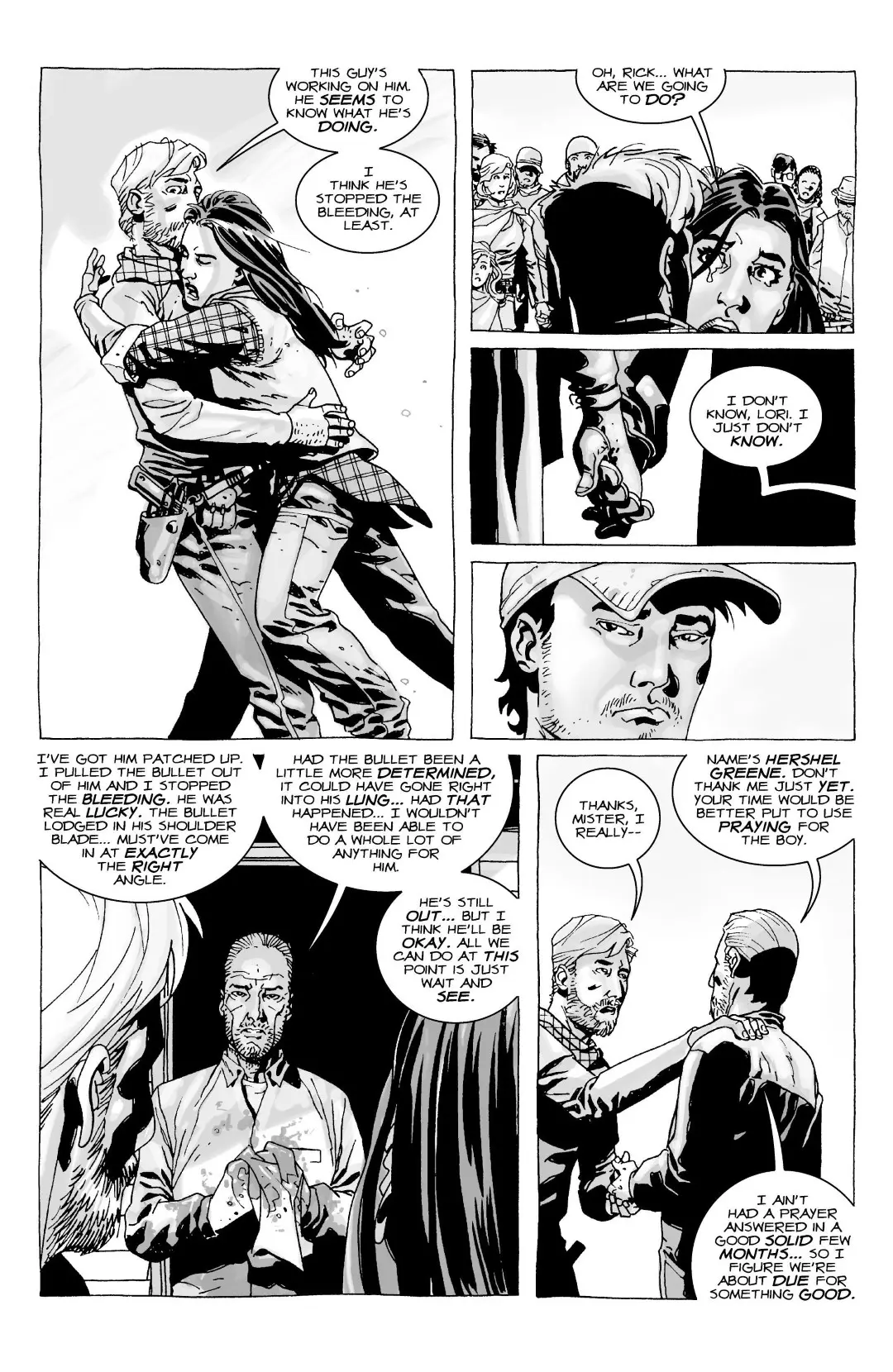
The primary mechanical driver of The Walking Dead Issue 10 (2004) centers on a high-stakes, low-light “Emergency Medical Triage, Surgical Stabilization, and Sanctuary Integration Loop.” Carrying his bleeding, comatose son through the snowbanks, Rick Grimes storms the main residential directory of the Greene family homestead. The tracking loops log a critical runtime spike inside the panel grids of The Walking Dead Issue 10 (2004) as the farmhouse patriarch, Hershel Greene, manual overrides his skepticism of outsiders to initialize an immediate, unpatched field surgery script, deploying his legacy veterinary and medical knowledge to extract the bullet fragments from Carl’s torso before the boy’s vital systems hit a permanent state of unbuffered deletion.
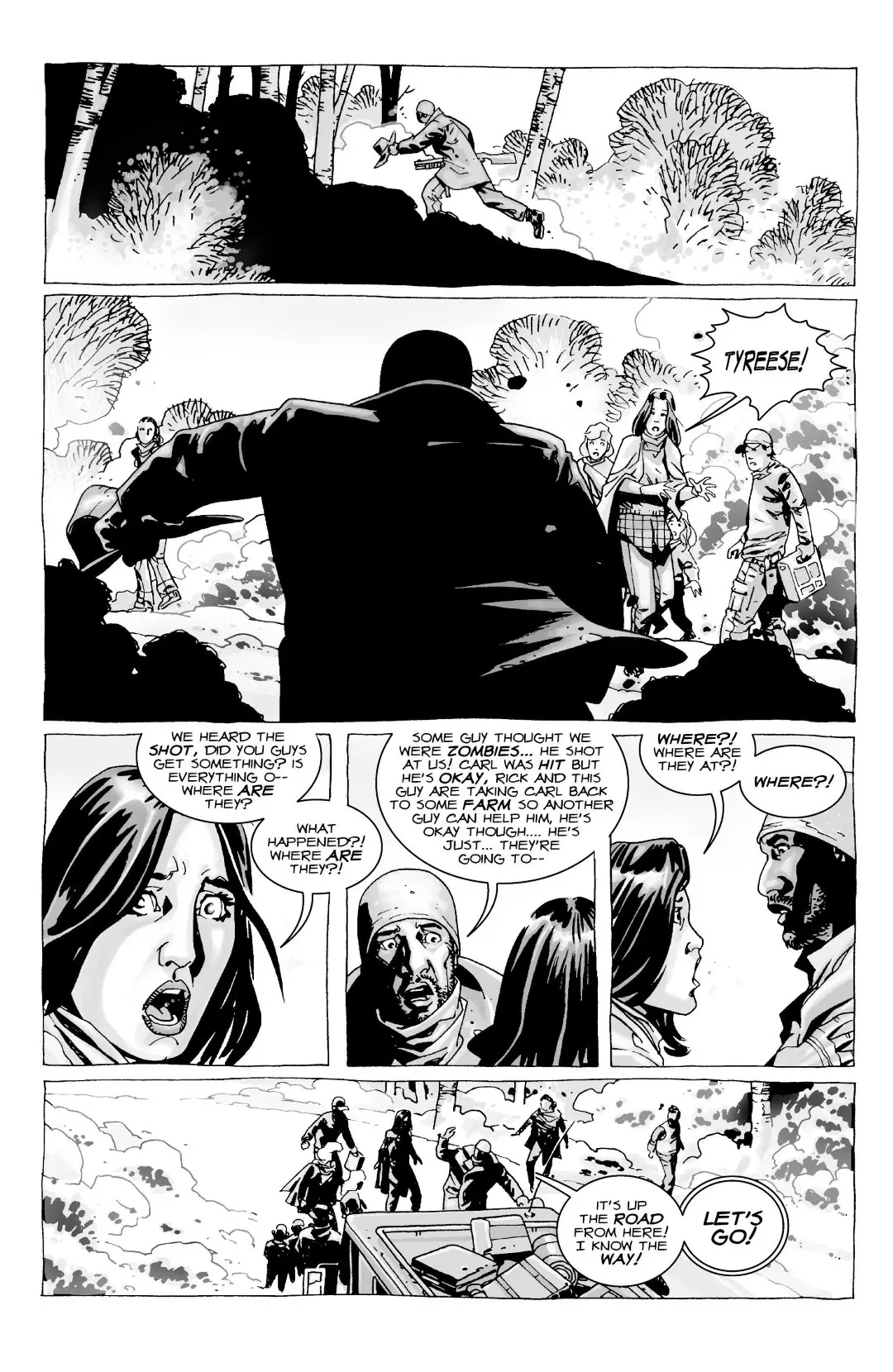
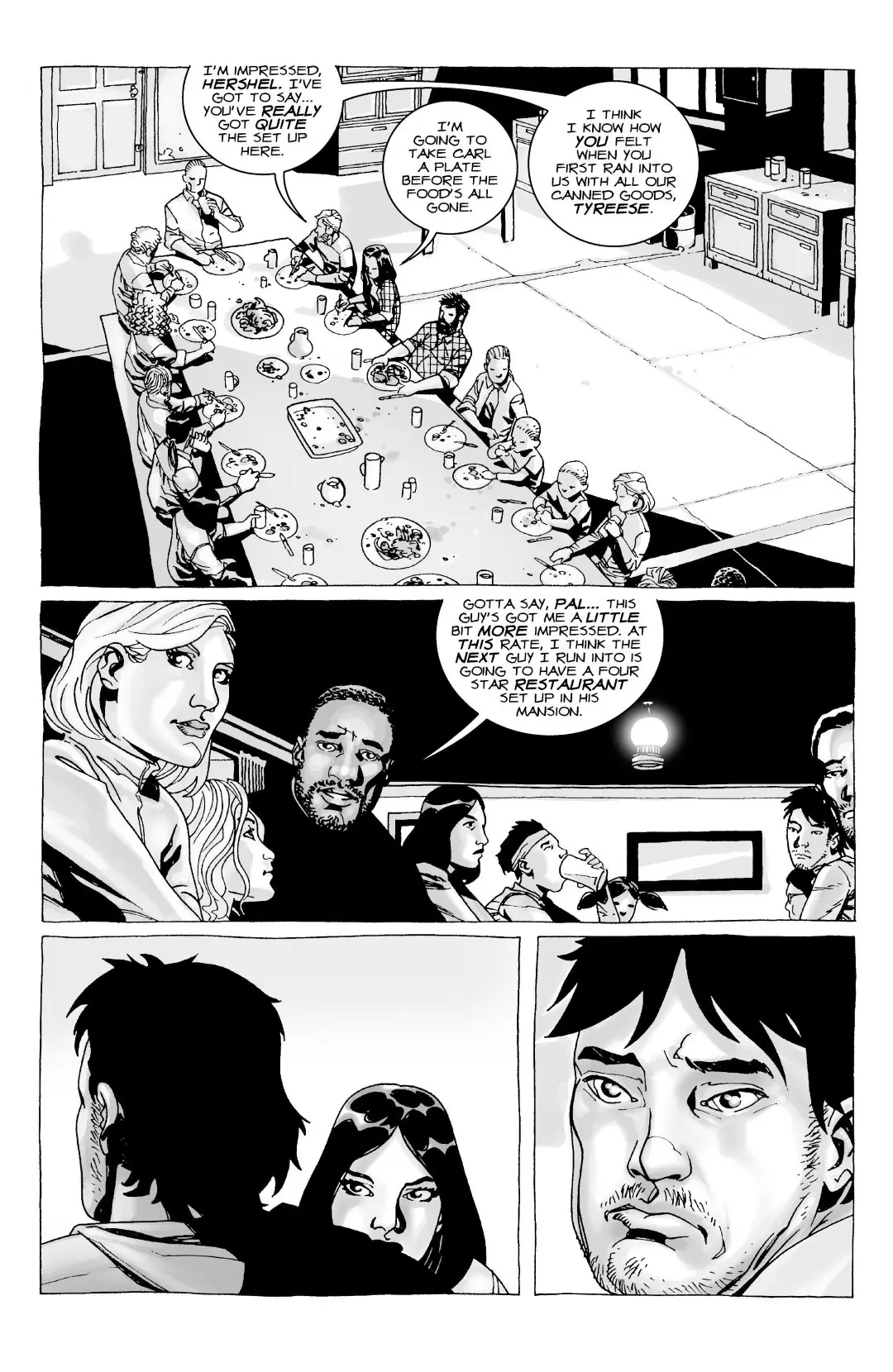
Transitioning from this high-pressure surgical theater to a display of “Tribal Consolidation and Strategic Resource Allocation,” the secondary tracking loops of The Walking Dead Issue 10 (2004) monitor the arrival of the remaining caravan assets. Escorted by Otis, Dale’s RV and the rest of the weary Atlanta survivors compile their coordinates on the farm’s lower pasture. The narrative panel grids track an intense validation sync as Rick’s group attempts to adapt to the farm’s highly unusual parameters; unlike the blood-soaked concrete ruins of Atlanta or the multi-front ambush loop of Wiltshire Estates, Hershel’s farm operates with working utilities, a livestock database, and a strict, domestic peacetime protocol that seems completely uncorrupted by the global system crash.
Imagine pacing across the polished hardwood floors of a warm, well-lit farmhouse living room in The Walking Dead Issue 10 (2004), your clothes still caked in the dried blood of your son and the grime of the open road, while a stern, deeply religious old man tells you that his land is safe because he follows a rigid code of isolation, your lawman instincts whispering that this beautiful sanctuary is running on a temporary safe buffer that cannot withstand the crushing weight of the surrounding apocalypse forever. This issue masterfully alters the strategic velocity and tone of the 2004 lore, proving that entering a fully functional, living homestead requires a leader to temporarily suppress his aggressive, street-level defensive algorithms to prevent a catastrophic ideological collision with the native administrators.
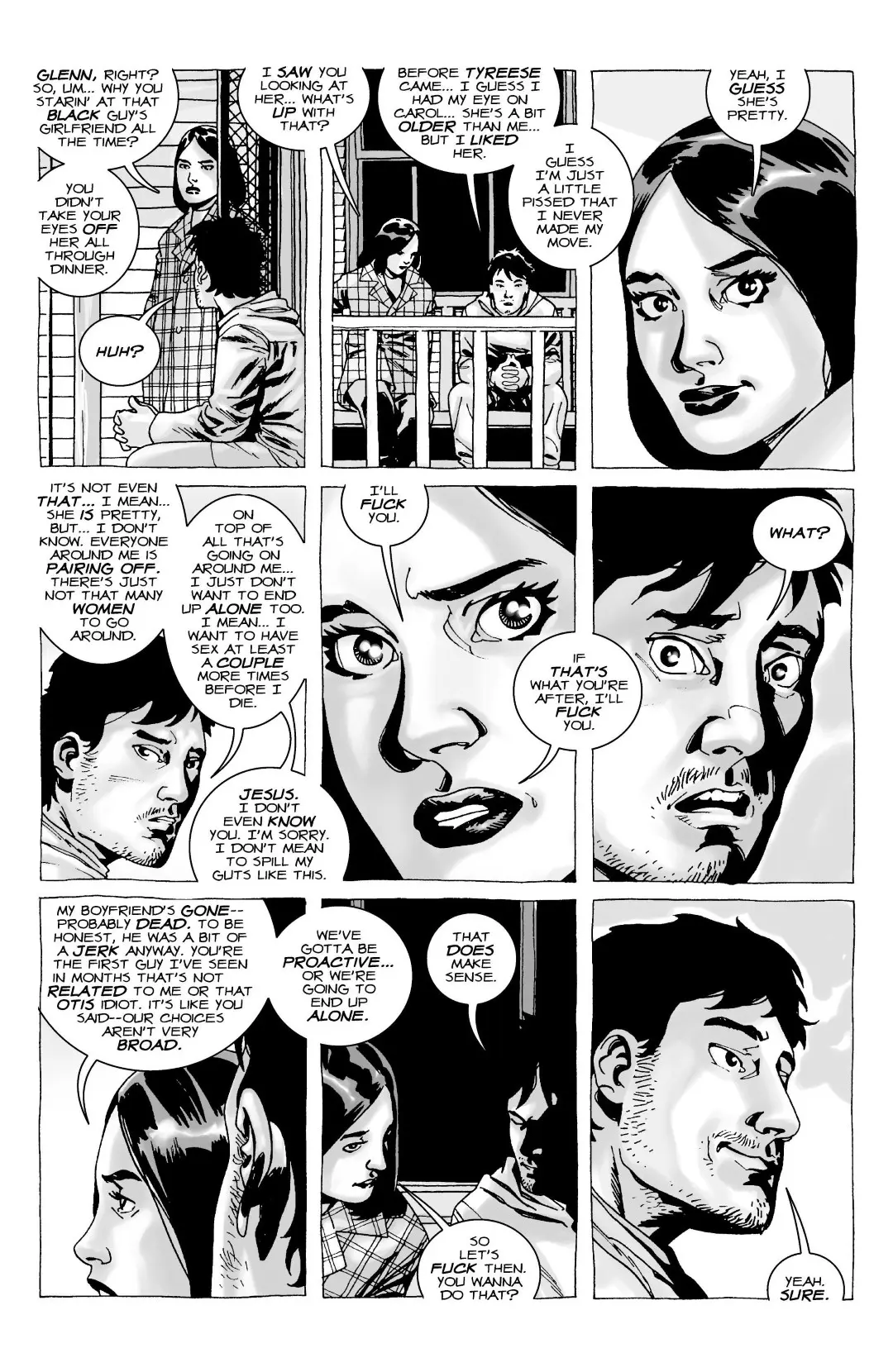
Meanwhile, deep-clearance internal diagnostics shift focus to the expanding relationship networks and hidden security anomalies compiling within the farm’s database. While Carl’s life registry slowly stabilizes following the successful surgical extraction, the auxiliary tracking loops log a rapid, high-frequency synchronization between Hershel’s daughter, Maggie Greene, and the nimble scouting asset, Glenn. This new interpersonal data link compiles amidst a backdrop of rising tension, as Hershel subtly reveals to Rick that their presence on the farm is governed by a strict temporary allowance script—hardcoding a countdown where, once Carl can travel, the nomad directory will be forcefully ejected back into the freezing wilderness.
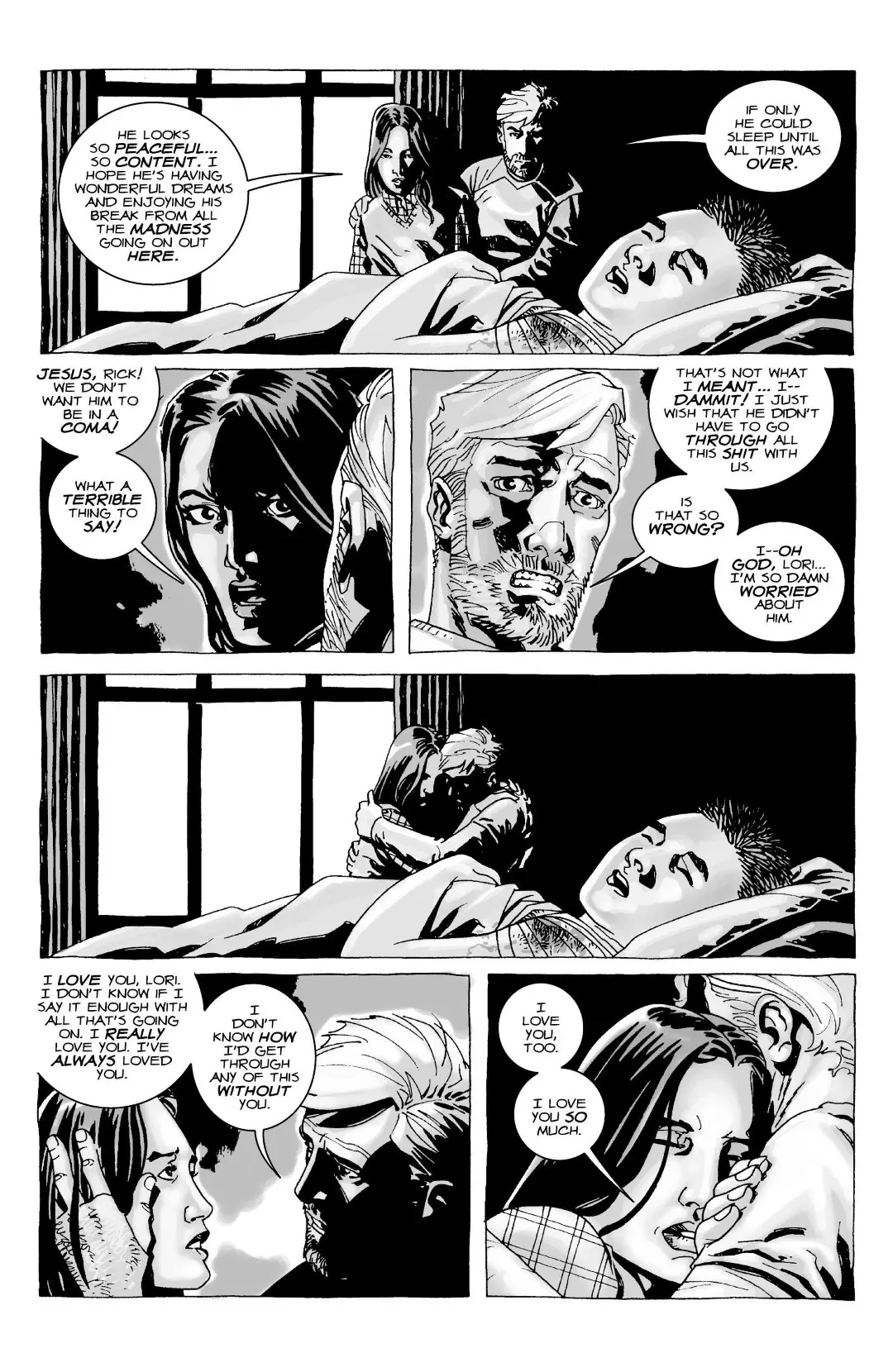
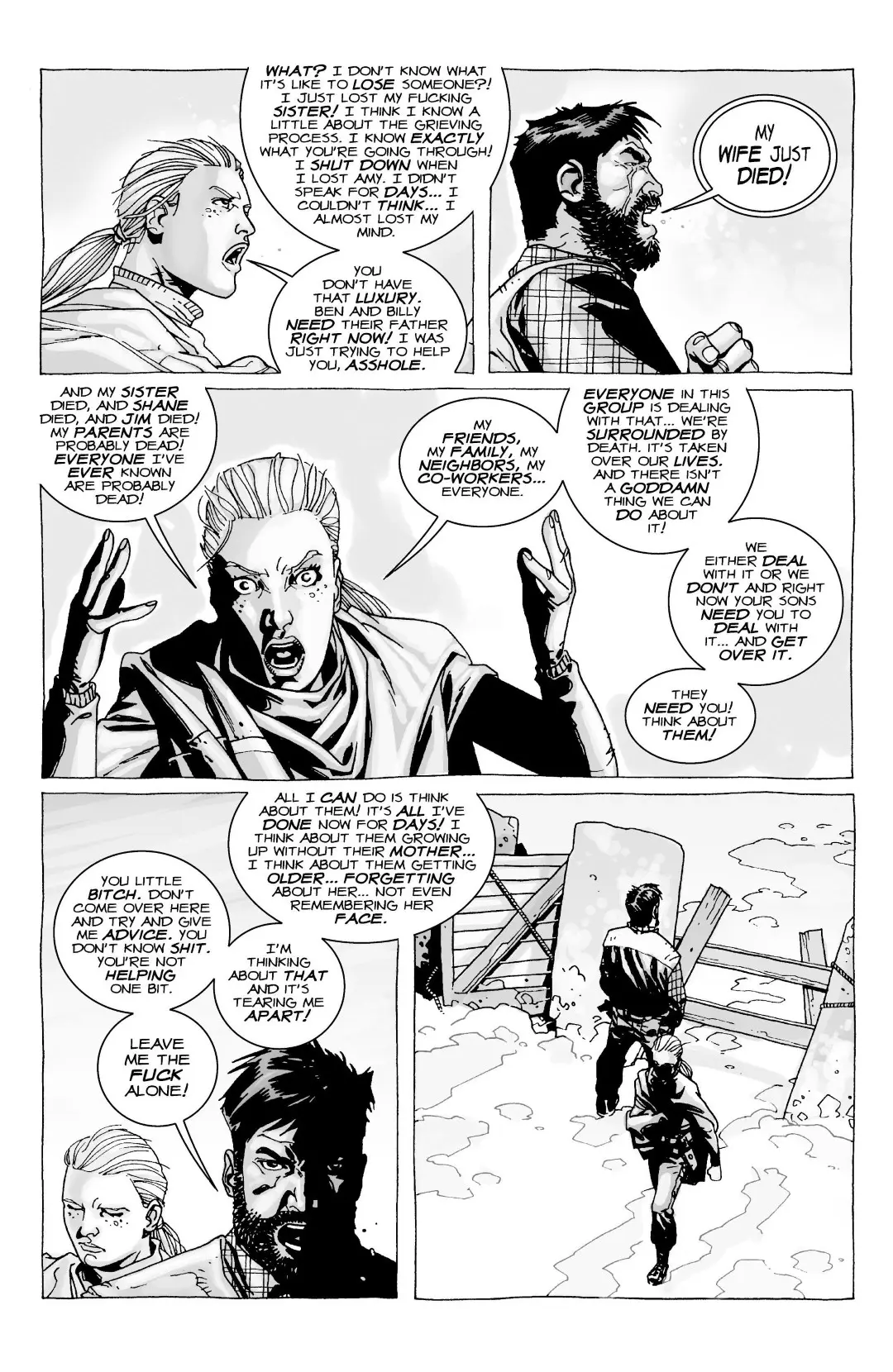
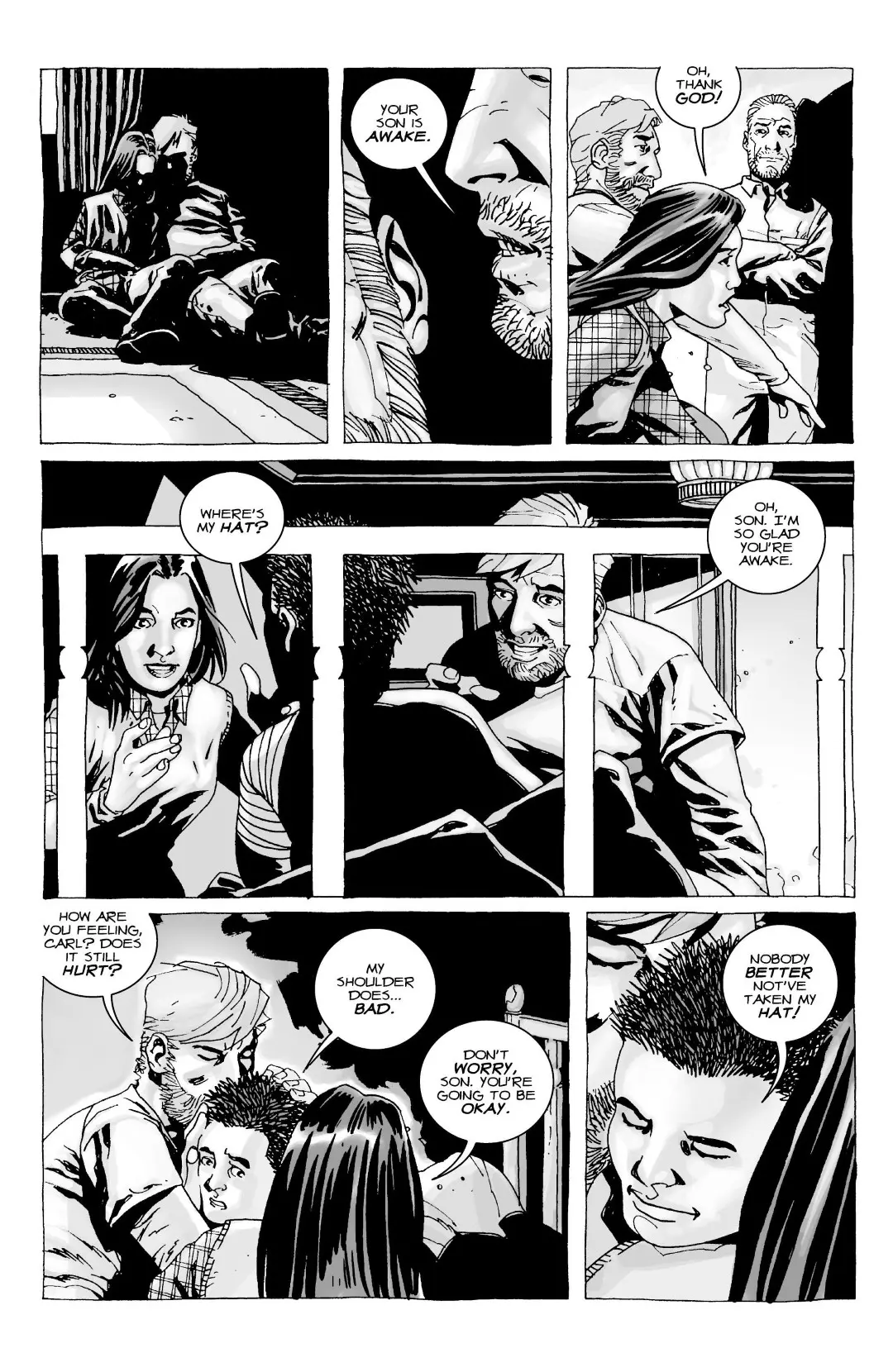
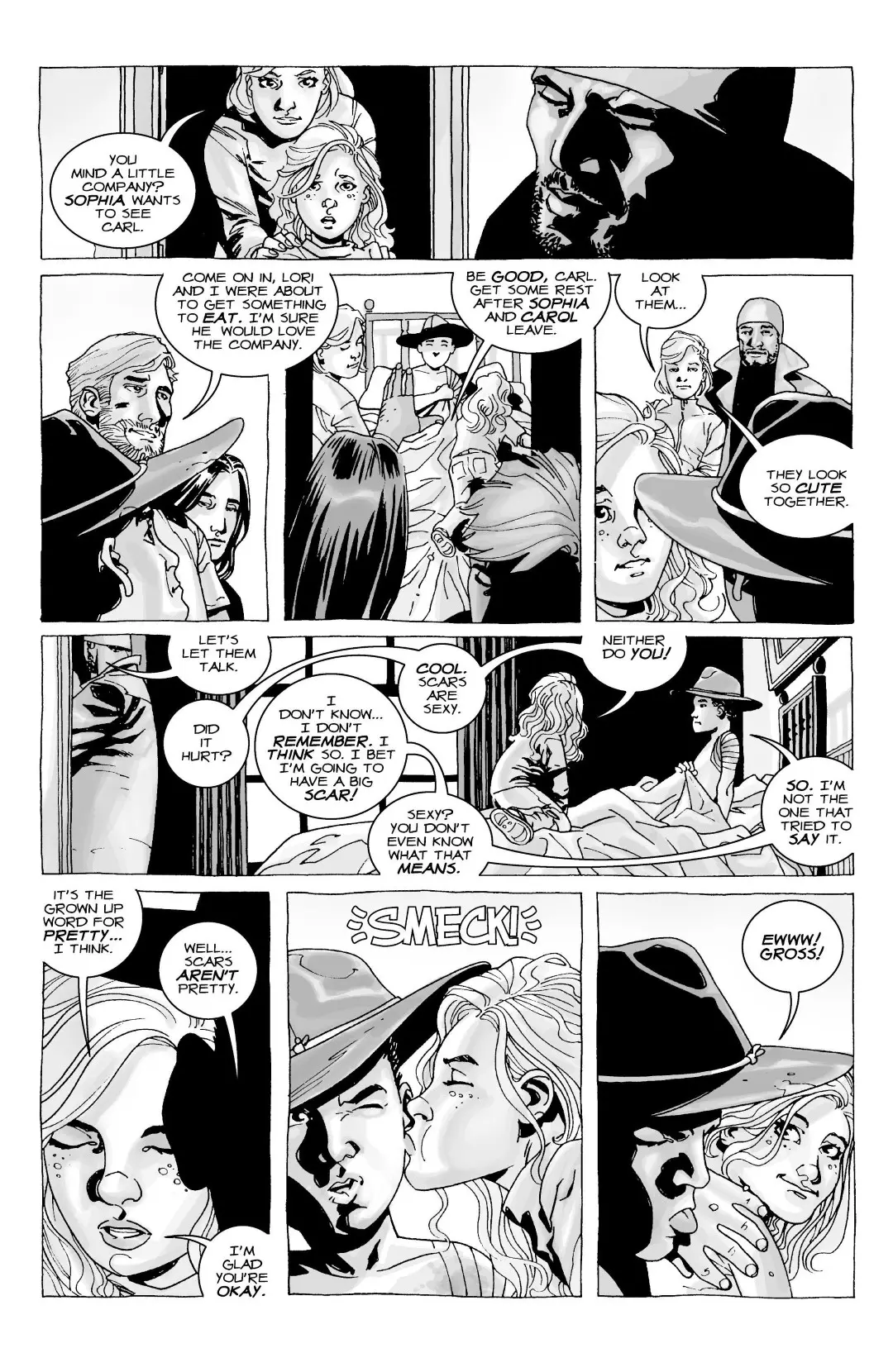
The artistic department delivers another absolute masterclass in gritty, high-contrast monochrome styling and hyper-expressive character framing throughout The Walking Dead Issue 10 (2004), with Charlie Adlard optimizing the visual real estate to capture the stark contrast between the weathered, battle-scarred outsiders and the clean, sheltered Greene family. The formatting flawlessly utilizes the black-and-white comic layouts inside The Walking Dead Issue 10 (2004), contrasting the tense, shadow-heavy environment of the makeshift operating room against the wide-open, deceptively peaceful vistas of the surrounding pastures. Adlard’s illustrations steer the reader’s eye straight into the heart of the psychological shifts, masterfully capturing the raw, tear-streaked exhaustion etching itself into Lori’s features, the calculating, unyielding authority lining Hershel’s posture, and the profound, chest-heaving relief of a father watching his son’s baseline heartbeat pulse back online.
The script hits its definitive terminal shutdown sequence as this tenth layer of the survival odyssey successfully archives, leaving the narrative codebase locked onto an irreversible, maximum-risk alert trajectory heading straight into the farm’s hidden internal secrets. Kirkman utilizes this high-voltage narrative milestone inside The Walking Dead Issue 10 (2004) to permanently clear out the immediate physical chase pacing, ensuring that the characters are safe for the moment but balanced on the absolute edge of a deep theological and tactical fracture. To trace the precise visual logs of this legendary independent print run before the farm’s darker subroutines expose themselves, fans consistently turn to the archived volumes of this historic era.
Examining the core components of this chapter, the narrative effectively transforms a medical rescue crisis into a launchpad for deep thematic conflict, proving that when the primary source files of an old world are fiercely preserved behind private firewalls, the arrival of unbuffered outsiders will inevitably trigger a system-wide security audit. With the tactical data files of The Walking Dead Issue 10 (2004) fully archived, Carl’s recovery script running smoothly, and the fragile peace of the farm operating at a tense, high-friction equilibrium, the volume terminates its runtime with the active monitoring arrays shifting from a dangerous crimson to a cautious, permanent yellow. The temporary preparation safe buffer has officially reset, the primary conflict vectors have cross-referenced, and the entire storytelling mainframe of The Walking Dead Issue 10 (2004) is quietly initializing the code for the next high-voltage deployment phase.
The Walking Dead Issue 10 (2004) Read Free Image Comics Online












Read Free Comics Online of all comics character on this website with very high-quality images on google free.



Leave a Reply