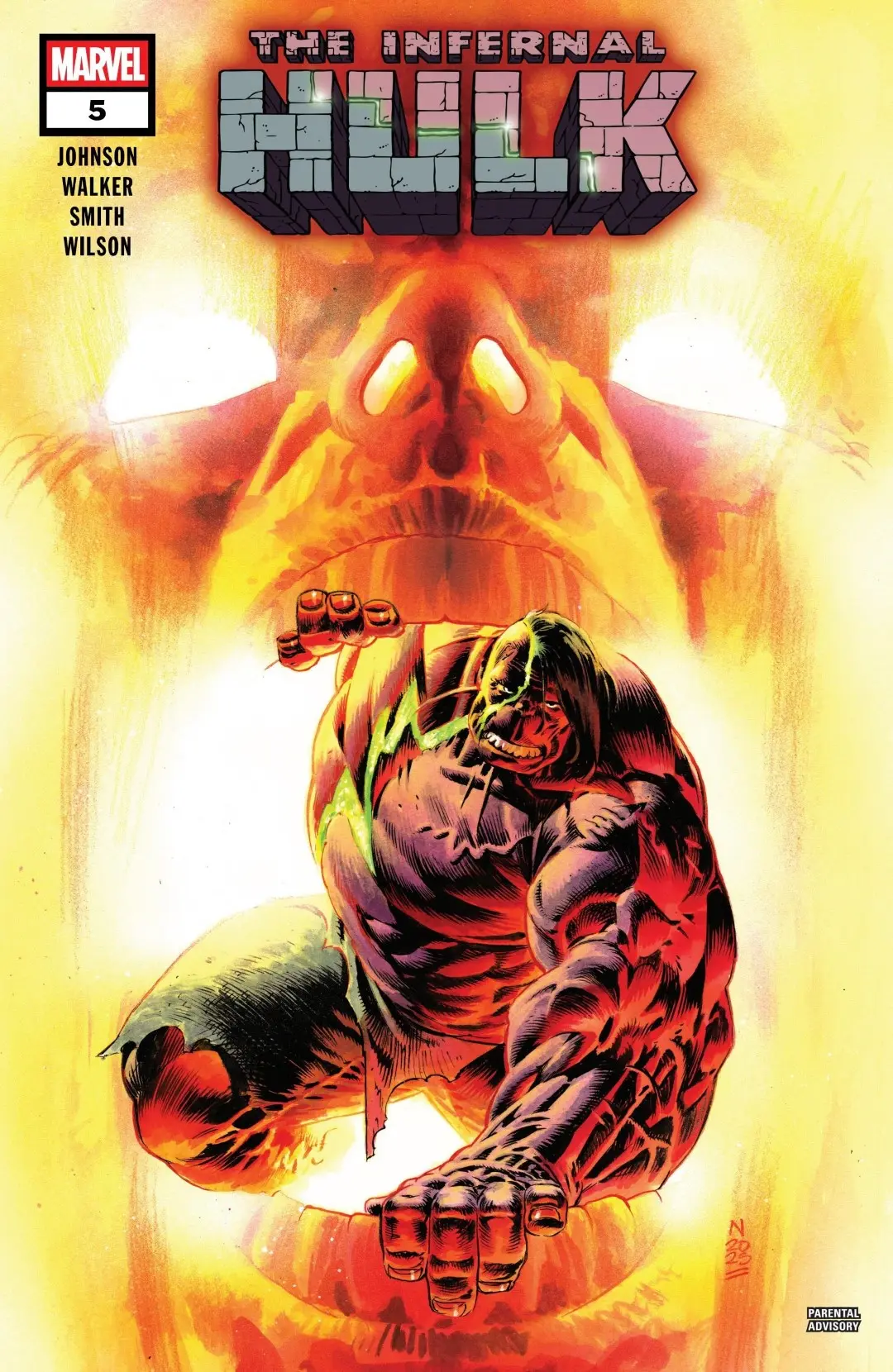
The Infernal Hulk Issue 5 (2026)
Publisher: Marvel
Read Free Comics Online of The Infernal Hulk Issue 5 (2026) Read Free Online with very high-quality images on google without any cost, Read Free Marvel comics online at Read Free comics Online.
Scroll down to read free comics online.
Read Previous Issue
The Infernal Hulk Issue 5 (2026) Read Free Marvel Comics Online
The question that haunts every version of Bruce Banner is deceptively simple: where does he end and the Hulk begins? For decades, comics have answered this question with varying degrees of complexity — sometimes treating the Hulk as pure id, sometimes as a separate personality, sometimes as a trauma response given gamma-irradiated flesh. The Infernal Hulk Issue 5 (2026) refuses all of these comfortable answers. It descends past every familiar framework into territory that is genuinely unsettling, a psychological horror story that uses the imagery of hell not as external spectacle but as internal landscape, and arrives at a conclusion so uncomfortable that readers who have followed Bruce Banner across years of comics will feel it differently than anything that came before. This is not the Hulk smashing. This is Bruce Banner finally being forced to look at what the smashing has always been about.
Where We Are — The Story So Far
The Infernal Hulk Issue 5 (2026) sits at the midpoint of a series that has systematically dismantled every defence Bruce Banner has ever constructed against his own psychology.
In The Infernal Hulk Issue 3 (2026), the transformation stopped being explosive and became ritualistic shadows crawling across Bruce’s skin before bones broke, the Hulk emerging less like a force of nature and more like something summoned.
In The Infernal Hulk Issue 4 (2026), the Ember Host introduced itself an entity claiming to predate Bruce’s gamma experiment entirely, something ancient that had simply been waiting for a vessel strong enough to contain it.
Doctor Strange attempted to intervene and found the infernal energy repelling every mystical approach he tried, a detail that establishes how far outside ordinary Marvel supernatural territory this series is operating.
By The Infernal Hulk Issue 5 (2026), the accumulation of these revelations has pushed Bruce to the edge of complete psychological collapse. He is no longer certain that the Hulk is something that happened to him. He is beginning to suspect that the Hulk is something he always was, waiting for the right catastrophe to crack him open and let it out.
The Opening — A Room Between Real and Construct
The Infernal Hulk Issue 5 (2026) opens in a room that refuses to confirm its own existence. Bruce Banner sits in a space whose walls bleed into shadows that move with deliberate purpose.
The visual choices establish from the very first page that reality is no longer reliable here perspectives shift without warning, colors hover at the edge of hellish without quite confirming it, the geometry of the room suggests interiority rather than location. This is not a place Bruce has been brought to. This is a place he has become.
The question the issue establishes in these opening pages and carries through every subsequent scene is whether hell is somewhere you go or something you carry inside yourself from the very beginning.
It is a question with no comfortable answer, and the issue is wise enough not to reach for one prematurely.
Instead it descends, level by level, into the architecture of Bruce’s guilt and self-deception, using the structure of a classical underworld journey Dante guided by Virgil, Orpheus seeking Eurydice but stripping away the companionship.
This is Bruce Banner descending alone, without guide, without comfort, into a hell that was built specifically around the dimensions of his particular failures.
The Descent — Identity Dissolving Layer by Layer
The narrative structure of The Infernal Hulk Issue 5 (2026) unfolds as a descent through layers of denial. Each level strips away another comfortable story Bruce has told himself about the separation between man and monster.
The first layer is the most familiar the argument that the Hulk is a curse inflicted upon him, something external, something that happened to Bruce Banner rather than something Bruce Banner contains.
This argument dissolves almost immediately because the issue refuses to let Bruce construct it without simultaneously showing how flimsy its foundations have always been.
The second layer is more painful the argument that the Hulk’s rage is not Bruce’s rage, that the destruction is not Bruce’s destruction, that the people hurt in the rampages were hurt by something other than the man who sits in this room looking at his hands.
The visual storytelling makes this argument impossible to sustain. Panels split and fracture as Bruce’s consciousness fragments, images of the Hulk bleeding into images of his own face until the boundary between them is not merely blurred but gone.
The artist renders this dissolution with a specificity that goes beyond illustration into genuine psychological portraiture. This is what a mind looks like when it can no longer maintain the fictions it has built to survive.
The third layer, and the deepest one The Infernal Hulk Issue 5 (2026) reaches, is the possibility raised by the Ember Host in Issue 4 and now given full weight: that gamma radiation did not create the Hulk but simply opened a door that was always there, waiting.
That Bruce Banner before the accident already contained the rage, the violence, the capacity for destruction that the Hulk expresses. That the experiment did not make him a monster — it made his monstrousness impossible to ignore.
The Supporting Cast as Psychological Projection
The people who appear in The Infernal Hulk Issue 5 (2026) are not visiting Bruce from outside. They are projections of his psyche, figures from his past appearing in forms that reveal how he truly sees them rather than how they actually are.
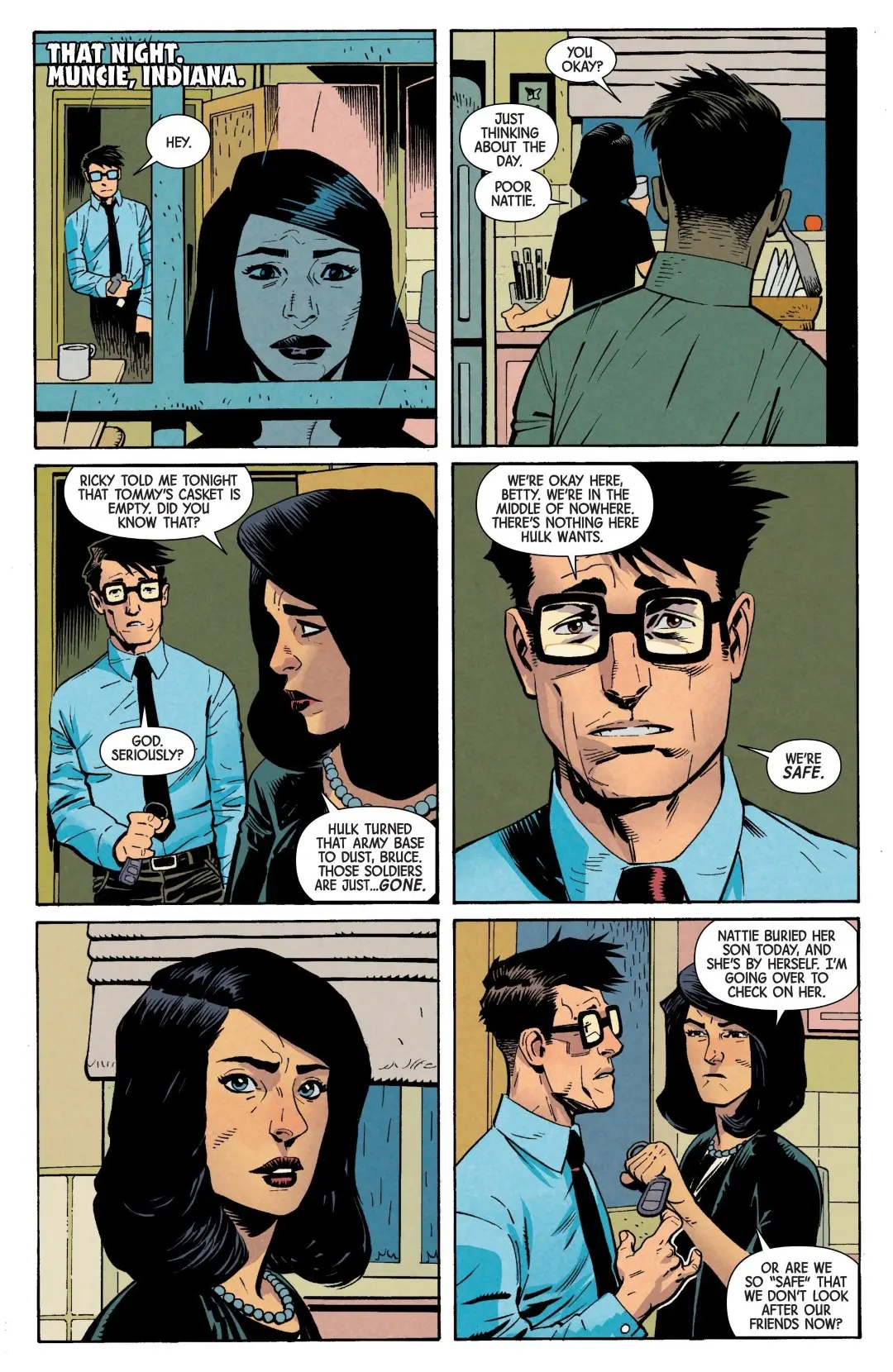
Betty Ross manifests not as love but as accusation her presence a reminder not of what they shared but of what his monster cost them both, the specific texture of a relationship destroyed not by circumstance but by something Bruce carried inside him all along. The grief of this manifestation is not that Betty is angry. It is that she is right.
General Ross appears as demonic warden, externalised judgement given military bearing and bureaucratic authority. But the issue makes clear that the Ross-as-warden projection is Bruce’s own judgement wearing his father figure’s face the accusation coming from inside the house, as it always has.
Even characters who might offer help appear twisted by Bruce’s perception into obstacles or threats, because a mind at war with itself cannot receive help without first transforming it into something it already knows how to fight.
This psychological architecture is the most sophisticated character work the Hulk has received in years, and it connects directly to the tradition of psychological horror storytelling that the best Marvel comics have always been capable of.
Readers who want to compare this level of psychological depth should explore Doctor Strange for another Marvel hero navigating the space between identity and power, and The Punisher for the darkest version of what happens when a man decides his worst impulses are actually justice.
The Art — Hell as Interior Architecture
The visual identity of The Infernal Hulk Issue 5 (2026) is its greatest achievement. The hellish imagery is never decorative every visual choice communicates something specific about the psychological state it is representing.
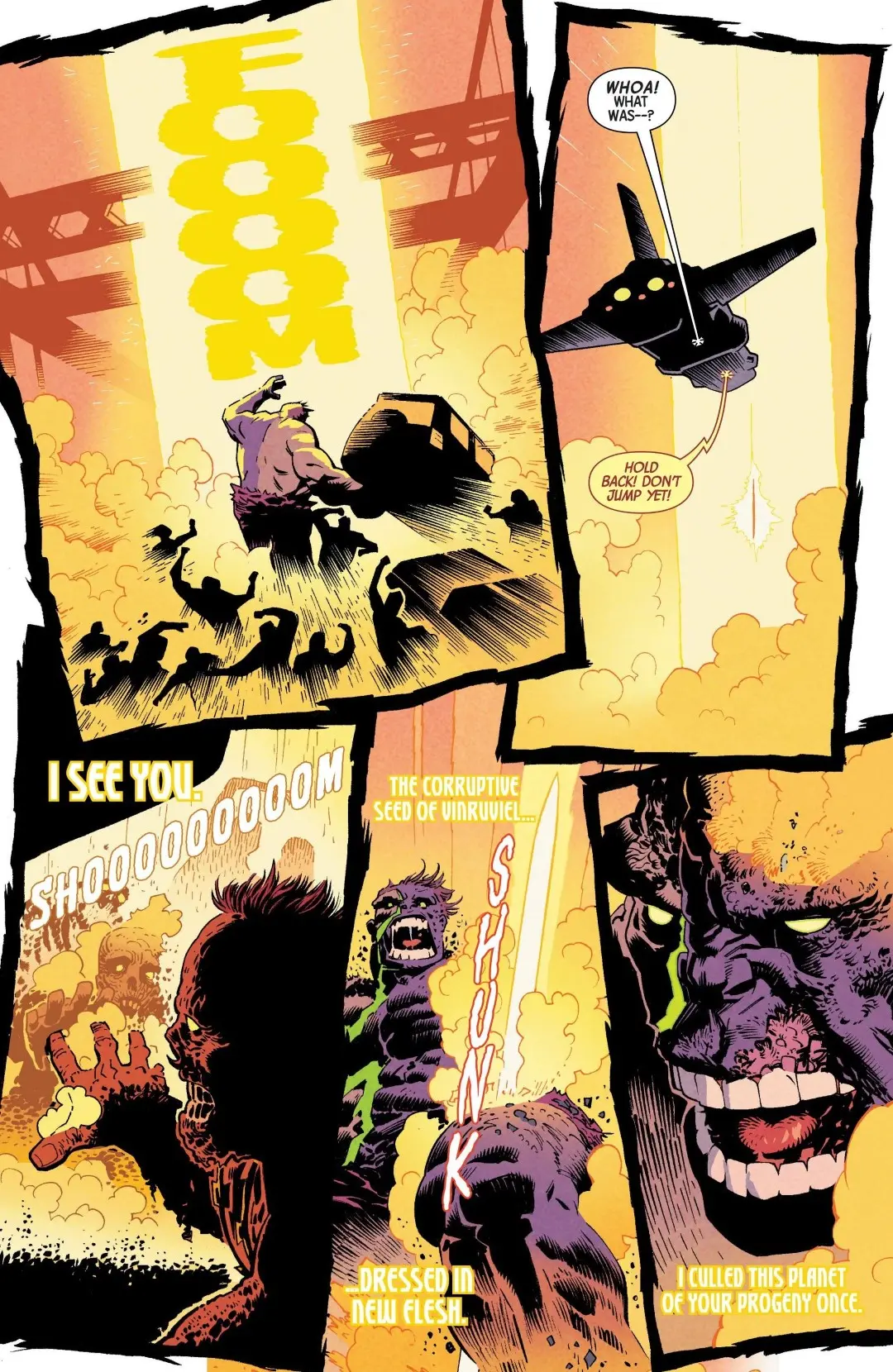
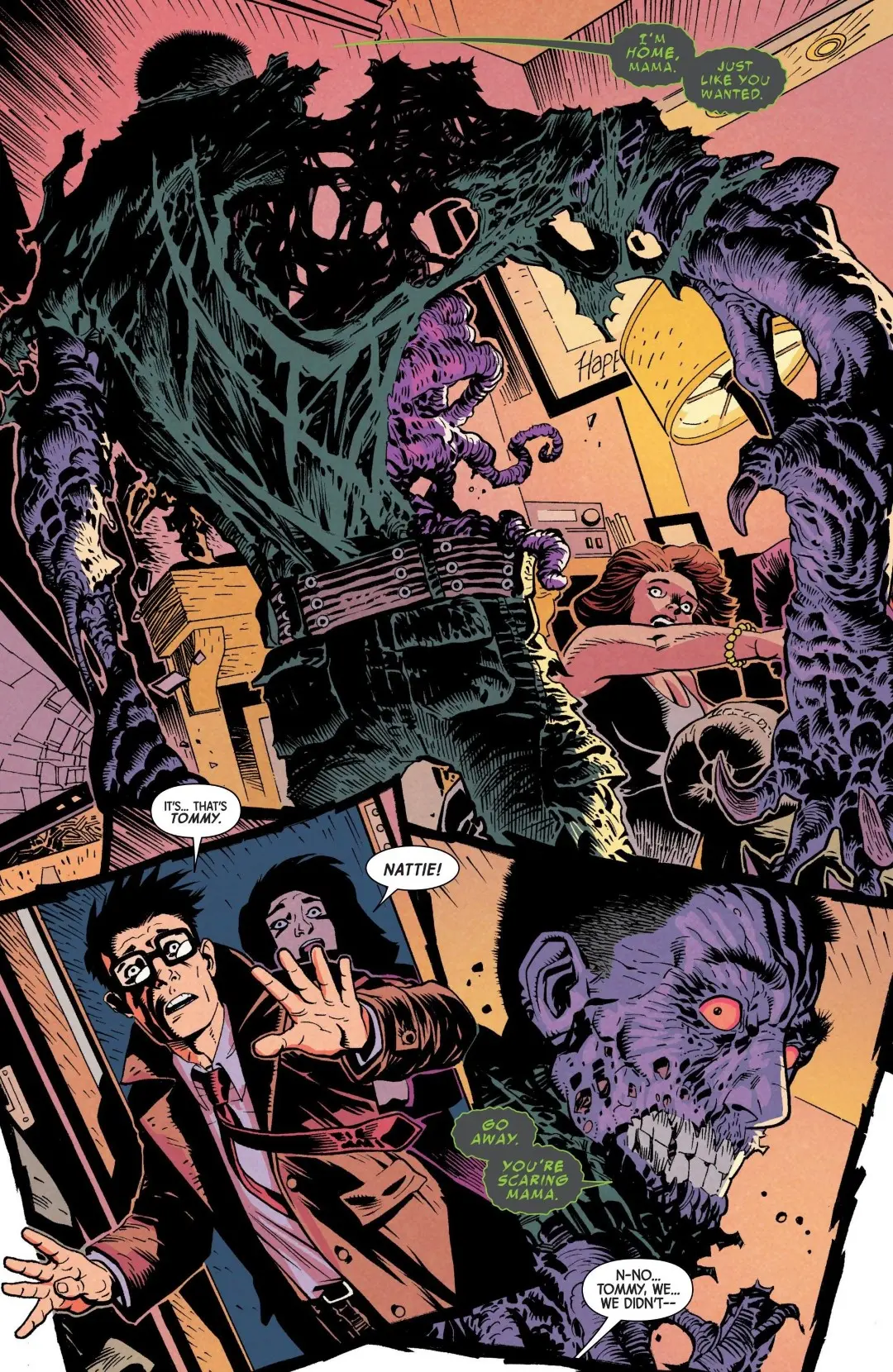
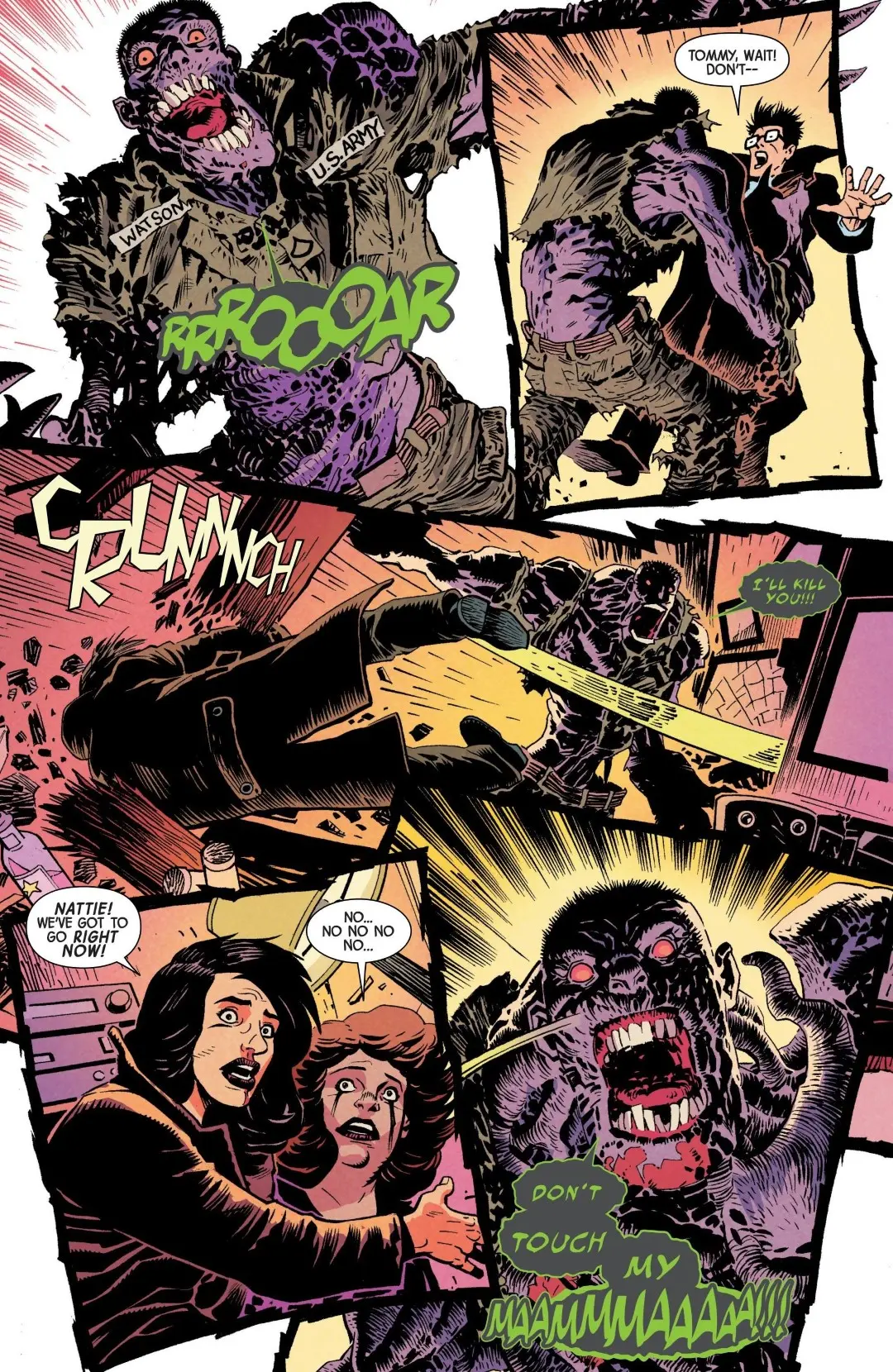
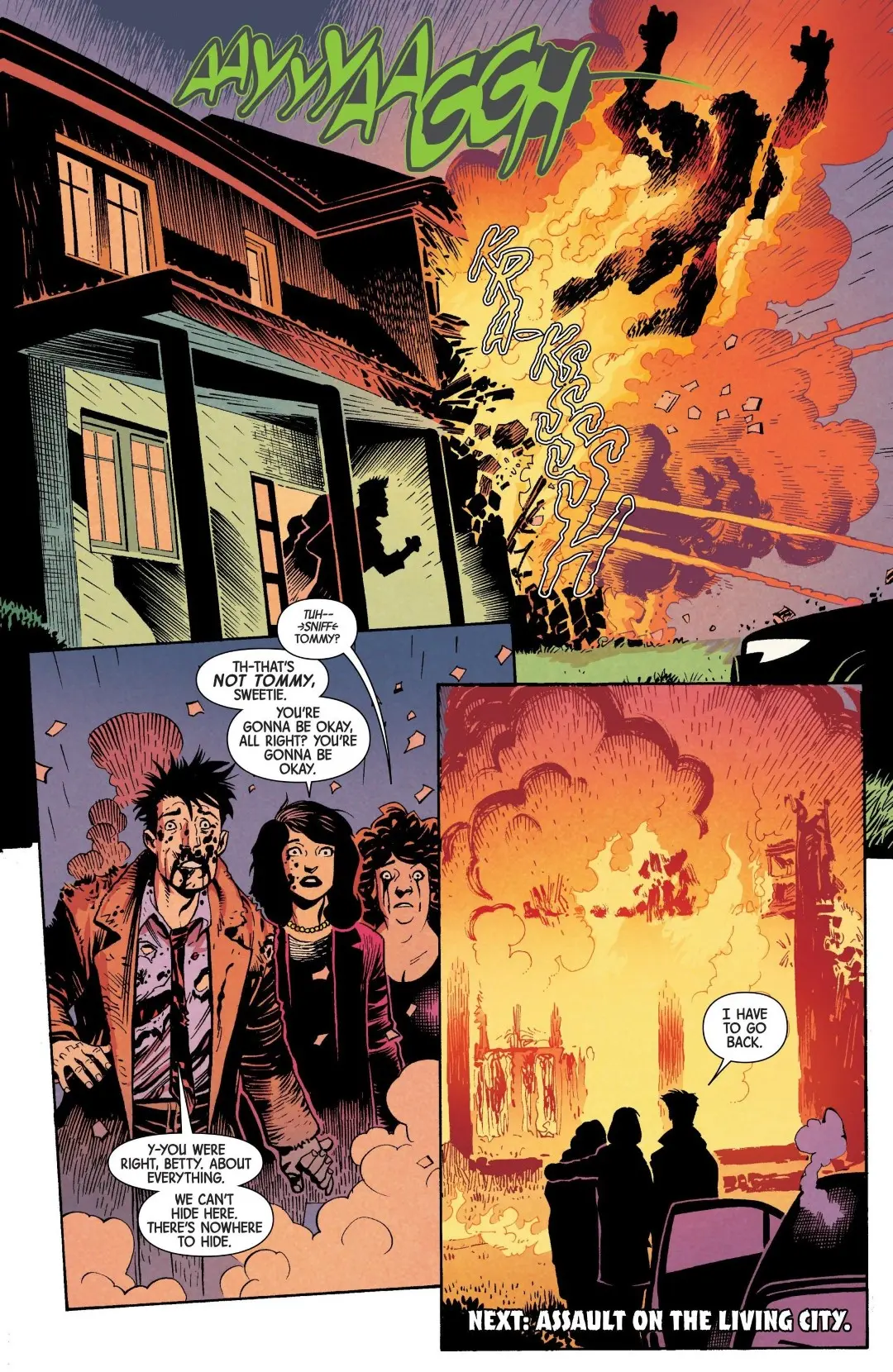
Fires appear not as external threats but as internal temperatures, the heat of shame and self-knowledge rather than damnation from outside. Demons represent aspects of self rather than genuine supernatural entities.
The palette of deep reds and sickly greens that has run through the series finds its most concentrated expression in this issue, the colors communicating a kind of psychological nausea, the visual equivalent of a mind that has been staring too long at things it would rather not see.
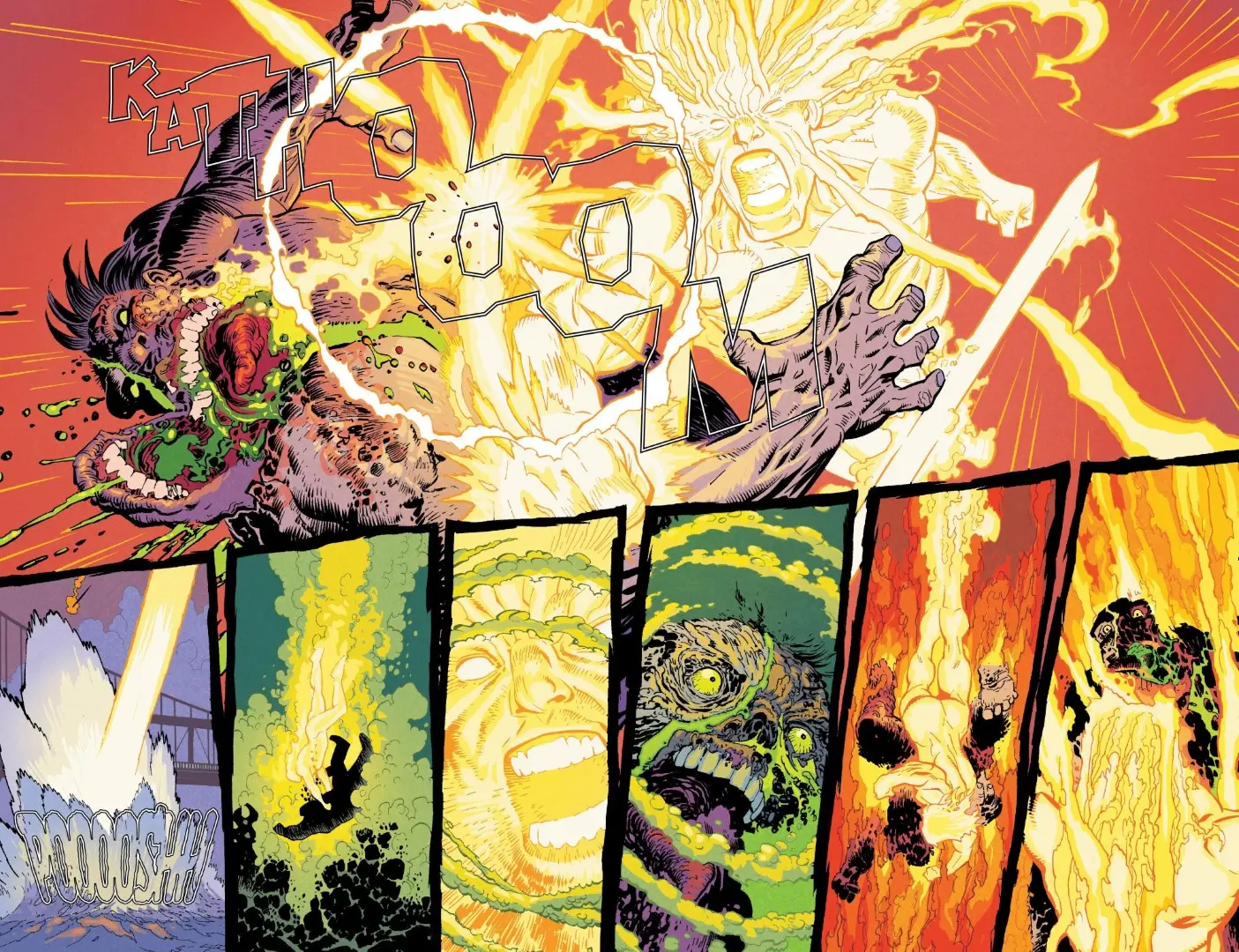
The sequence where panels split to show Bruce and the Hulk simultaneously is the visual centrepiece of The Infernal Hulk Issue 5 (2026) and one of the finest pages of Hulk art published in recent memory.
The dissolution of the boundary between the two faces the man and the monster happens gradually across the page, each panel pushing the merger one step further until the final image refuses to distinguish between them at all.
It is a visual argument made without a single word of dialogue, and it is more persuasive than anything the script could have written in that space.
What This Issue Means for the Series
The Infernal Hulk Issue 5 (2026) is the issue that the entire series has been building toward, and it earns every dark moment it delivers. By pushing Bruce Banner past the comfortable fictions that most Hulk stories allow him to maintain, it opens up territory for The Infernal Hulk Issue 6 (2026) that would not have been available without this descent.
The confrontation with the Infernal Hulk the corrupted version of himself that Issue 6 will force Bruce to face means something different after reading this issue, because we now understand that the confrontation is not between Bruce and an external force but between Bruce and the version of himself he has spent his entire life refusing to acknowledge.
The series as a whole belongs in conversation with the best psychological superhero storytelling in Marvel’s history alongside the Demon in a Bottle arc from Iron Man for its treatment of self-destruction as identity crisis, and alongside the darkest Daredevil runs for its willingness to let a hero face the possibility that the darkness he fights exists inside him as much as outside.
Readers who want the full psychological horror experience should read the series from The Infernal Hulk Issue 3 through the current run, then continue to The Infernal Hulk Issue 6 where the confrontation this issue makes inevitable finally arrives.
Read the Full Infernal Hulk Series Free
The complete Infernal Hulk series is available free in HD on Read Free Comics Online. Start with Issue 3 to follow the psychological descent from its beginning, continue through Issue 4 and this issue, then move immediately to Issue 6 the confrontation this issue has earned.
For more of Marvel’s darkest psychological storytelling, explore Doctor Strange, Iron Man, and the complete Marvel Comics library — all free, all in HD, no signup required.
Bruce Banner has been running from himself since 1962. The Infernal Hulk Issue 5 (2026) is the issue where he finally stops running. Read it free, right now, and find out what was waiting for him when he did.
The Infernal Hulk Issue 5 (2026) Read Free Online











Read Free Comics Online of all comics character on this website with very high-quality images on google free.

Leave a Reply