Civil War: Front Line Issue 1 (2006)
Publisher: Marvel
Read Free Comics Online of Civil War: Front Line Issue 1 (2006) Read Free Online with very high-quality images on google without any cost, Read Free Marvel comics online at Read Free comics Online.
Scroll down to read free comics online.
Civil War: Front Line Issue 1 (2006) Read Free Marvel Comics Online
The superhero civil war that tore the Marvel Universe apart was defined by its spectacle, the battles between former allies, the ideological clash between Iron Man and Captain America, the shifting allegiances that left readers breathless. Yet amidst the chaos, one series dared to ask what all of this meant for ordinary people, for the journalists trying to report the truth, for the citizens caught between titans. Civil War: Front Line Issue 1 (2006) arrived as the first chapter of a series that would provide the ground-level perspective essential to understanding the event’s full impact. As we at Read Free Comics Online revisit this pivotal debut, we discover that the creative team understood something fundamental about conflict: that the battles making headlines are only half the story, and that the real cost is measured not in super-powered punches but in human lives torn apart.
The opening pages of Civil War: Front Line Issue 1 (2006) establish a tone of journalistic urgency that will persist throughout the entire series. Ben Urich, the veteran reporter who has covered superheroes longer than most heroes have worn masks, stands in the newsroom of the Daily Bugle, watching the world change. The artist captures the chaos of a breaking story, phones ringing, editors shouting, the frantic energy of journalists trying to make sense of events that defy sense. Yet amidst the noise, Civil War: Front Line Issue 1 (2006) finds its focus in the quiet determination of a man who has spent his career chasing truth, now faced with the most dangerous story of his life.
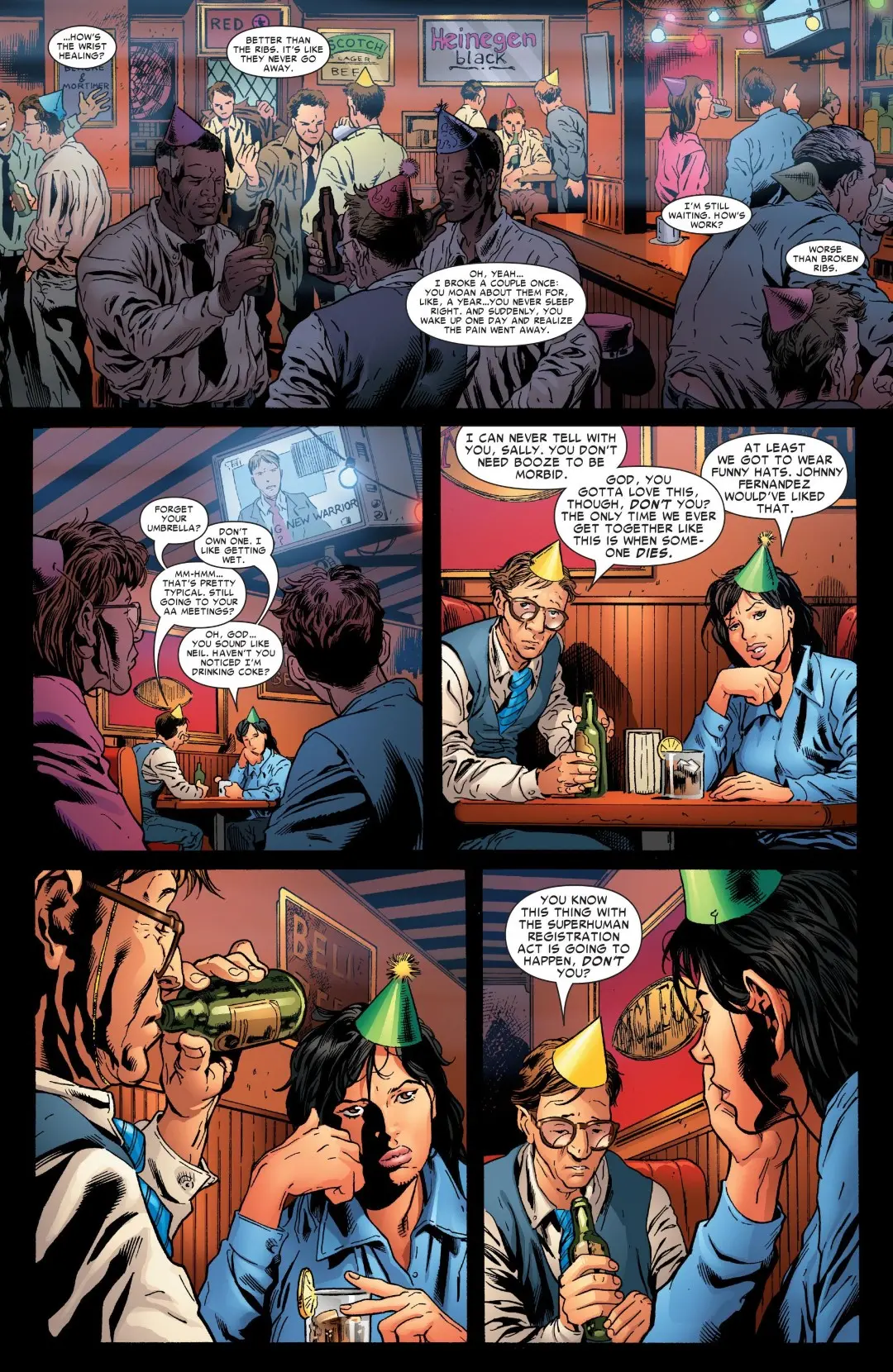
The narrative structure of Civil War: Front Line Issue 1 (2006) unfolds through the dual perspectives of Urich and a new character, Sally Floyd, a blogger and columnist who represents the changing face of journalism. Where Urich brings decades of experience and the institutional weight of the Bugle, Sally brings the raw, unfiltered voice of the internet, the passion of someone who believes that the truth matters even when no one wants to hear it. Their partnership in Civil War: Front Line Issue 1 (2006) becomes the engine that drives the series, two reporters from different generations trying to navigate a story that could get them killed.
The theme of truth runs through Civil War: Front Line Issue 1 (2006) like a current that cannot be stopped, connecting every scene to the question of what journalism means when sides are drawn and facts become weapons. The Superhuman Registration Act has divided the hero community, but it has also divided the public, and Civil War: Front Line Issue 1 (2006) shows how quickly the idea of objective reporting can be overwhelmed by the demand for partisanship. Urich and Floyd find themselves pressured to choose sides, to frame their reporting in ways that serve one faction or another, and their refusal to do so makes them targets for everyone.
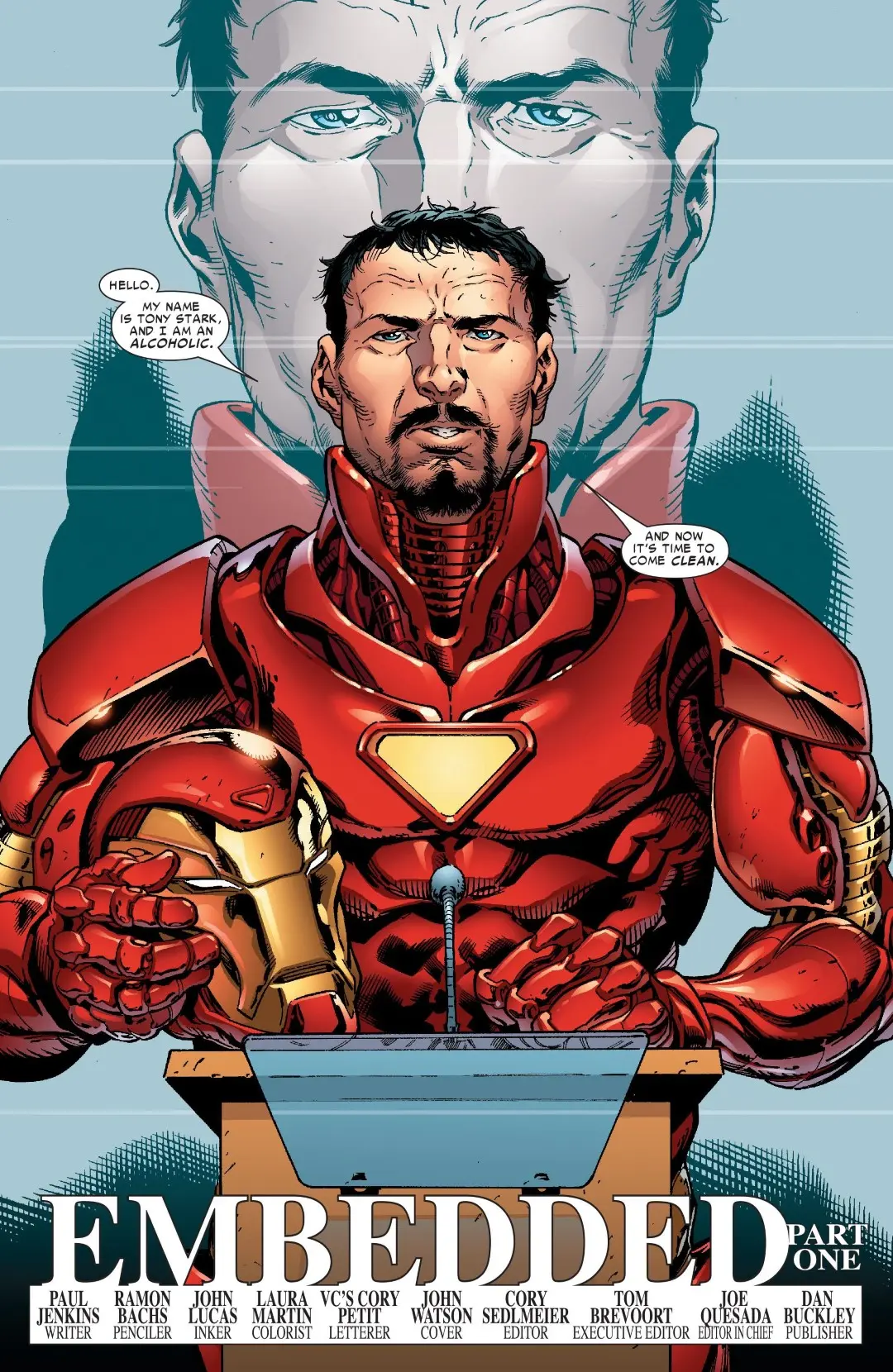
The visual storytelling in Civil War: Front Line Issue 1 (2006) reaches remarkable heights in its depiction of the media landscape during crisis. Splash pages show newsrooms transformed into war rooms, televisions tuned to competing channels, the constant scroll of information that obscures as much as it reveals. The artist captures the chaos of the story’s immediate aftermath, but also finds moments of quiet intimacy, the close-up on Urich’s face as he realizes the scale of what he is covering, the tension in Floyd’s hands as she types her first column. In Civil War: Front Line Issue 1 (2006) , the visual language of journalism becomes the language of the story itself.
The supporting cast in Civil War: Front Line Issue 1 (2006) includes the familiar faces of the Daily Bugle newsroom, J. Jonah Jameson railing against Spider-Man even as the world changes around him, the young reporters who will shape the next generation of journalism. Yet the issue also introduces ordinary citizens whose lives have been upended by the Superhuman Registration Act, people who never asked to be part of a war but find themselves in its path. These characters in Civil War: Front Line Issue 1 (2006) remind readers that the conflict between heroes is not just about ideology but about the people caught in the middle.
The philosophical heart of Civil War: Front Line Issue 1 (2006) grapples with questions about whether journalism can survive when truth itself becomes a casualty. Urich has spent his life believing that facts matter, that the truth will set you free, that reporting is a sacred trust. Yet Civil War: Front Line Issue 1 (2006) forces him to confront the possibility that in war, truth is the first casualty, and that even the most dedicated reporter may be powerless against forces that want the truth buried.
The middle section of Civil War: Front Line Issue 1 (2006) features extended sequence where Urich and Floyd must decide whether to publish information that could damage one side or another, knowing that their choice could have consequences far beyond their own safety. This moment in the issue captures the impossible position of journalists in wartime, the knowledge that every word you write becomes ammunition for someone, that neutrality is itself a choice, that the pursuit of truth may require abandoning the illusion of objectivity.
The theme of legacy receives powerful examination in Civil War: Front Line Issue 1 (2006) through Urich’s memories of covering stories that shaped his career, the lives he documented, the secrets he kept, the truths he told. He carries the weight of decades of reporting, the knowledge that some stories are worth dying for, and some are worth living with forever. Civil War: Front Line Issue 1 (2006) asks whether the journalism he has practiced his entire life is adequate for the moment he now faces, or whether the rules must change when the world itself is changing.
The final pages of Civil War: Front Line Issue 1 (2006) offer not resolution but the beginning of a long and dangerous journey. Urich and Floyd commit to telling the story regardless of the cost, to being witnesses when everyone else is choosing sides. The closing image captures them standing together, two reporters against a world that would prefer they remain silent, ready to do what journalists have always done, ask questions, seek truth, bear witness.
In conclusion, Civil War: Front Line Issue 1 (2006) stands as essential companion to the main Civil War event, providing the perspective that transforms spectacle into story. It asks whether journalism can survive when truth becomes a casualty, whether reporters can remain neutral when neutrality itself is a choice, what it means to bear witness when the world demands you choose sides. For readers who followed the Civil War as it unfolded, this issue offered the grounding that made the event matter. For those discovering it now, Civil War: Front Line Issue 1 (2006) provides entry into one of Marvel’s most ambitious storytelling experiments, a series that understood that the biggest stories are not about the battles but about the people who refuse to stop asking why. Read Free Comics Online recommends this issue to anyone who believes that the best superhero stories are ultimately about the world they protect, about the ordinary people who live in the shadow of giants, about the journalists who refuse to let their stories go untold.
Civil War: Front Line Issue 1 (2006) Read Free Online






Read Free Comics Online of all comics character on this website with very high-quality images on google free.
Leave a Reply