Publisher: Marvel
Read Free Comics Online of Doom 2099 Issue 36 (1995) Read Free Online with very high-quality images on google without any cost, Read Free Marvel comics online at Read Free comics Online.
Scroll down to read free comics online.
Read Previous Issue | Doom 2099 Issue 35 (1995)
Read Next Issue | Doom 2099 Issue 37 (1996)
Doom 2099 Issue 36 (1995) Read Free Marvel Comics Online
Doom 2099 Issue 36 (1995): The Shockriding Begins
Published: December 1995
Author: Warren Ellis
Artist: Steve Pugh
Inker: Scott Koblish
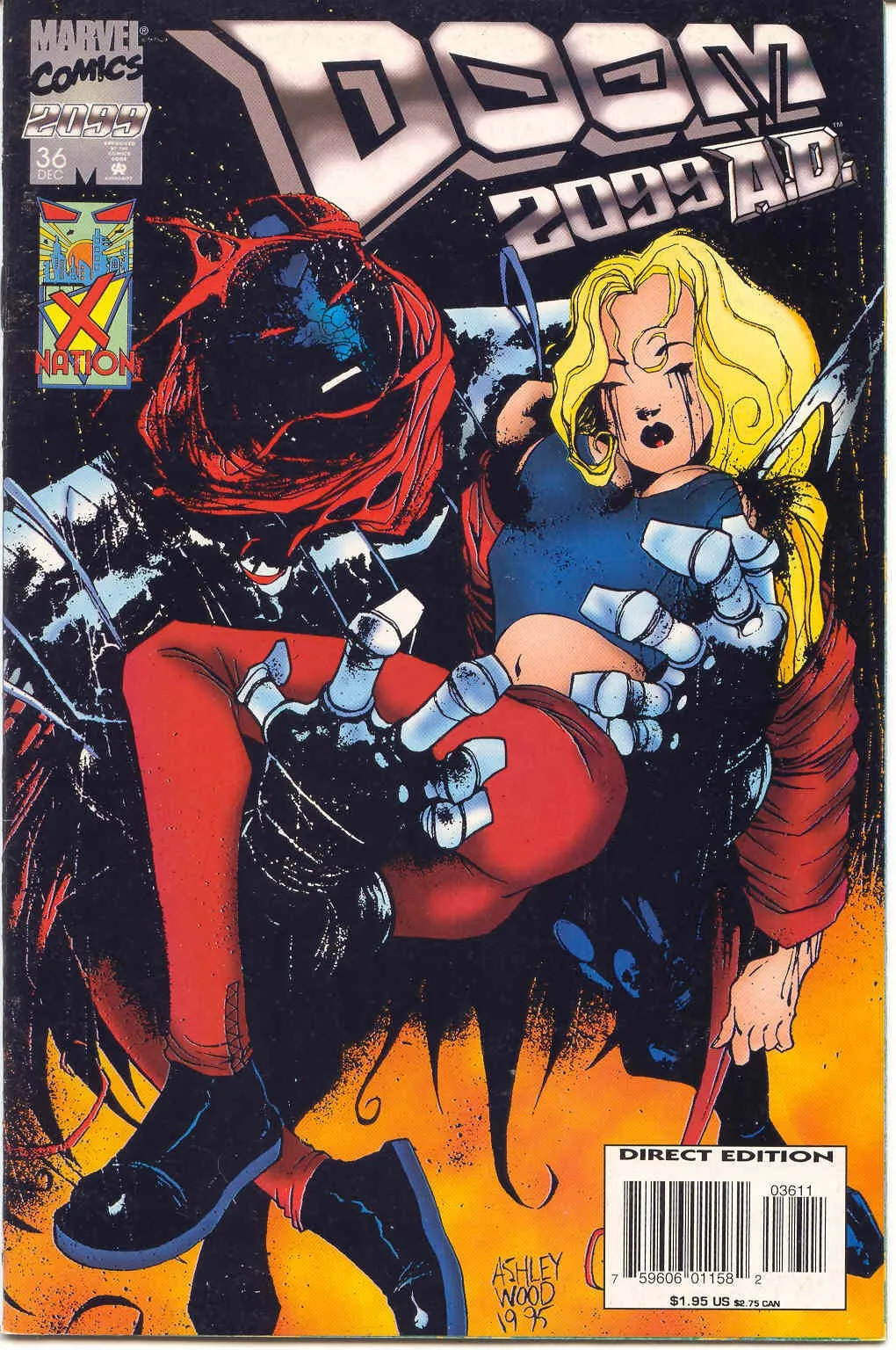
Cover Artist: Ashley Wood
Colorist: Megan McDowell
Letterer: John Costanza
Editor: Joey Cavalieri, Bobbie Chase
Publisher: Marvel Comics
The Desperate Gambit
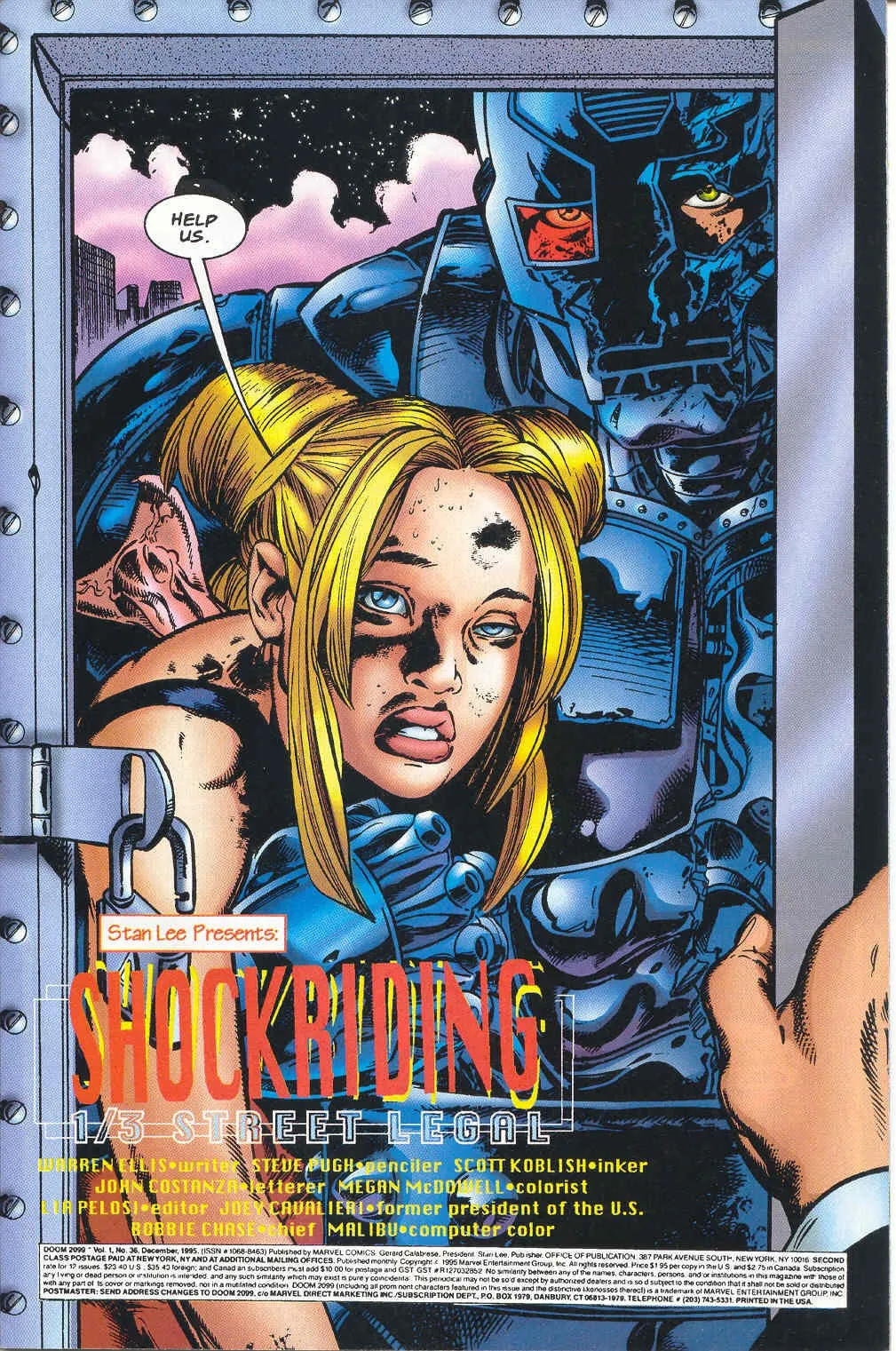
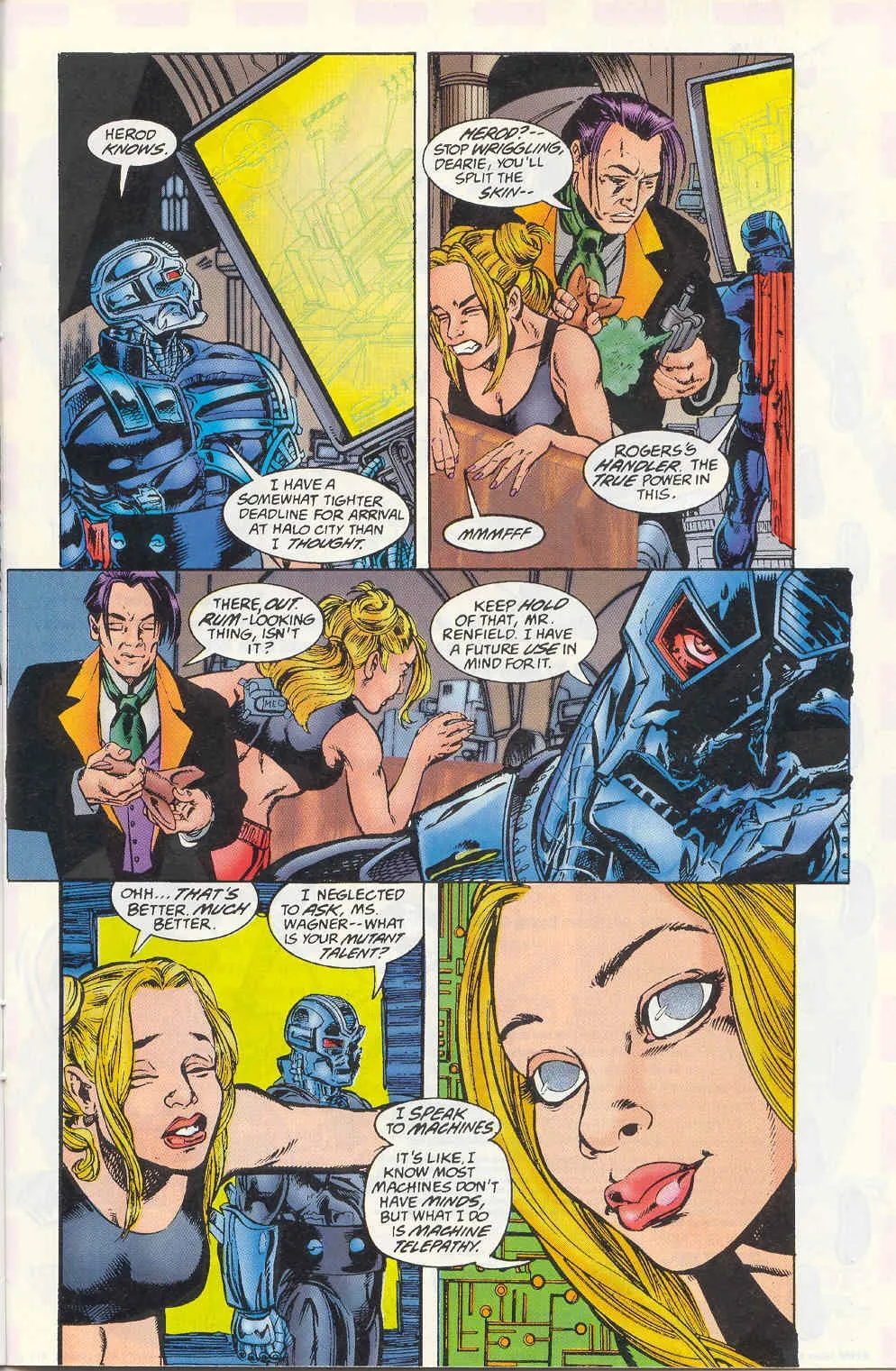
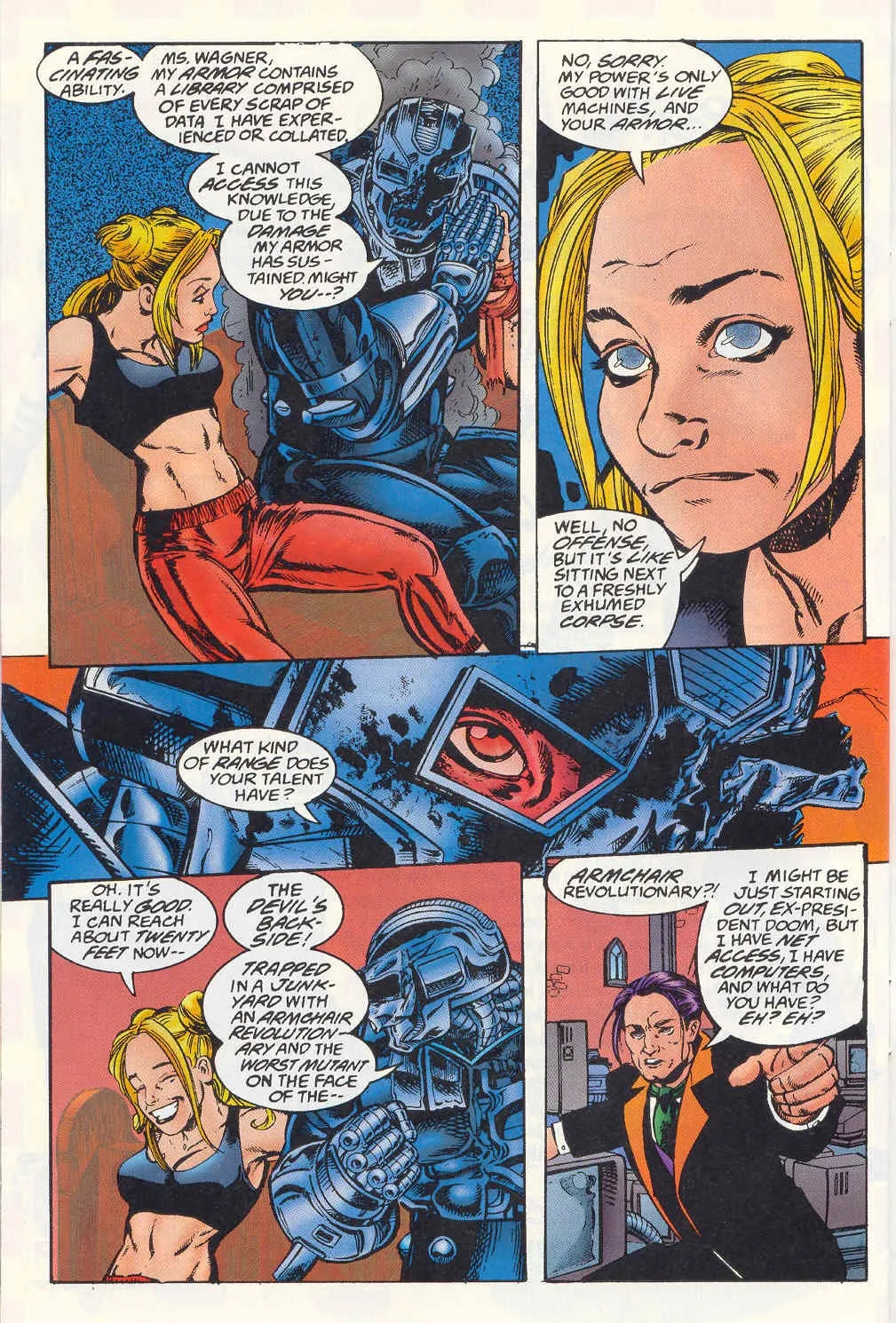
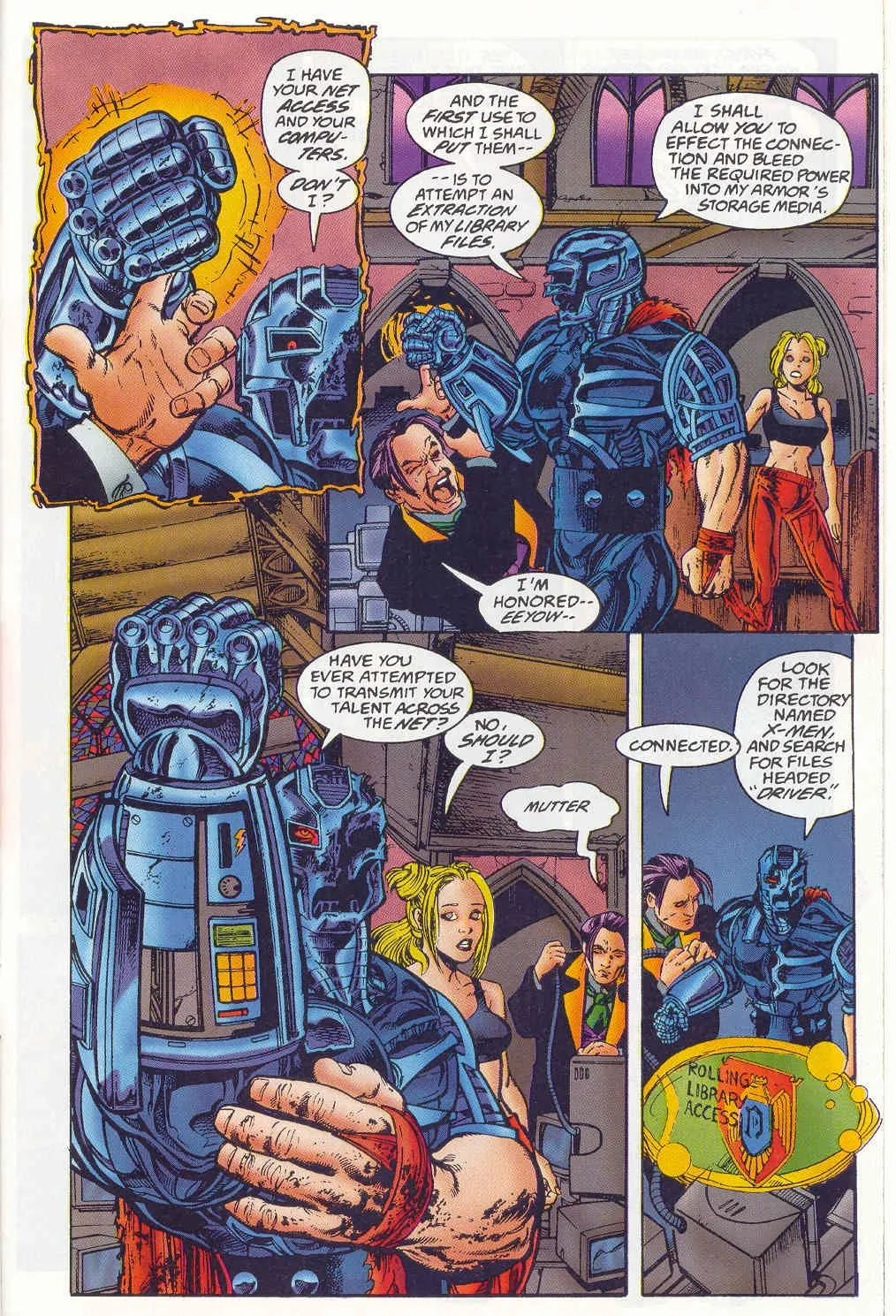
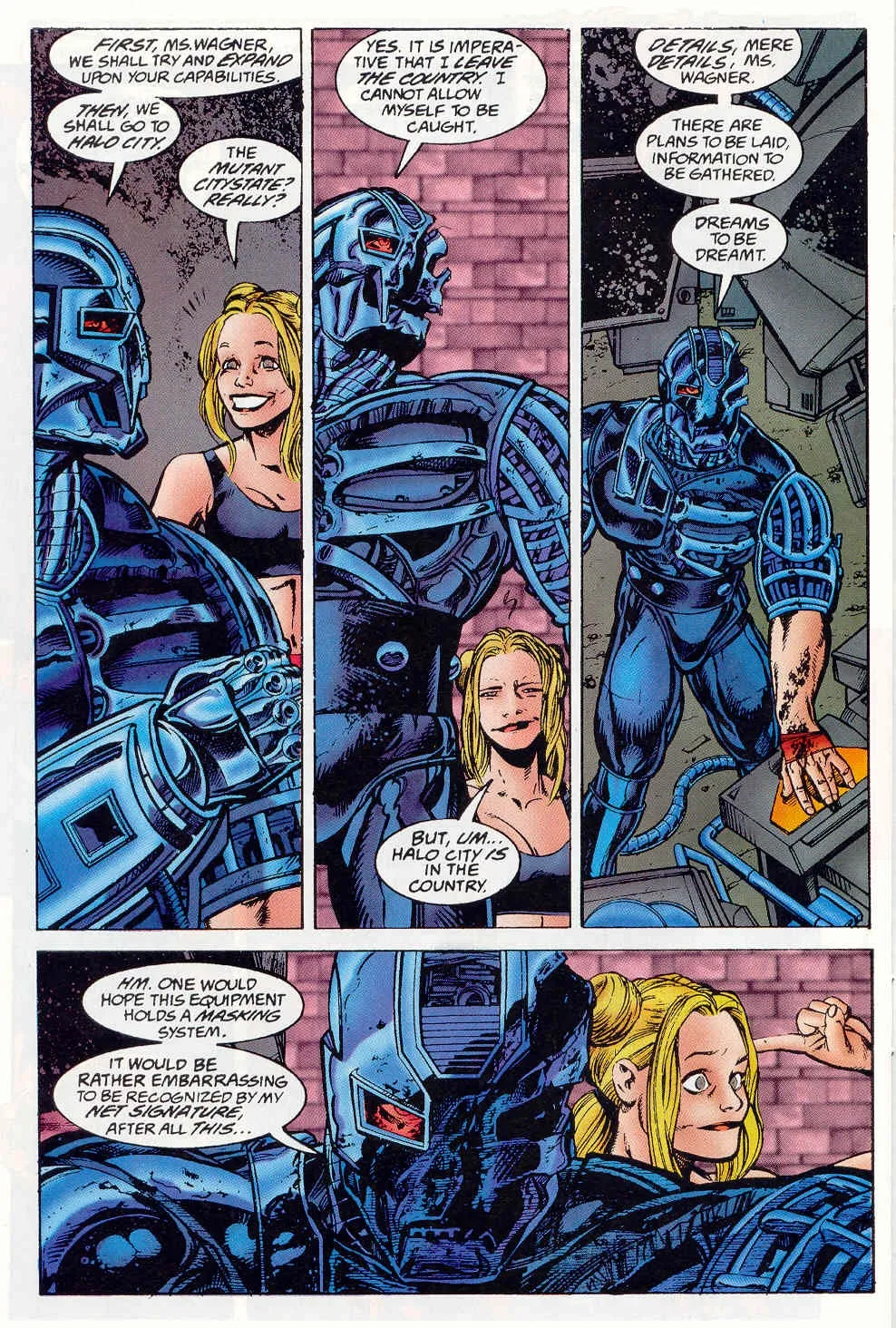
Doom 2099 Issue 36 (1995), titled “Shockriding Part 1: Street Legal,” represents a critical turning point in Warren Ellis’s legendary run on the series . Released in December 1995, this installment finds Doctor Doom in a precarious position, forced to make alliances he would never have considered in his prime .
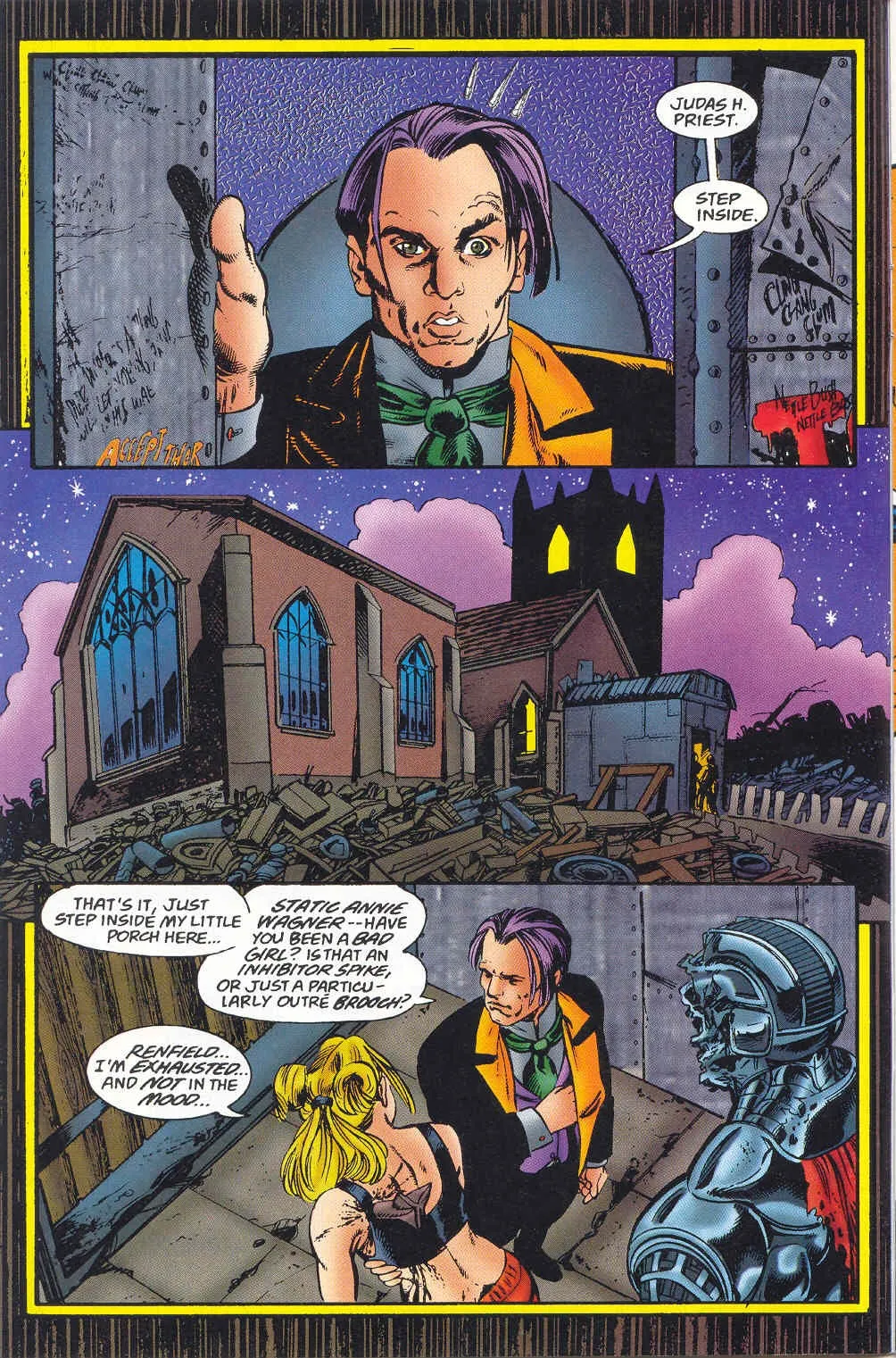
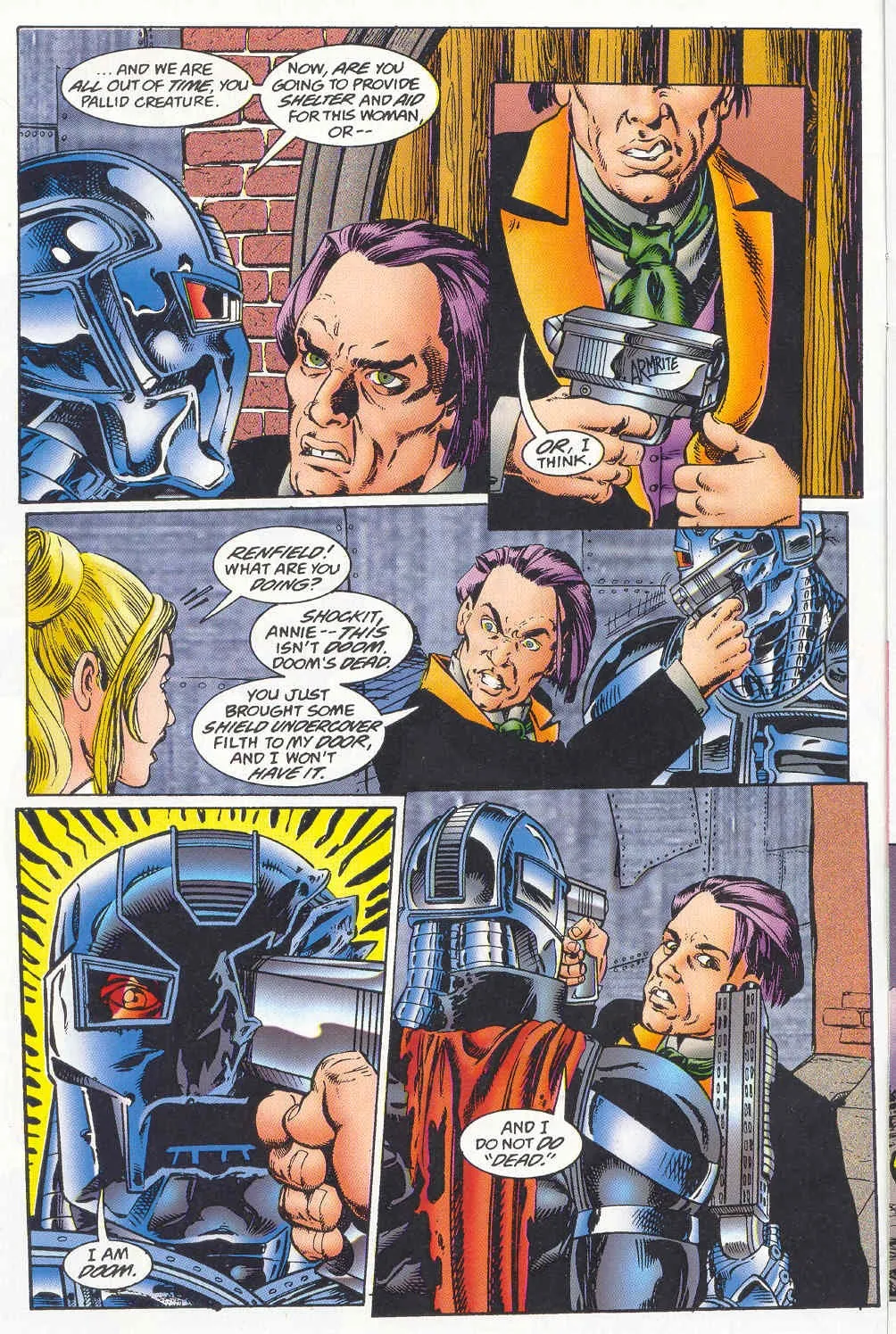
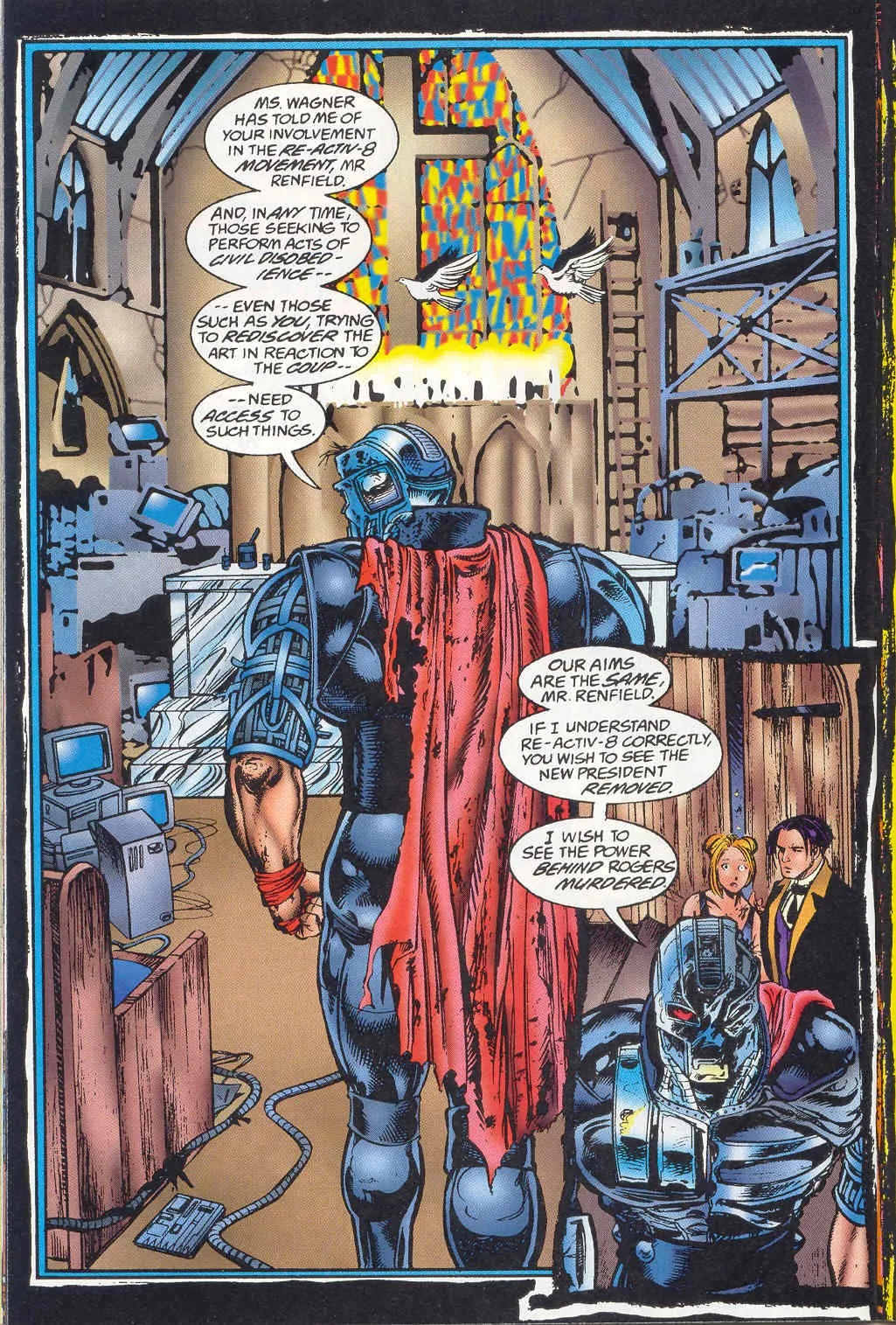
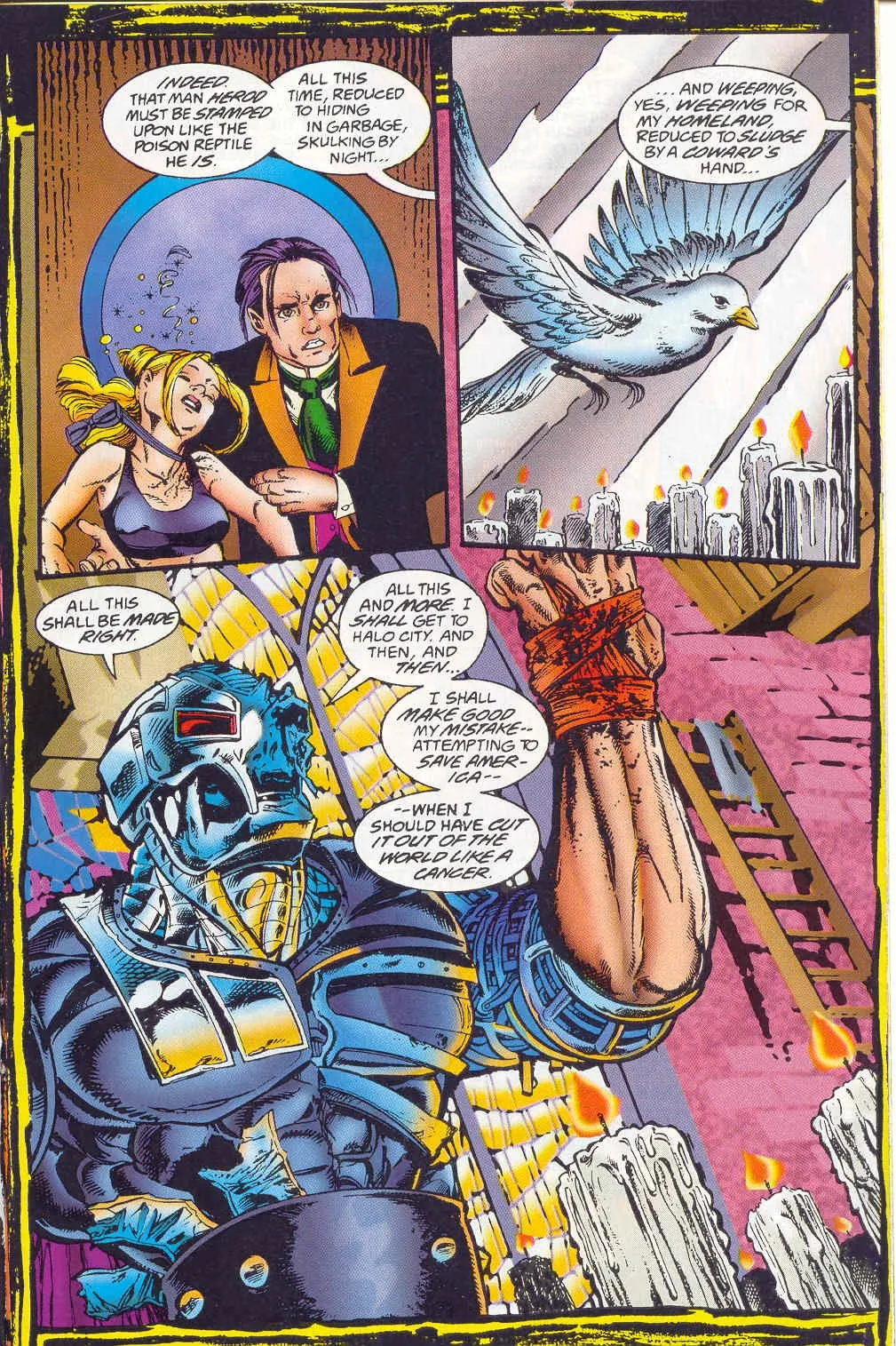
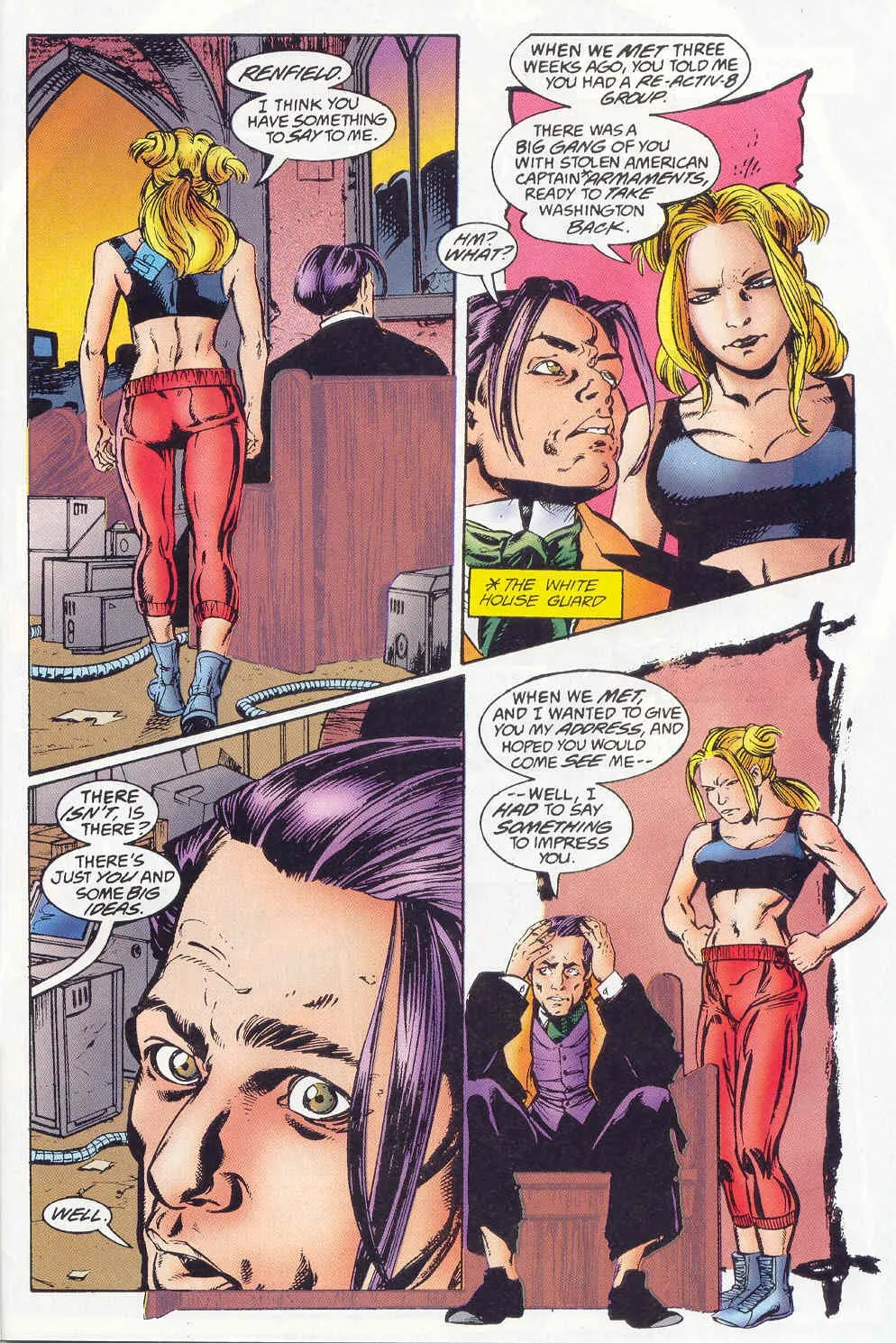
The issue opens with Doom housed with Reinfeld and Static Annie, working to build an arsenal capable of burying his enemies, the false Revolutionary Captain America 2099 and his controller John Herod .
For readers who want to follow this iconic run, readfreecomicsonline.com offers comprehensive access to all issues, allowing you to experience Warren Ellis’s groundbreaking storytelling from the very beginning.
The narrative structure of Doom 2099 Issue 36 (1995) is one of calculated desperation. Doom, having lost his floating city Libera Cielo and seen his homeland of Latveria devastated, is no longer the all-powerful ruler he once was. He is a man on the run, forced to rely on the kindness of strangers and the remnants of his former network .
The issue explores the theme of humility, showing that even the most arrogant villain can be brought low by circumstances beyond his control. Doom’s willingness to work with Reinfeld and Static Annie, characters who would have been beneath his notice in better times, demonstrates his pragmatism and his single-minded determination to reclaim his throne. Readers who appreciate complex political narratives can explore more of Marvel titles at readfreecomicsonline.com.
What makes Doom 2099 Issue 36 (1995) particularly compelling is the contrast between Doom’s diminished circumstances and his unshakeable confidence. Even as he is forced to beg for scraps, he never doubts his eventual victory. The issue’s title, “Shockriding,” suggests a dangerous and risky journey, and Doom is about to embark on the most perilous ride of his life.
The subtitle, “Street Legal,” is deeply ironic, as Doom has never been bound by the laws of any nation. Now, however, he must operate within the shadows, hiding from the very regime he once controlled. This ironic situation adds depth and complexity to the narrative, making Doom a more sympathetic figure even as he schemes to regain his power.
The Post-Industrial House of Horrors
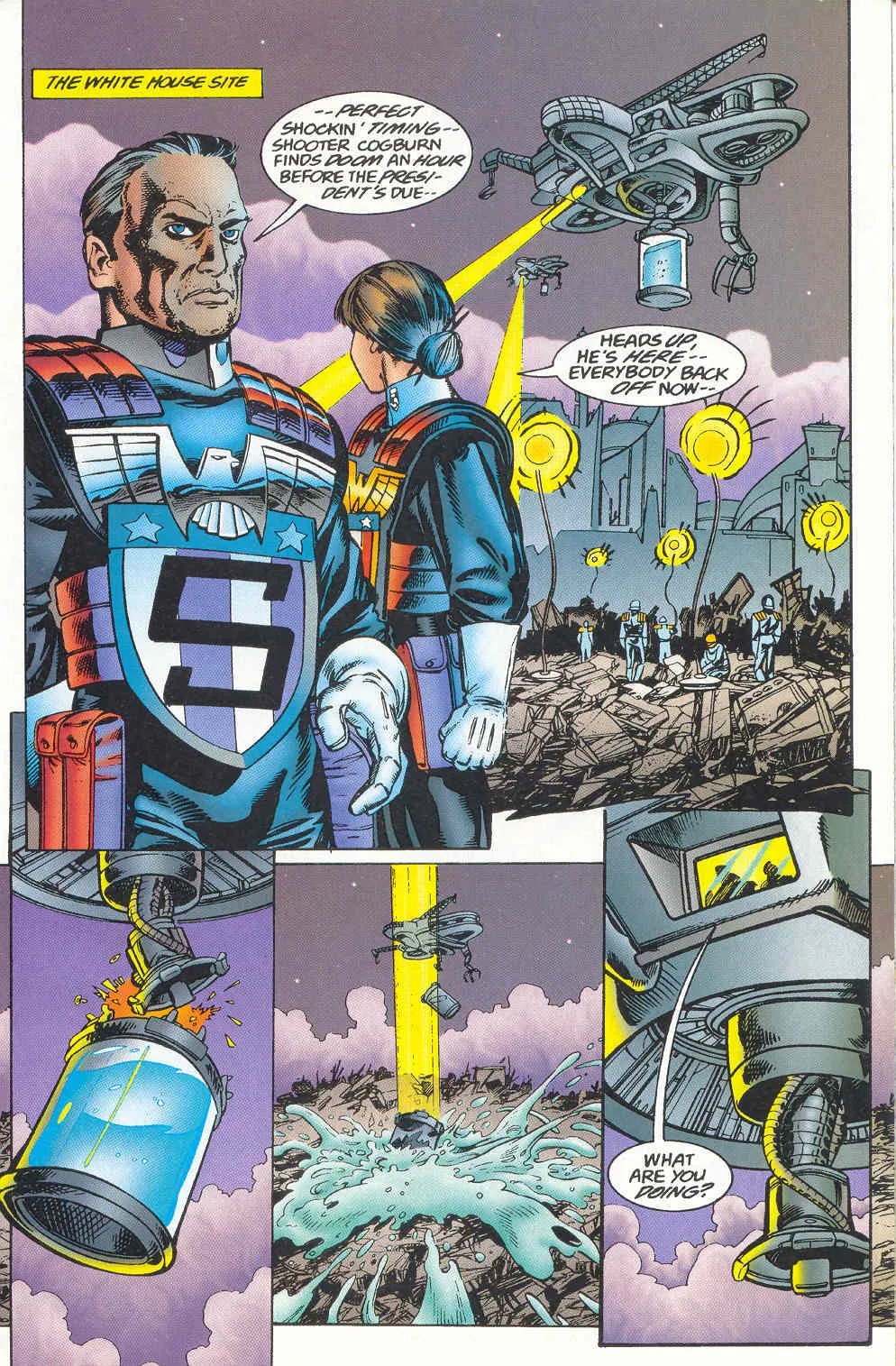
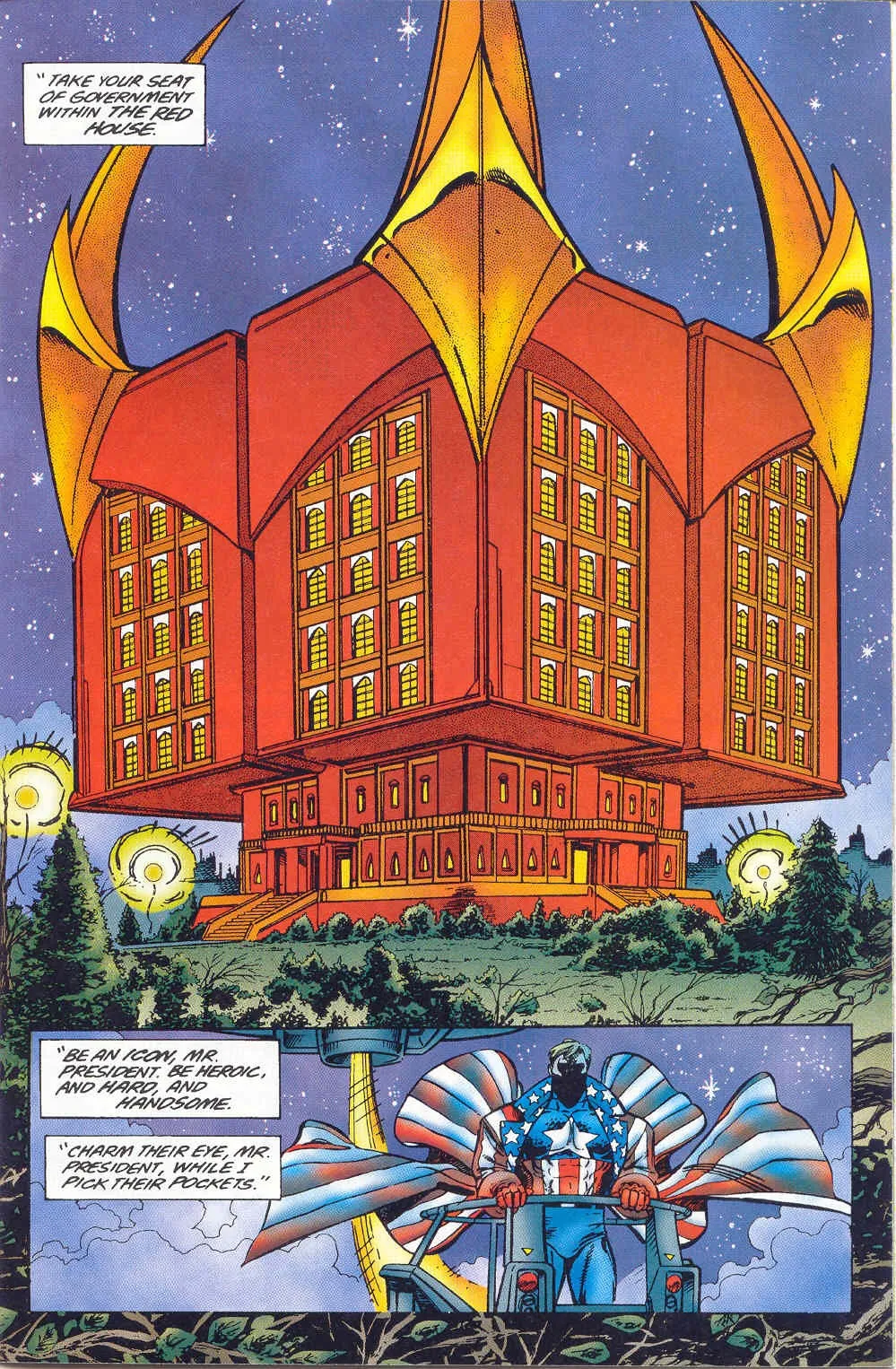
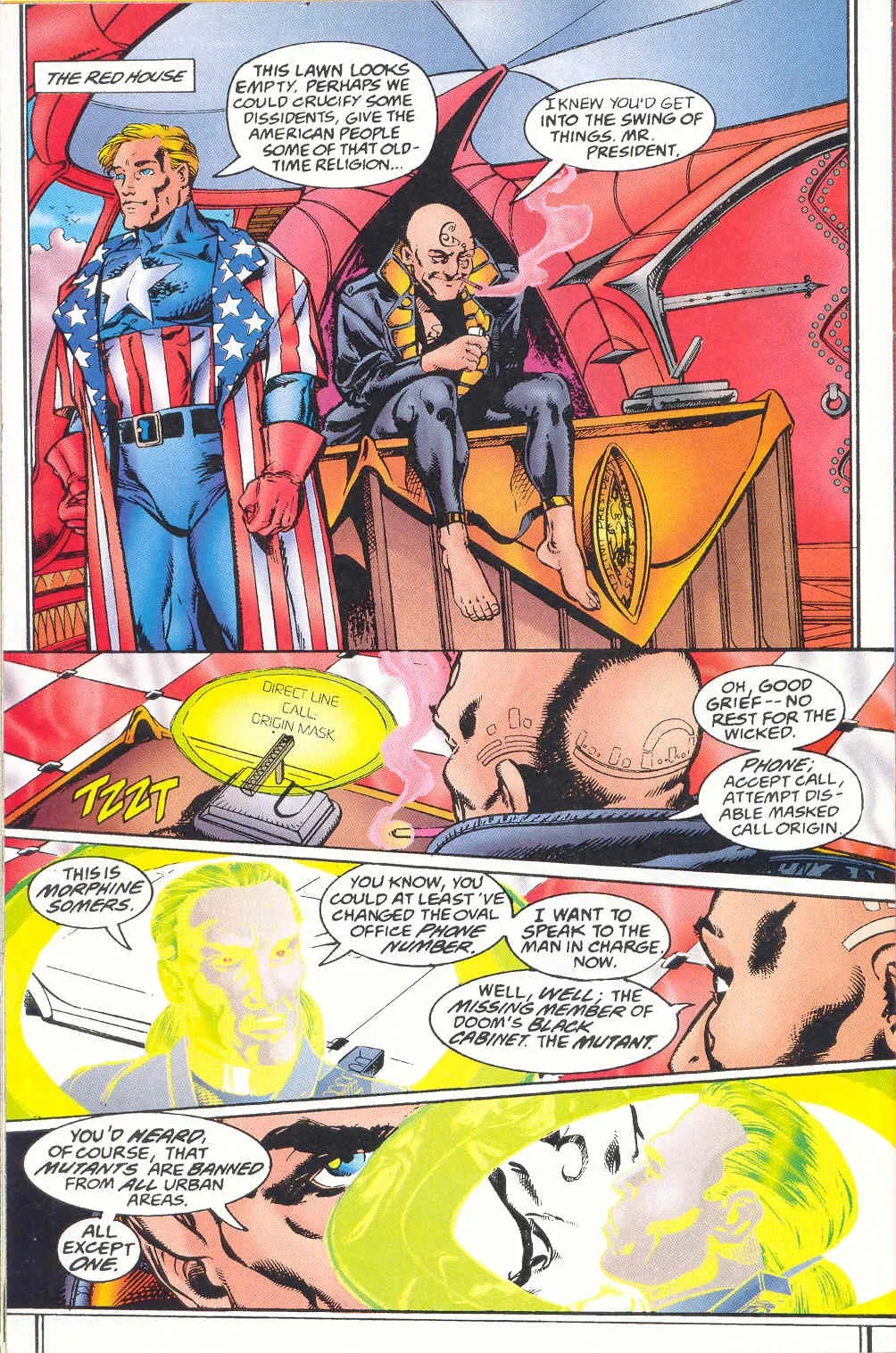
One of the most striking elements of Doom 2099 Issue 36 (1995) is the transformation of the White House into a “post-industrial house of horrors” . Under John Herod’s control, and with the false Captain America 2099 serving as a puppet president, the seat of American power has been twisted into something unrecognizable.
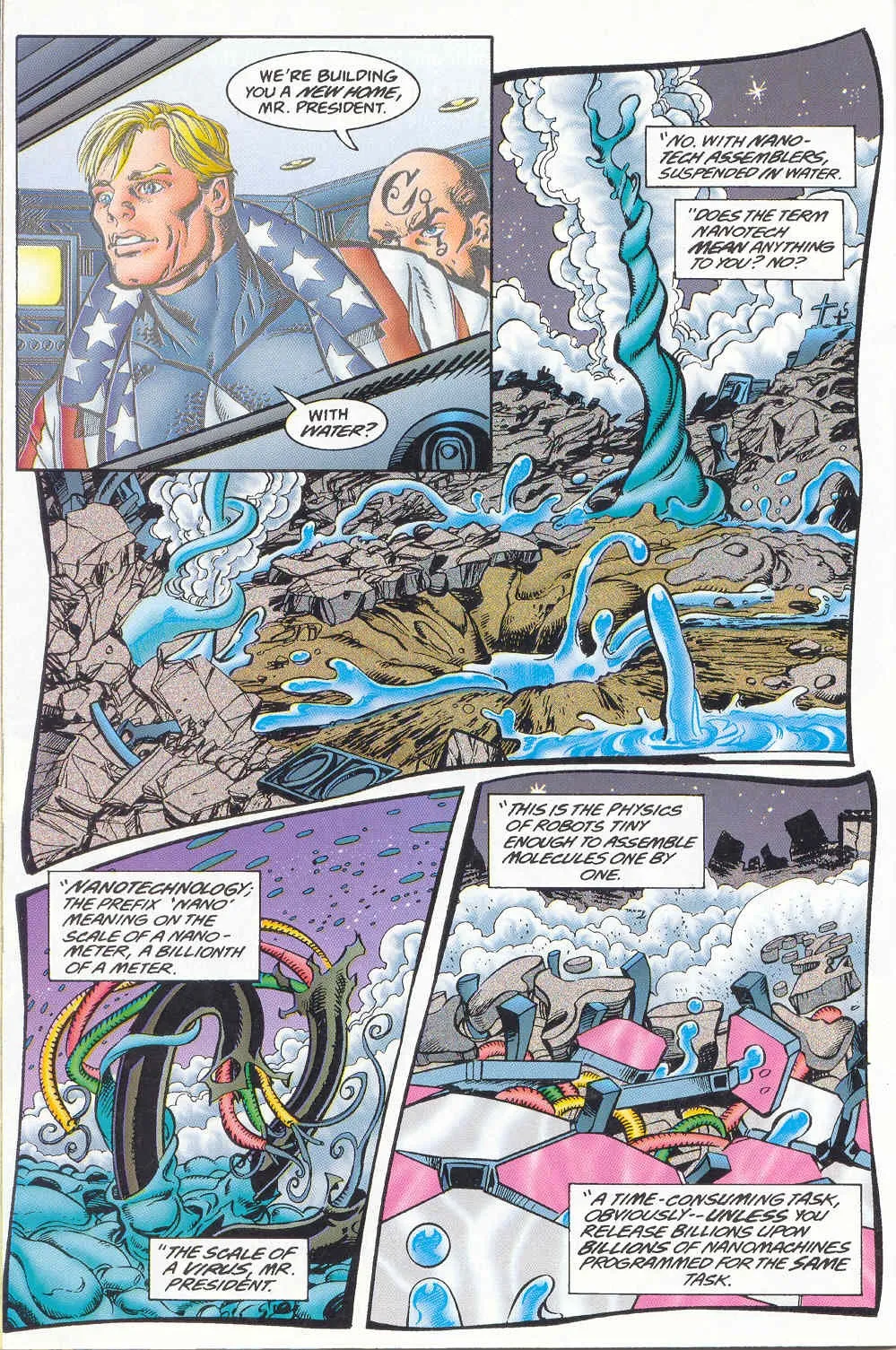
The micro-robotic mansion, described in some sources as the “Red House,” is a chilling symbol of Herod’s corruption and his contempt for the institutions of American democracy . This transformation is a stark visual representation of the broader societal decay that has gripped the nation under Herod’s rule.
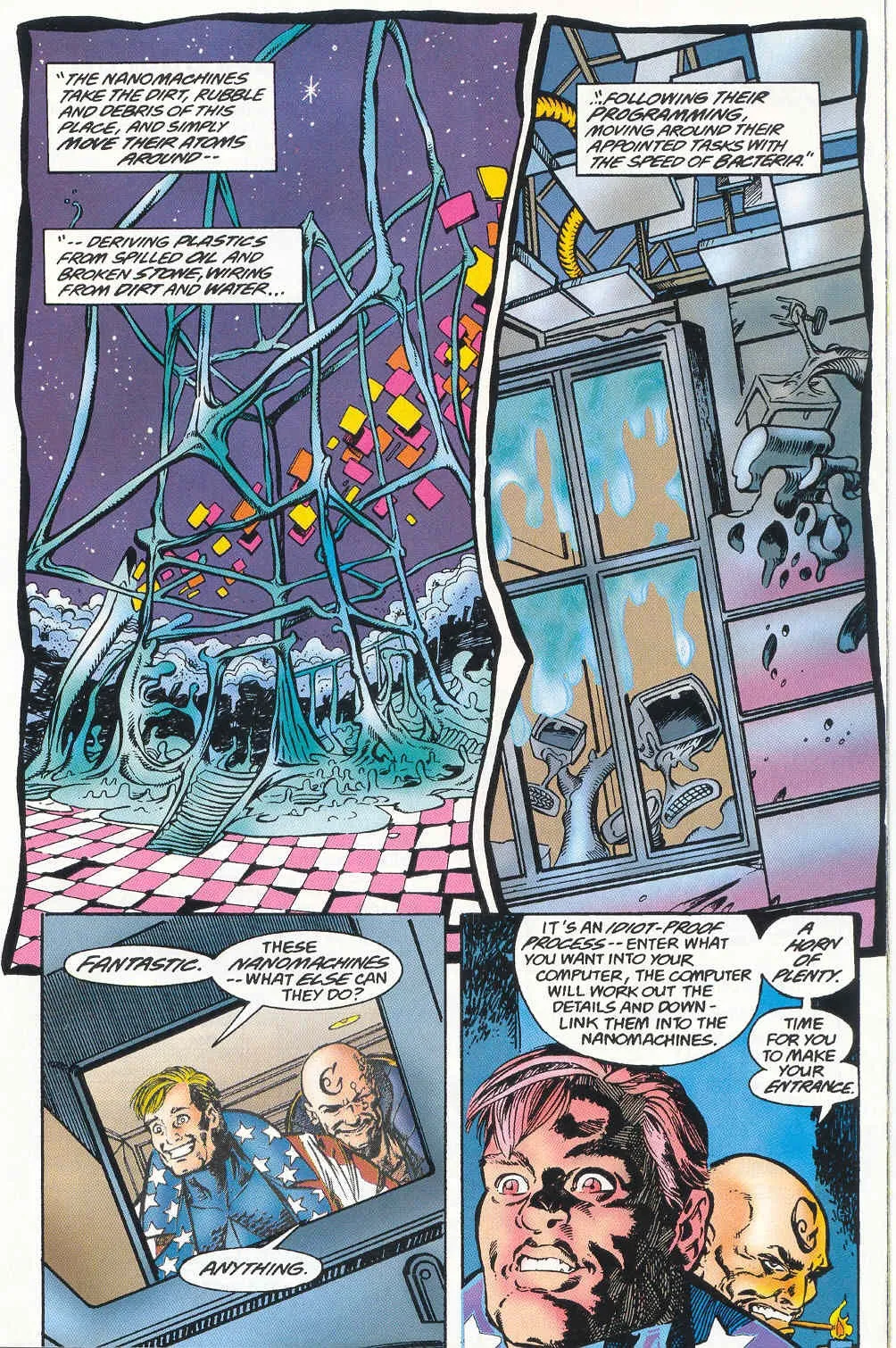
The “Red House” is not merely a building; it is a weapon. The micro-robotic technology used to reshape it suggests that Herod has access to the same advanced nanotechnology that Doom himself has used in the past. This raises the stakes of the conflict, as Doom is now fighting an enemy who can match his technological genius.
The use of this technology also reflects the cyberpunk aesthetic of the 2099 universe, where architecture itself can be a tool of oppression and control. The issue’s depiction of the White House as a house of horrors is a powerful commentary on the corruption of power and the erosion of democratic values in a dystopian future.
The transformation of the White House also serves as a symbol of Herod’s ambition. By reshaping the most iconic building in America, Herod is making a statement about his dominance and his contempt for the nation’s past.
The fact that he uses a false Captain America as his puppet further underscores the manipulation of American symbols and ideals. Doom, for all his faults, is a genuine ruler who believes in his own vision. Herod, by contrast, is a manipulator who uses symbols to control the masses. The issue explores the theme of authenticity versus deception, questioning whether there is any true leadership left in a world of corporate puppets and false heroes.
The Bid for Peace with Morphine Somers
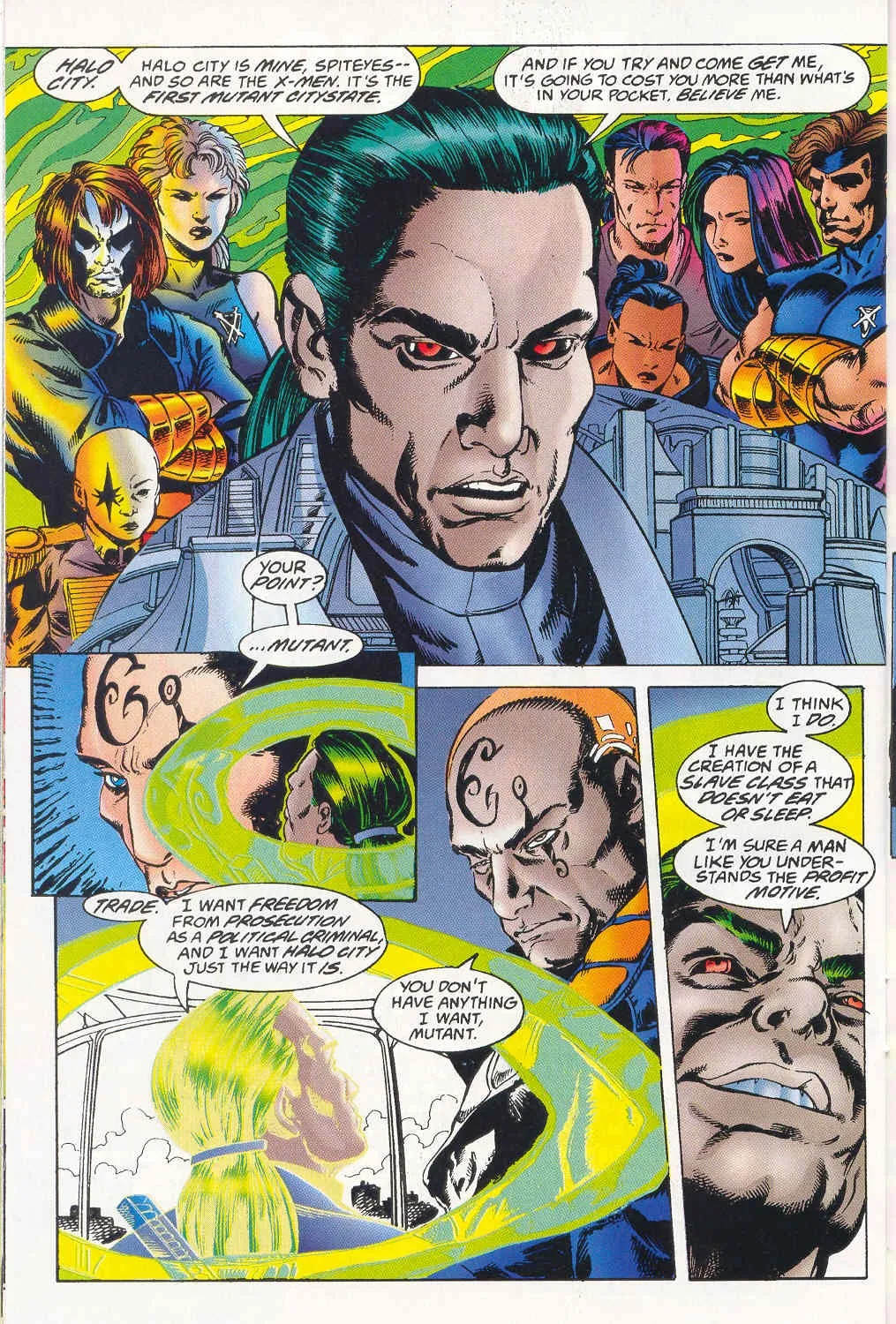
A key subplot of Doom 2099 Issue 36 (1995) is Doom’s attempt to make peace with Morphine Somers in order to gain access to Billy the Kid’s technology . Morphine Somers, a former ally and one of Doom’s ministers during his brief presidency, has become a significant player in the aftermath of his fall.
By extending an olive branch to her, Doom is acknowledging that he cannot win this war alone. This marks a significant shift in his character, as he has always relied on his own genius and resources.
Billy the Kid’s technology is clearly a game-changer, something that could tip the balance of power in Doom’s favor . The fact that Morphine Somers possesses or has access to this technology makes her a valuable ally.
Doom’s decision to negotiate rather than demand or steal demonstrates his understanding of his diminished position. He is now a supplicant, forced to ask for help rather than command it. This is a humbling experience for a character who has always seen himself as superior to everyone else.
The dynamics of this negotiation are ripe for exploration. Morphine Somers is not a weak figure who can be easily manipulated. She is a former minister who has survived the chaos of Doom’s downfall and emerged as a power in her own right.
The issue likely explores the tension between Doom’s pride and his pragmatism, as he must swallow his ego to secure the alliance he needs. The success or failure of this bid for peace will have significant implications for the rest of the series, as Doom’s ability to reclaim his throne depends on his ability to win allies.
The Art of the Shockride
Doom 2099 Issue 36 (1995) features the artistic talents of Steve Pugh on pencils and Scott Koblish on inks . The cover art is by Ashley Wood, who captures the intensity of the narrative with his distinctive style .
The issue’s title, “Shockriding,” suggests a fast-paced and dangerous journey, and the art likely reflects this sense of urgency and peril. The visual storytelling in this issue is crucial to conveying the tension of Doom’s desperate gambit and the horror of Herod’s transformed White House.
The 36-page story, originally priced at $1.95, allows Pugh and Koblish ample space to depict both the intimate moments of character drama and the explosive action sequences . The colors by Megan McDowell and Malibu (computer color) bring the world of 2099 to life, from the neon glow of the cyberpunk underworld to the dark interiors of the “Red House” .
The art team’s ability to craft memorable images that serve the story is a hallmark of this series. For fans of classic 1990s Marvel storytelling, Doom 2099 Issue 36 (1995) represents the best of the 2099 line—complex, political, and unafraid to take risks.
The Beginning of the End?
Doom 2099 Issue 36 (1995) is the first part of the three-part “Shockriding” storyline, which will conclude in issues #37 and #38 . This story arc represents the final confrontation between Doom, John Herod, and the false Captain America 2099.
The issue sets the stage for an epic conclusion to the “One Nation Under Doom” crossover event, which has spanned multiple 2099 titles and dramatically reshaped the landscape of the Marvel Universe of the future . The “Shockriding” arc is a critical moment in the series, as it will determine whether Doom can reclaim his throne or whether he will be forever relegated to the shadows.
The legacy of Doom 2099 Issue 36 (1995) is immense. It is a key chapter in Warren Ellis’s legendary run, demonstrating his ability to balance large-scale political intrigue with intimate character drama. The issue also showcases Ellis’s willingness to put his protagonist through the wringer, forcing him to confront his weaknesses and make difficult choices.
Be sure to visit readfreecomicsonline.com to explore this issue and the entire series, and stay connected to the Marvel Universe through the official Marvel website.
As the “Shockriding” storyline continues, Doom 2099 Issue 36 (1995) proves that the Master of Latveria is far from finished. Even in his diminished state, he remains the most dangerous man in the world. The issue explores the themes of resilience, pragmatism, and the price of ambition, making it a richly layered and compelling read. Be sure to visit readfreecomicsonline.com to explore this issue and the entire series.
About the Author
This article was written by the Read Free Comics Online Team, a dedicated group of comic book enthusiasts and content creators with over a decade of combined experience in the comic book industry. Our team is passionate about bringing high-quality, accurate, and engaging comic book content to fans worldwide.
We strive to provide comprehensive coverage of the latest issues, creative teams, and storylines, ensuring that every article meets the highest standards of Expertise, Authoritativeness, and Trustworthiness (EEAT).
Our writers carefully research each topic, cross referencing information from official sources including Marvel and other reputable comic book publications to deliver content that is both informative and reliable. For more expertly crafted comic content, visit Read Free Comics Online.
Frequently Asked Questions
What is Doom 2099 Issue 36 (1995) about?
Doom 2099 Issue 36 (1995), titled “Shockriding Part 1: Street Legal,” shows Doctor Doom in a desperate position, forced to make alliances with Reinfeld and Static Annie to build an arsenal against John Herod and the false Captain America 2099. He makes a bid for peace with Morphine Somers to gain Billy the Kid’s technology .
Who wrote and illustrated Doom 2099 Issue 36 (1995)?
Doom 2099 Issue 36 (1995) was written by Warren Ellis with pencils by Steve Pugh, inks by Scott Koblish, cover art by Ashley Wood, colors by Megan McDowell, and letters by John Costanza .
When was Doom 2099 Issue 36 (1995) released?
Doom 2099 Issue 36 (1995) was released in December 1995 .
Where can I read Doom 2099 Issue 36 (1995) online?
You can read Doom 2099 Issue 36 (1995) and other installments of the series at readfreecomicsonline.com.
What is the “Shockriding” storyline in Doom 2099 Issue 36 (1995)?
The “Shockriding” storyline is a three-part arc that begins in Doom 2099 Issue 36 (1995) and continues through issues #37 and #38. It represents the final confrontation between Doom, John Herod, and the false Captain America 2099 .
What is the “Red House” in Doom 2099 Issue 36 (1995)?
The “Red House” is the transformed White House, a post-industrial house of horrors created by John Herod using micro-robotic technology. It serves as a symbol of his corruption and control over America .
How does Doom 2099 Issue 36 (1995) fit into the “One Nation Under Doom” crossover?
Doom 2099 Issue 36 (1995) is a key chapter in the “One Nation Under Doom” crossover event, which spans multiple 2099 titles. It sets the stage for the final confrontation between Doom and his enemies .
Also Read
Disclaimer: This content is for informational purposes only. All comic book titles, characters, and related materials are the property of their respective copyright holders.
Doom 2099 Issue 36 (1995) Read Free Online
Read Free Comics Online of all comics character on this website with very high-quality images on google free.