Publisher: Marvel
Read Free Comics Online of Doom 2099 Issue 33 (1995) Read Free Online with very high-quality images on google without any cost, Read Free Marvel comics online at Read Free comics Online.
Scroll down to read free comics online.
Read Previous Issue | Doom 2099 Issue 32 (1995)
Read Next Issue | Doom 2099 Issue 34 (1995)
Doom 2099 Issue 33 (1995) Read Free Marvel Comics Online
Doom 2099 Issue 33 (1995): The Fall of the American Caesar
Published: September 1995
Author: Warren Ellis
Artist: Steve Pugh
Inker: Scott Koblish
Colorist: Megan McDowell
Letterer: John Costanza
Editor: Joey Cavalieri, Bobbie Chase
Publisher: Marvel Comics
The Unraveling Begins
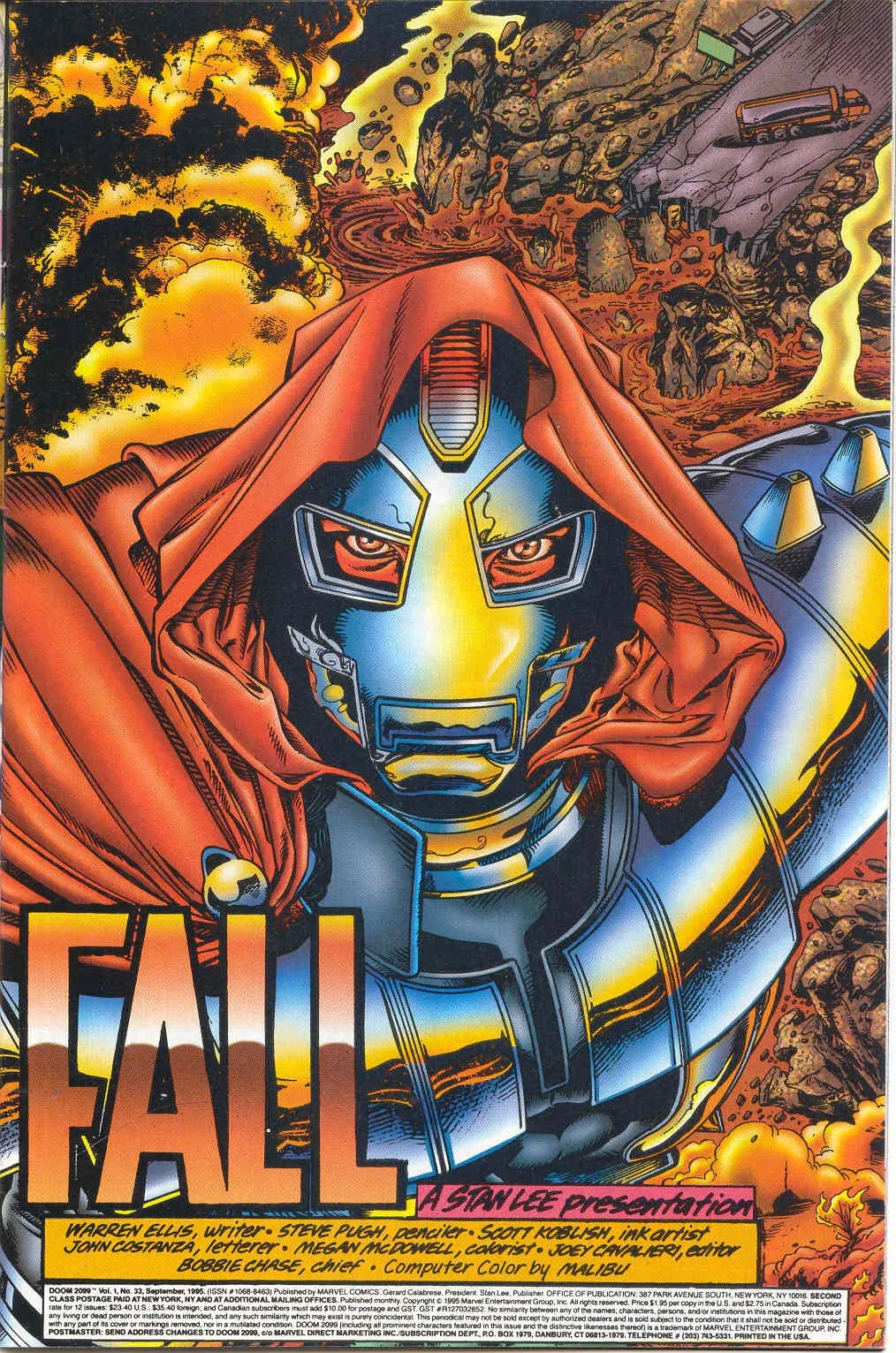
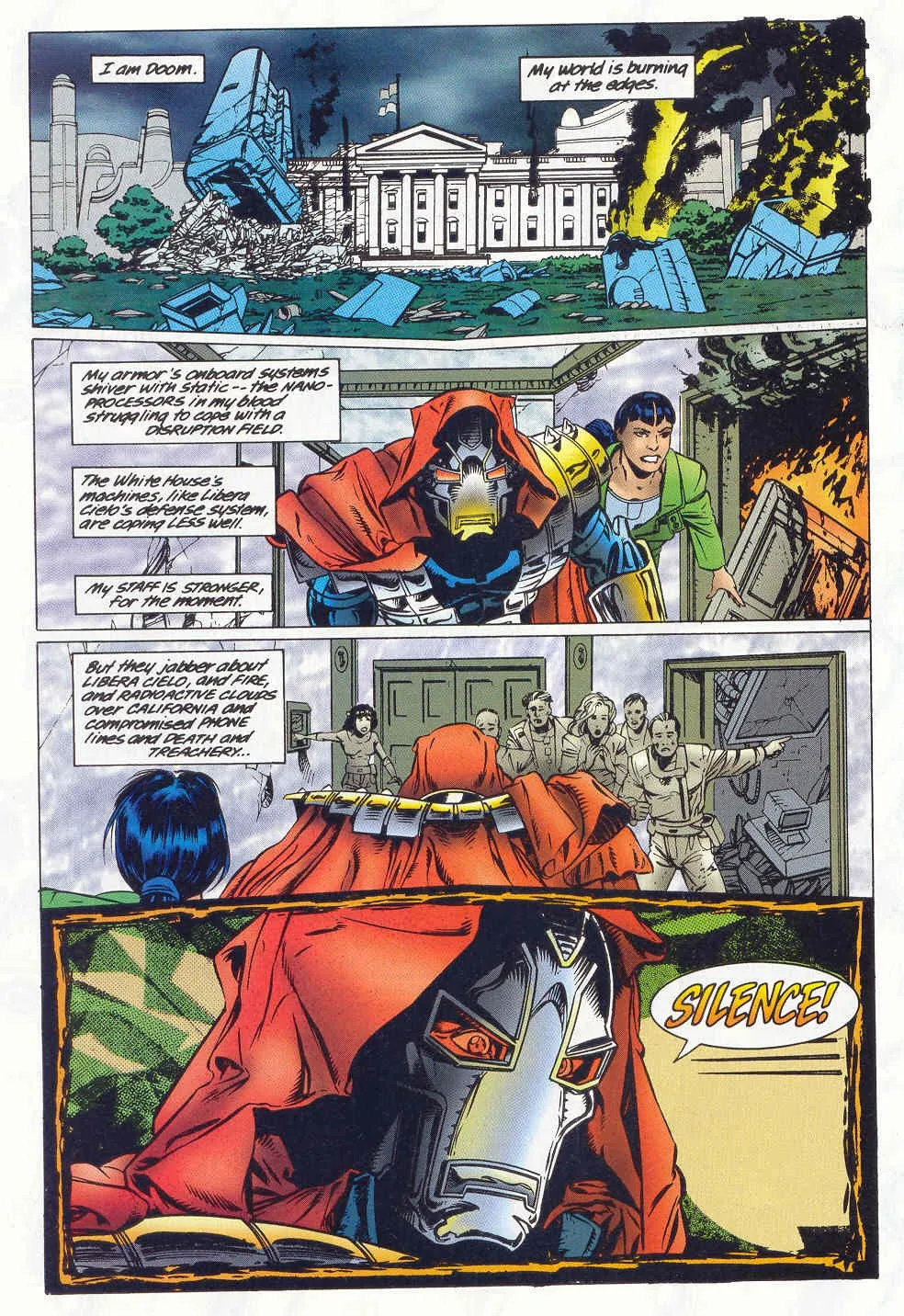
Doom 2099 Issue 33 (1995), titled “Fall,” represents the devastating climax of Warren Ellis’s ambitious storyline, delivering a brutal and shocking reversal of fortune for the newly installed President Doom .
Released in September 1995, this installment marks the beginning of the “One Nation Under Doom” crossover event, as forces both old and new conspire to bring down the Master of Latveria’s American empire . The issue opens with Doom at the pinnacle of his power, having conquered the United States and begun implementing his vision of a new world order.
However, as the title “Fall” suggests, his triumph is about to become his greatest tragedy. For readers who want to follow this iconic run, readfreecomicsonline.com offers comprehensive access to all issues, allowing you to experience Warren Ellis’s groundbreaking storytelling from the very beginning.
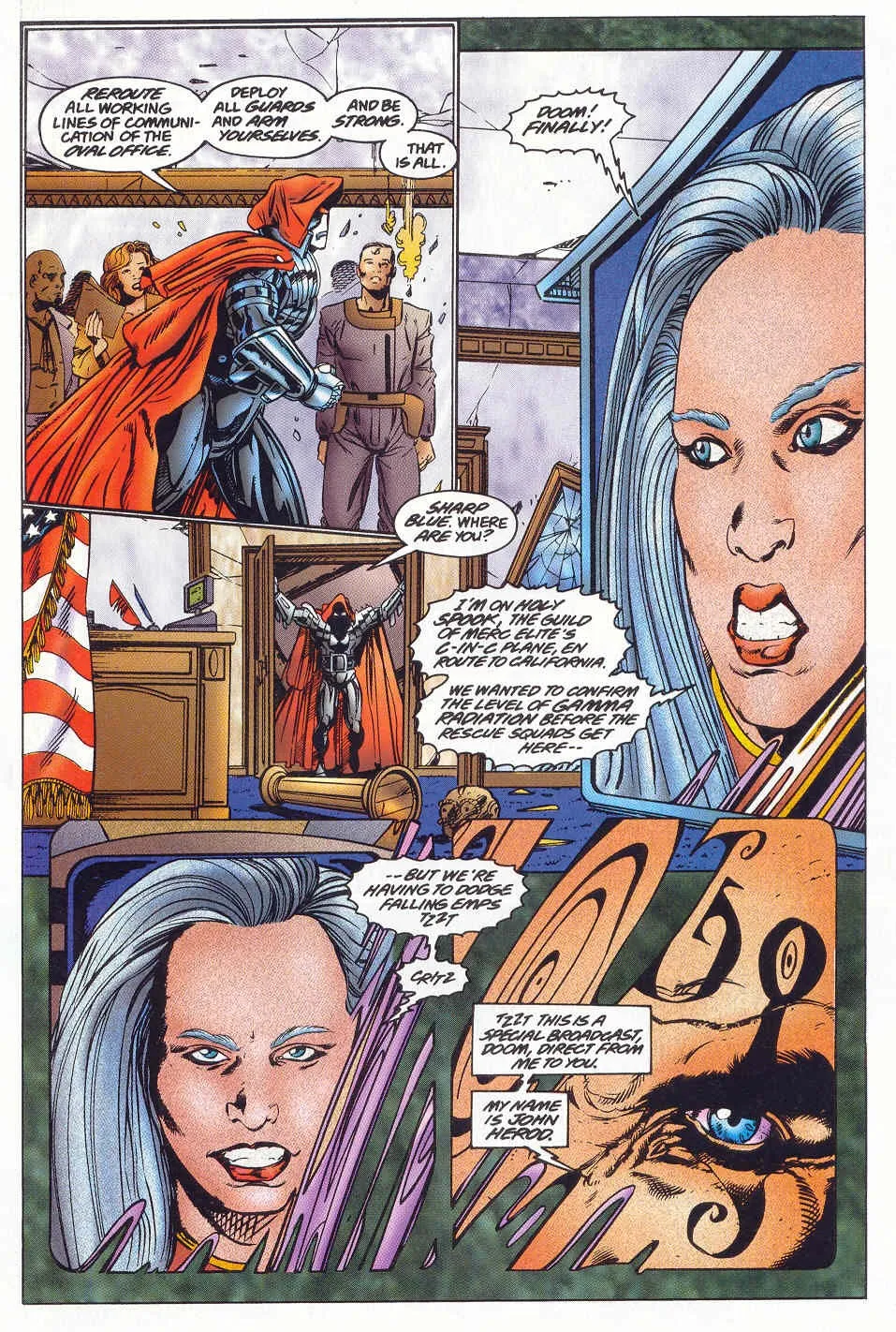
The narrative structure of Doom 2099 Issue 33 (1995) is one of escalating catastrophe. Ellis masterfully builds tension as multiple threats converge on Doom’s presidency simultaneously. The mysterious John Herod, a figure whose motivations remain ambiguous, launches a coordinated multi-front attack that grows increasingly spectacular in scope .
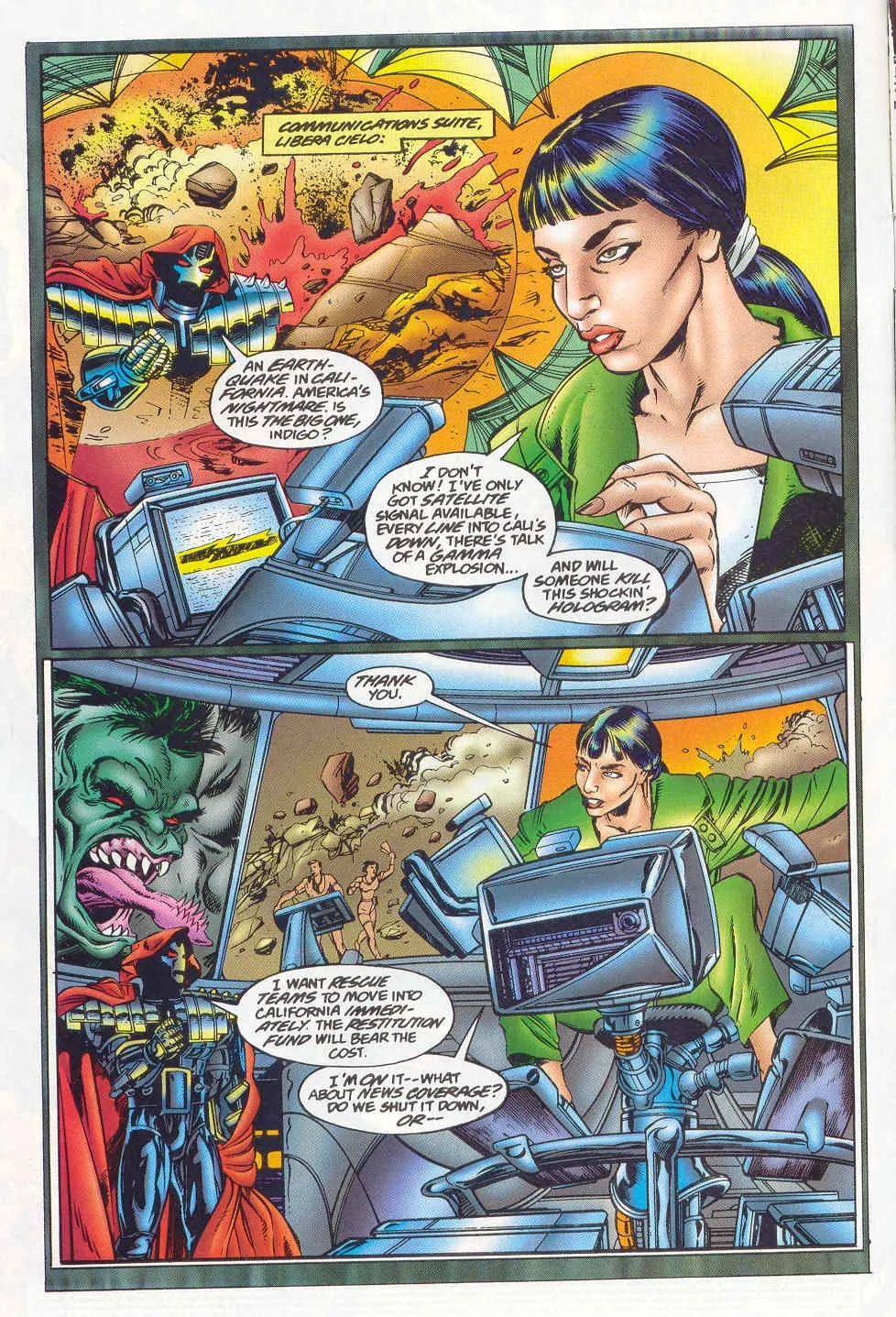
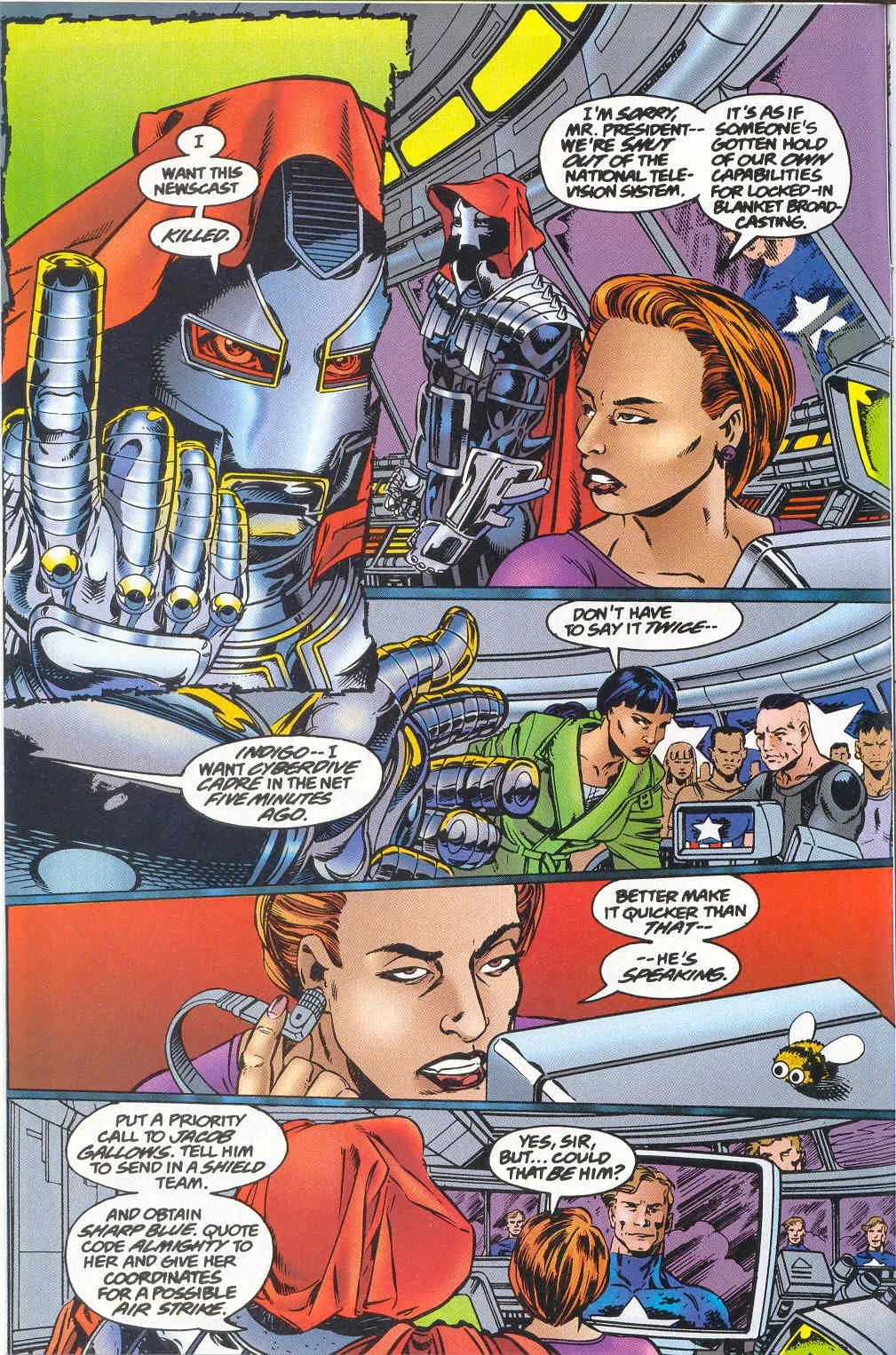
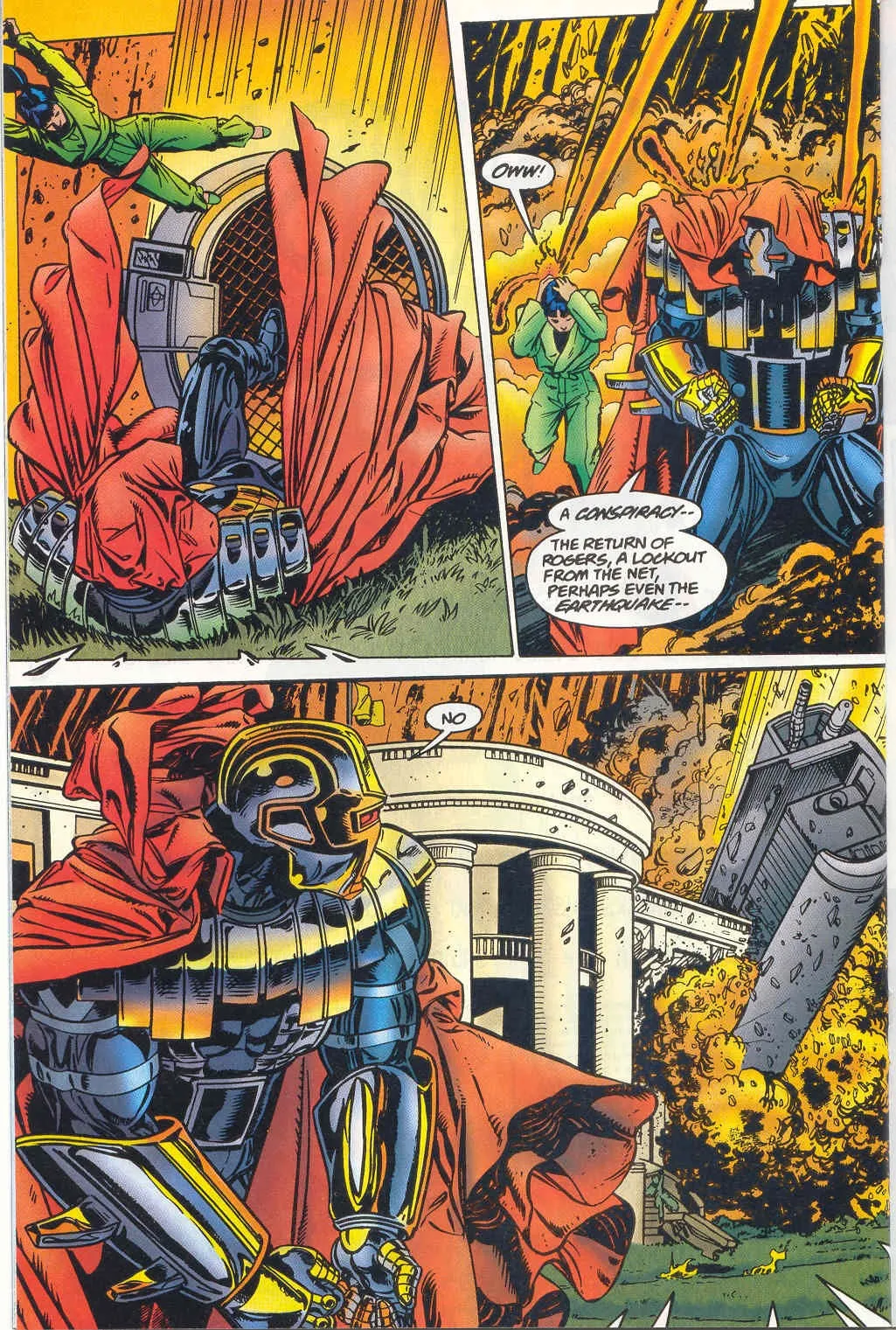
From causing earthquakes in California to destroying the floating city of Libera Cielo, Herod’s assault is both personal and political, designed to humiliate Doom as much as to defeat him . The issue’s pacing reflects the chaotic nature of the attack, with Doom struggling to respond to threats on multiple fronts while his enemies close in around him.
John Herod’s Multi-Front Assault
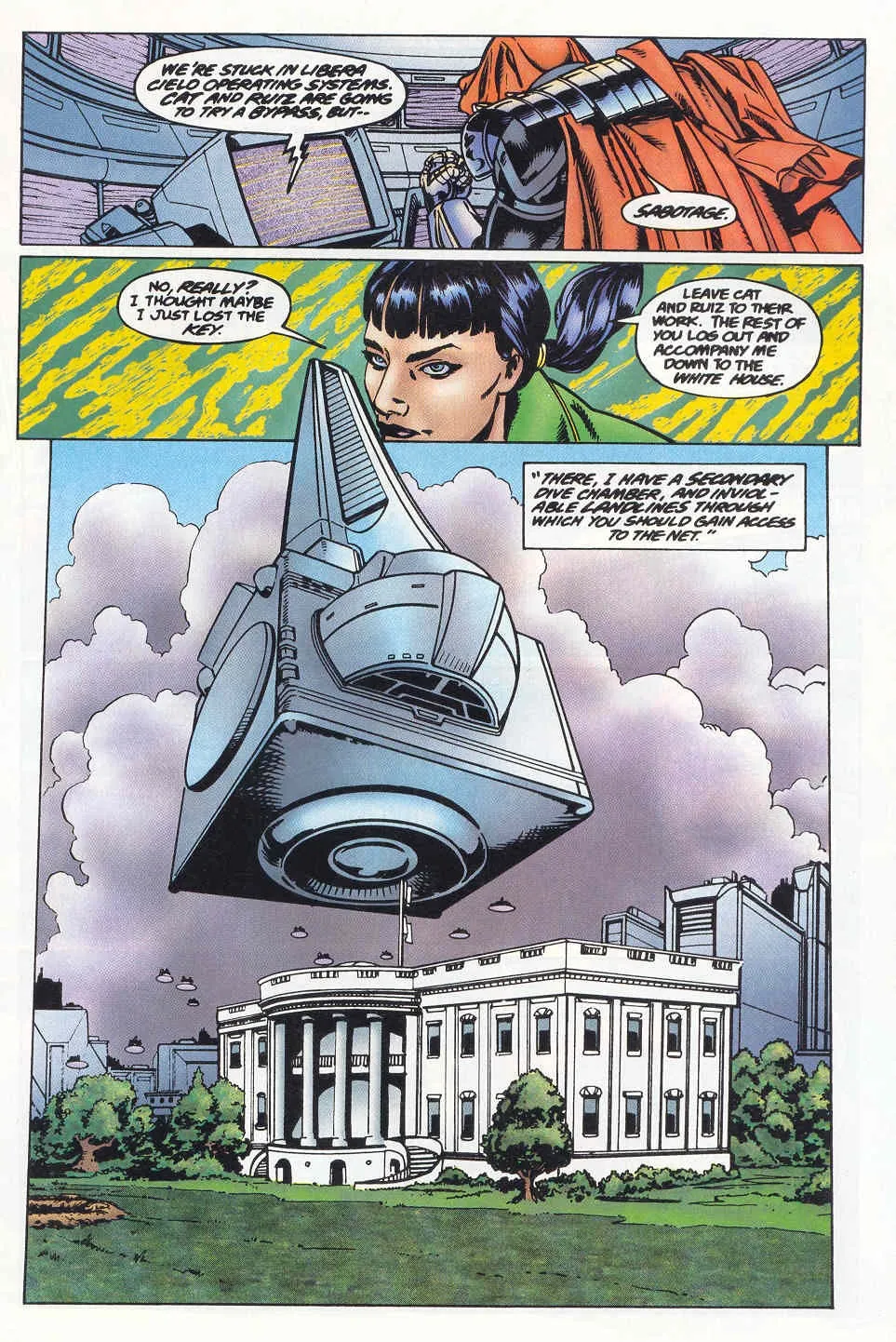
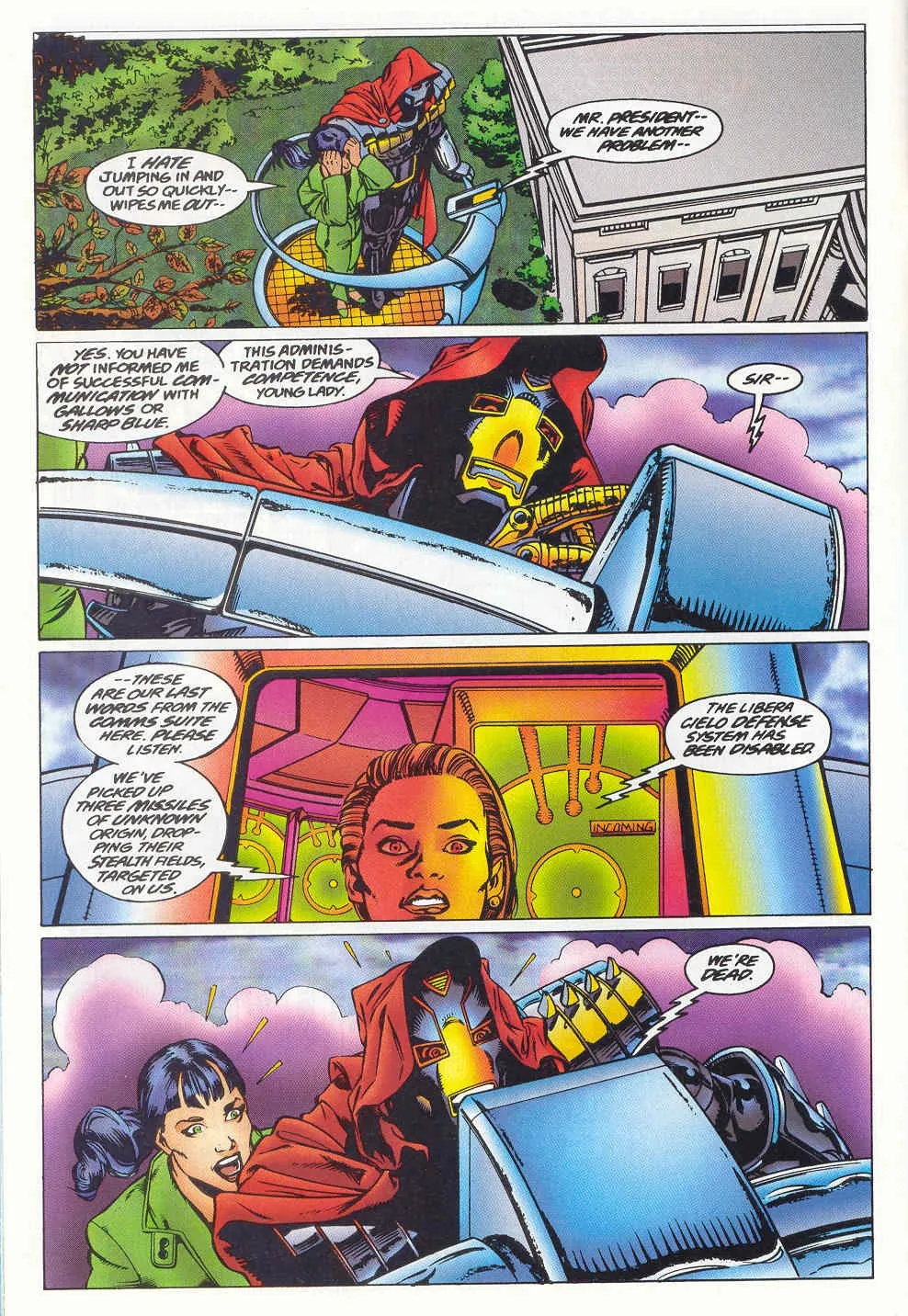
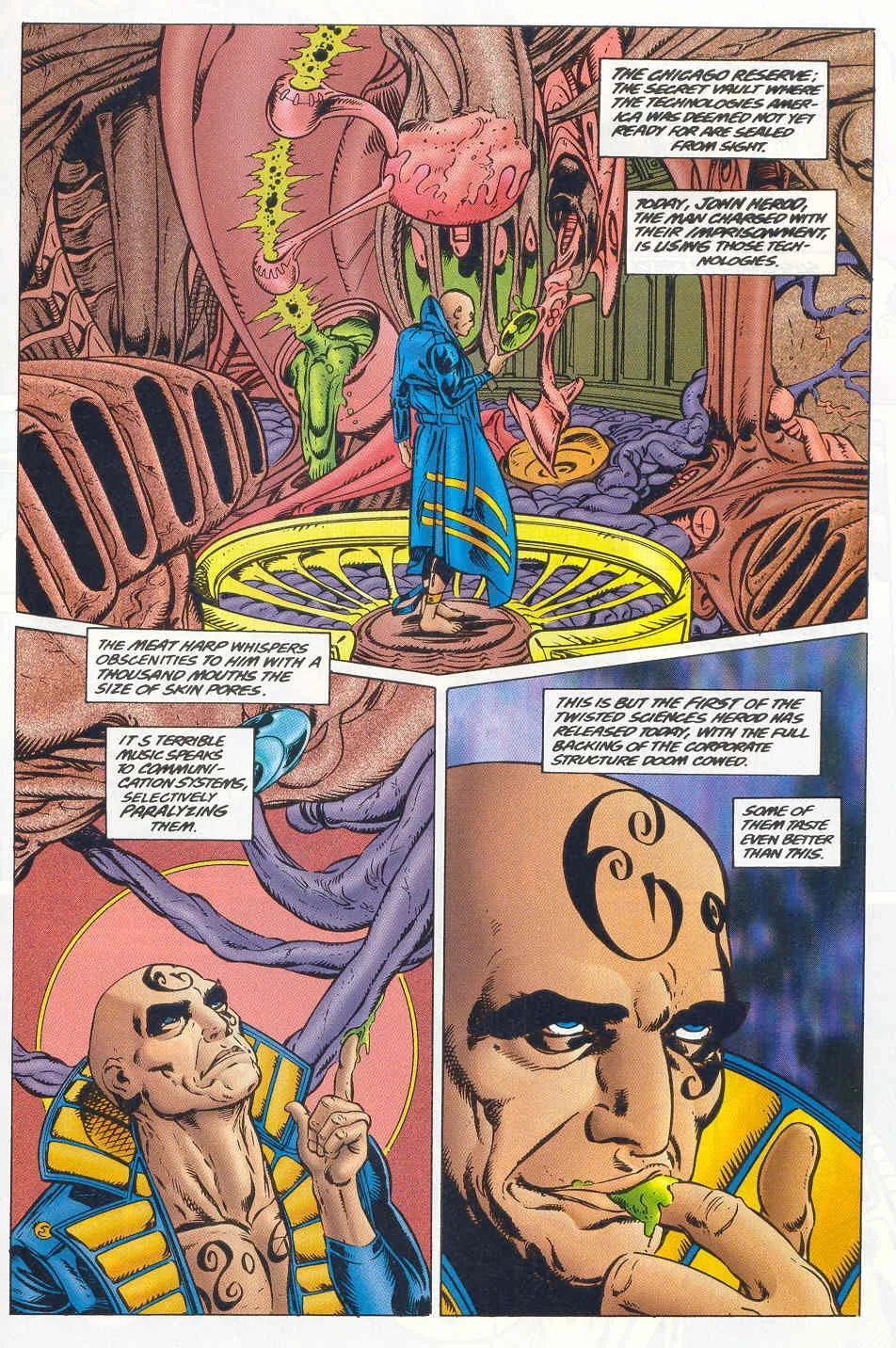
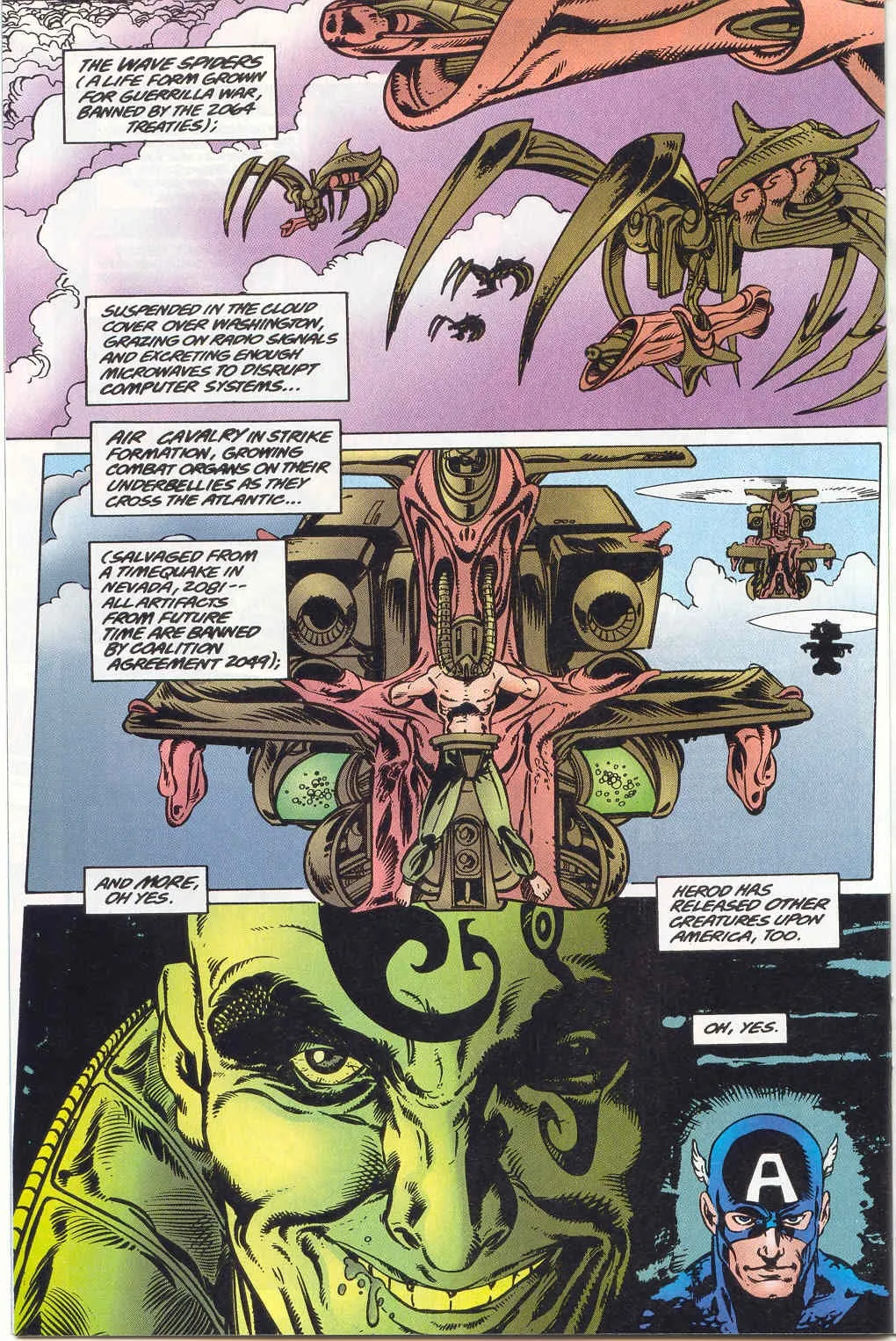
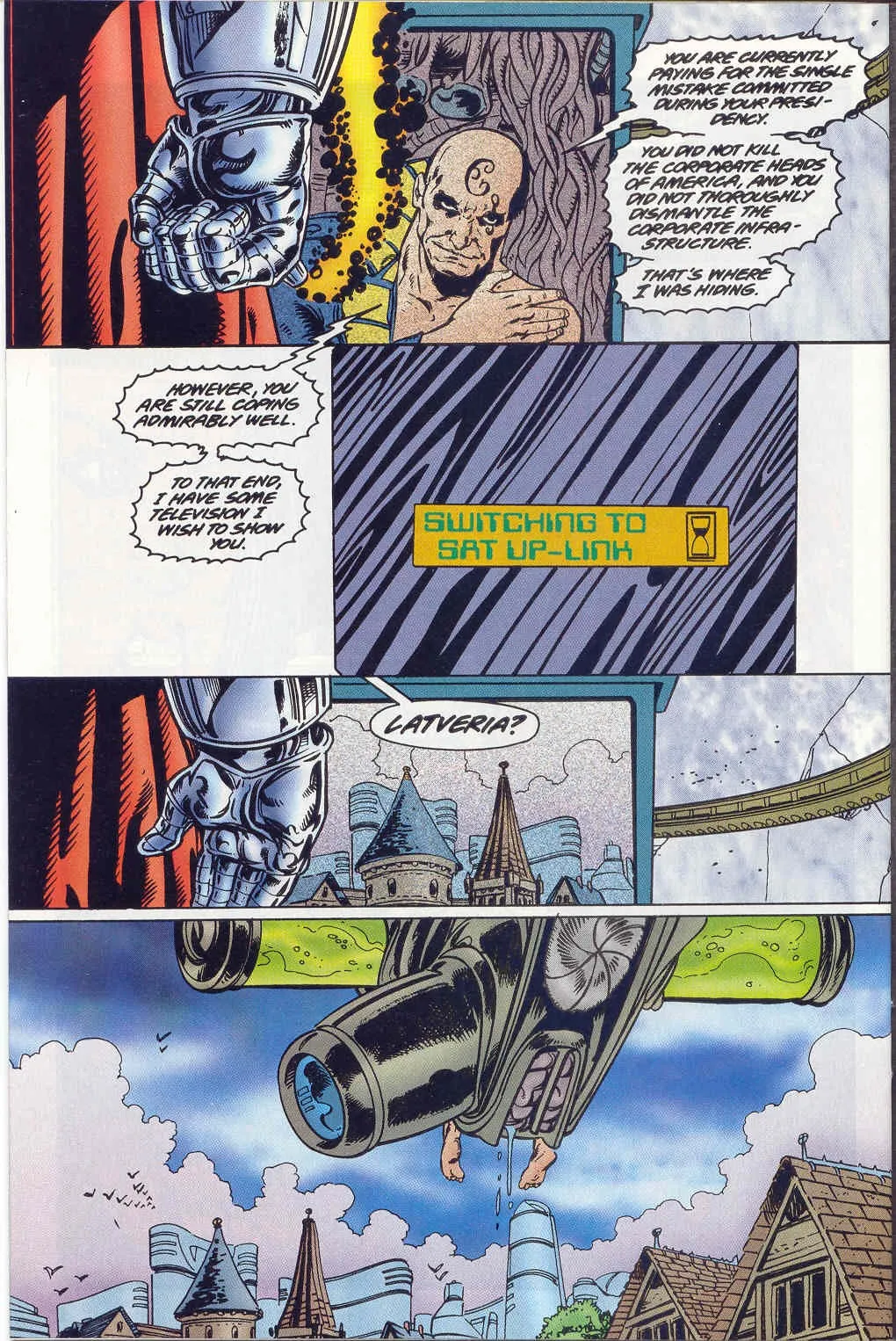
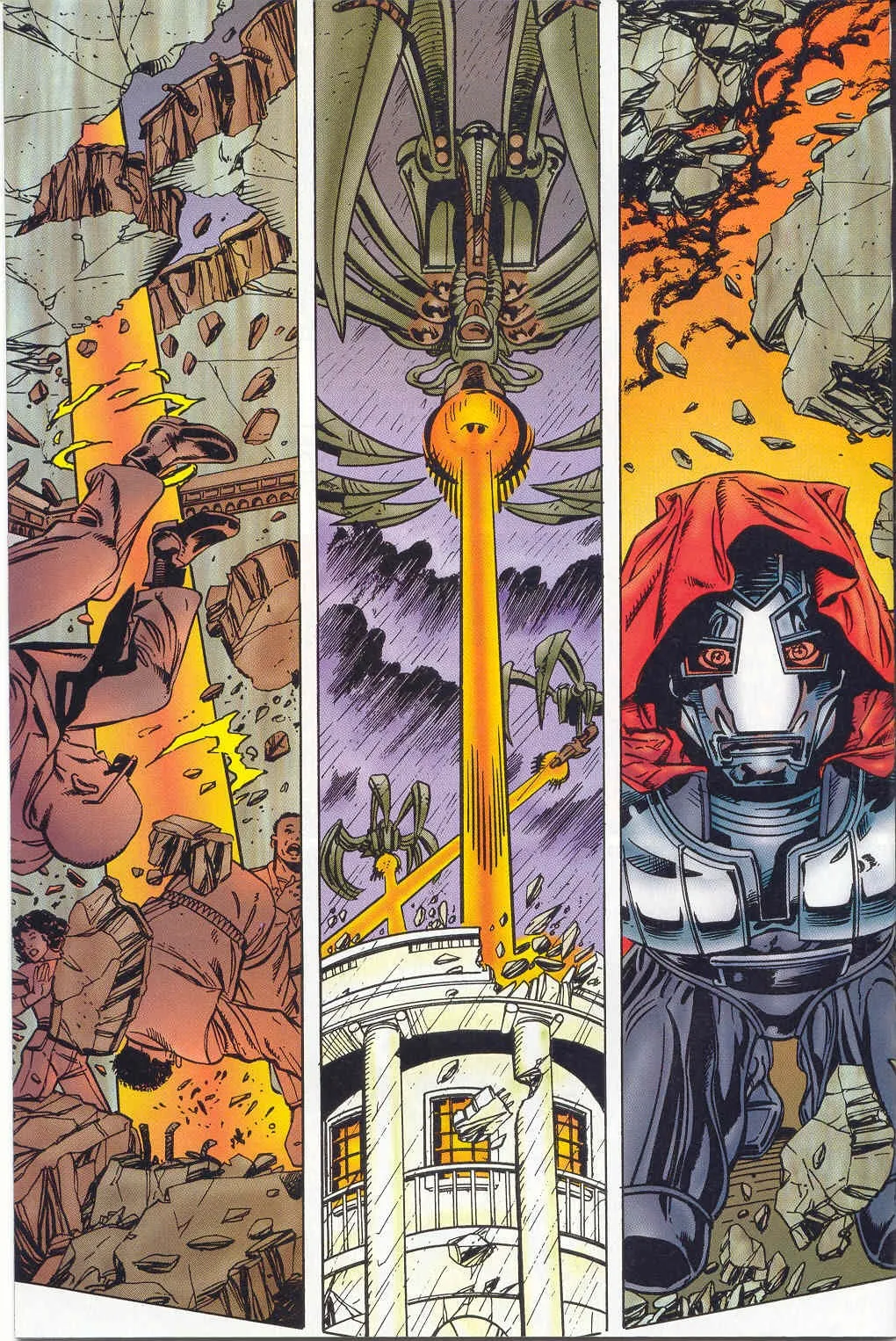
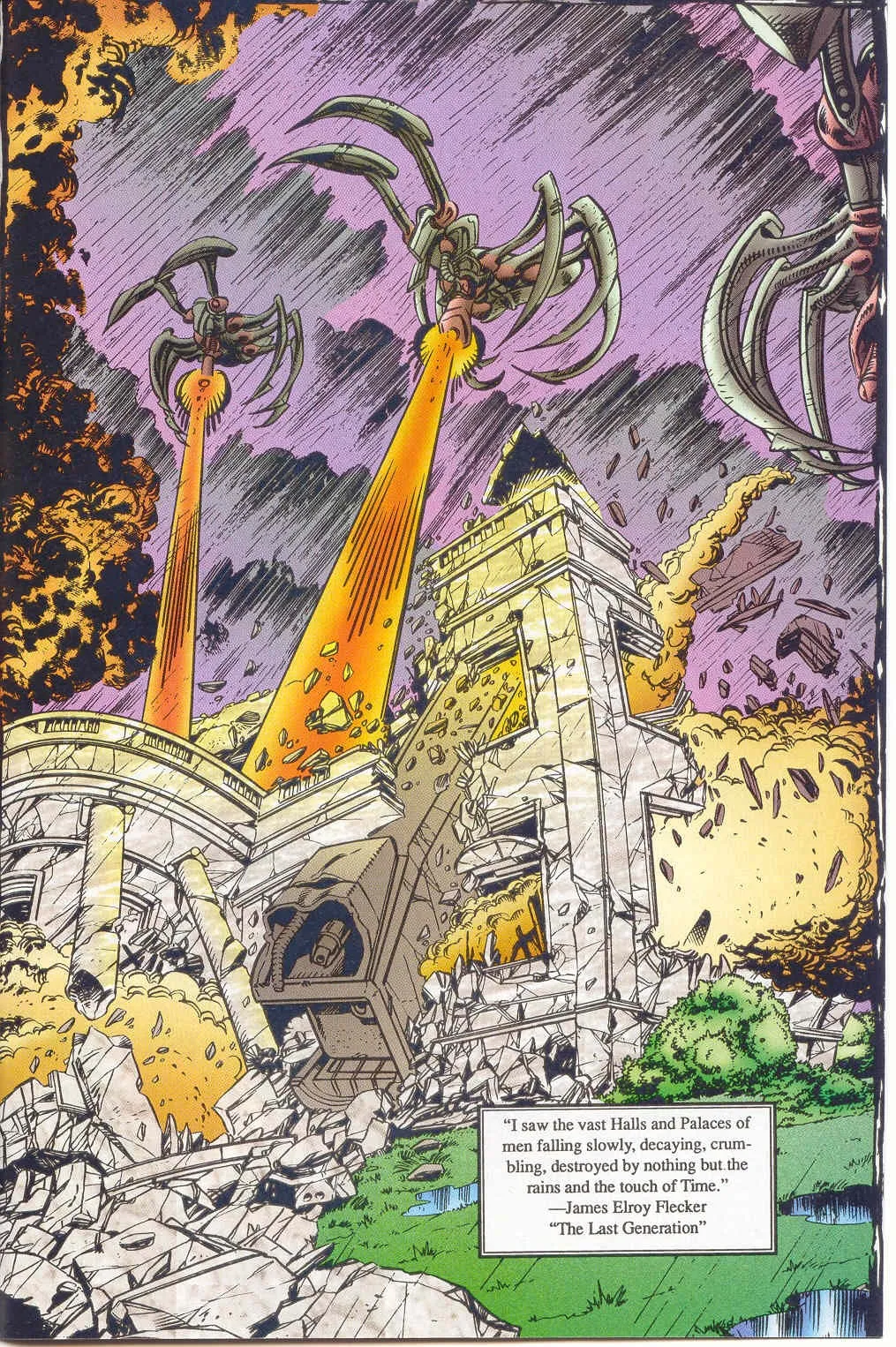
The central antagonist of Doom 2099 Issue 33 (1995) is John Herod, the enigmatic leader of the Chicago Reserve, a secret repository of outlawed technology . Herod’s attack on Doom is notable for its use of weapons of mass destruction previously banned by international accords . The wave spiders, developed for guerrilla warfare but banned in 2064, are deployed to disrupt computer systems and allow for a sneak attack on Libera Cielo and the White House .
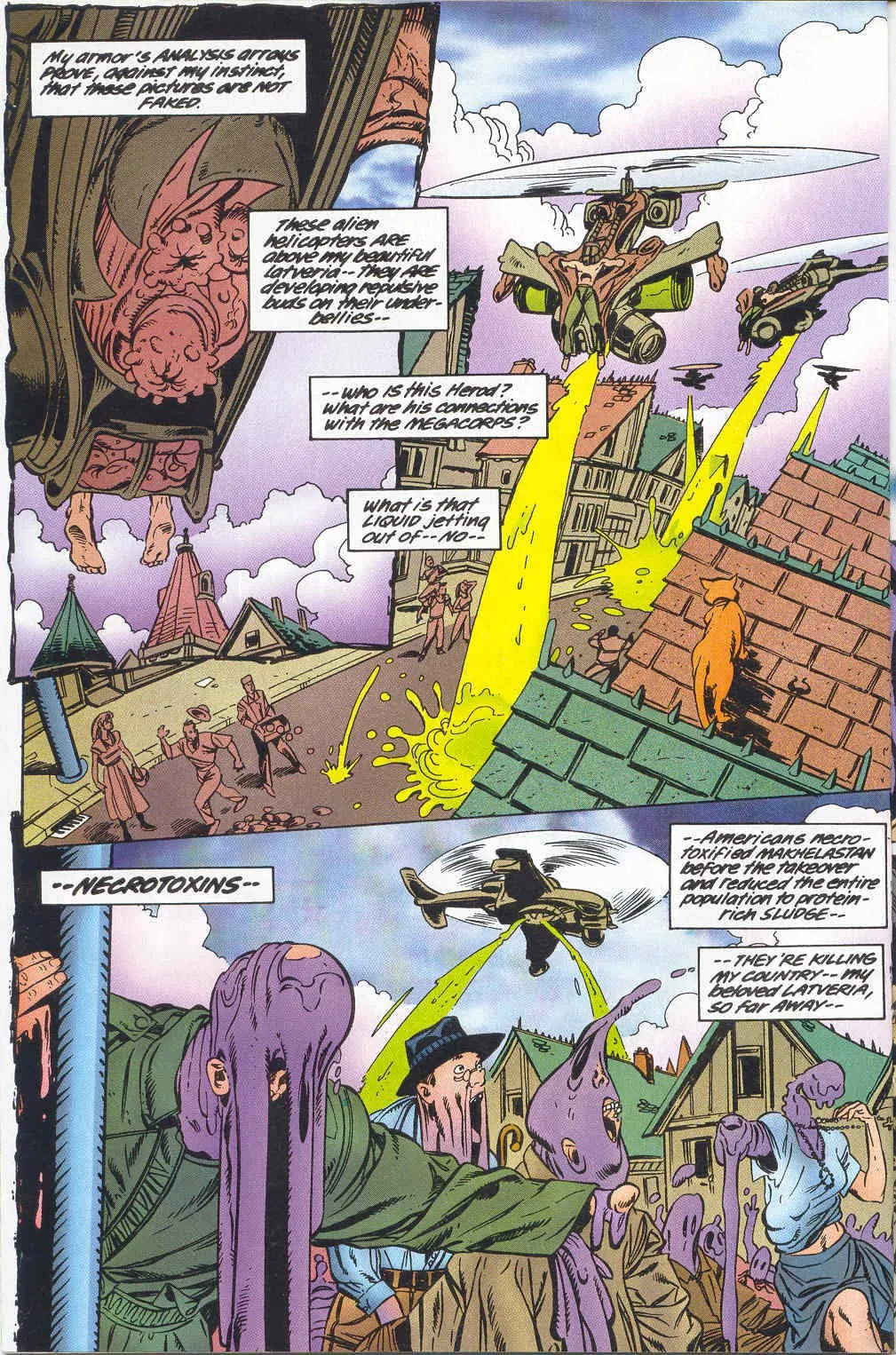
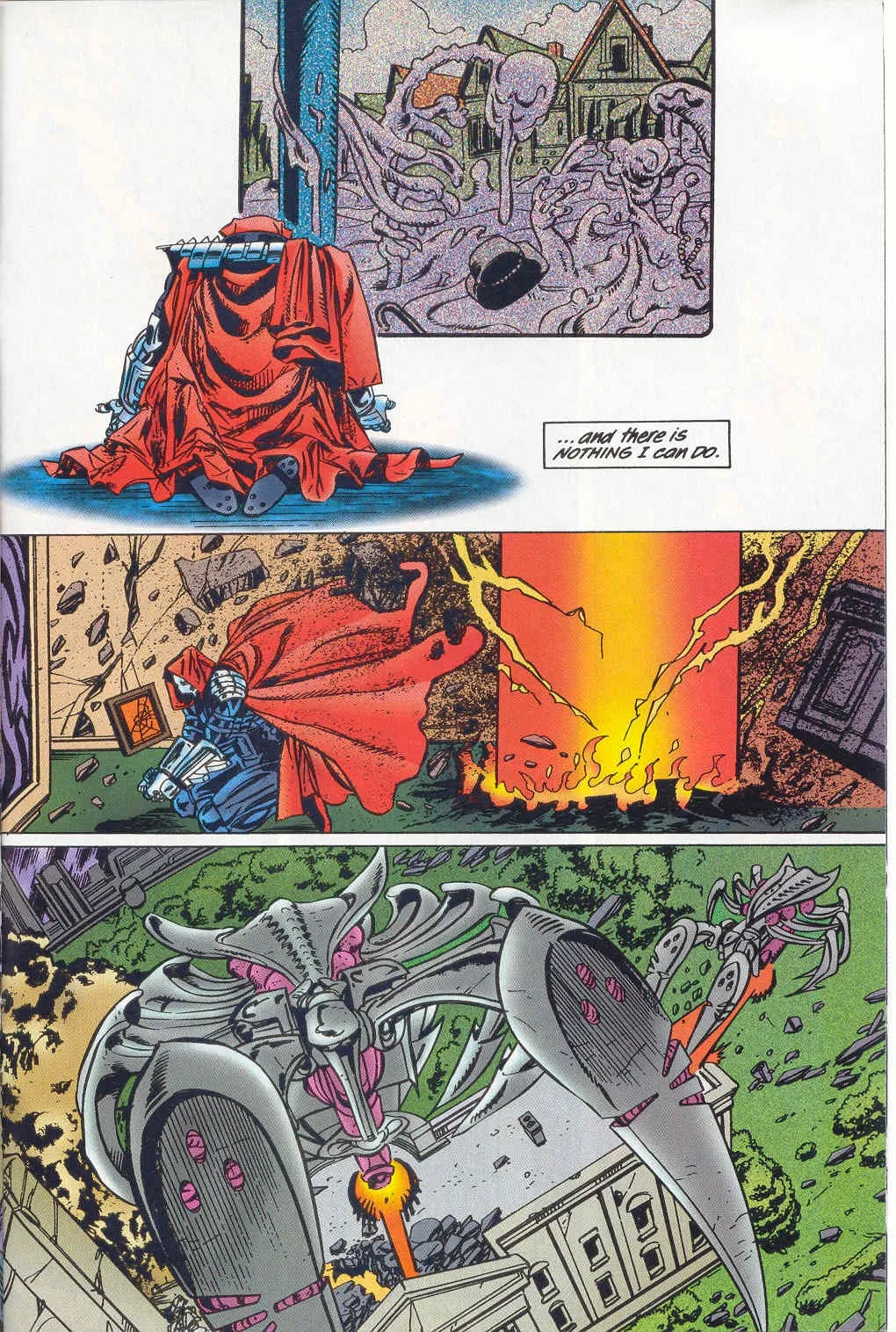
The air cavalry, salvaged from a “timequake” in 2081 but unusable since a 2049 accord banned future weapons, is unleashed against Latveria . Most horrifically, the necrotoxins, previously used by America to reduce the population of Makhelastan to “protein-rich sludge,” are now deployed against the Latverian population .
This use of forbidden weapons raises profound questions about the nature of power in the 2099 universe. The existence of international bans and treaties implies a level of governmental authority that seems to contradict the corporate-dominated culture we have seen so far .
Yet the unleashing of these weapons demonstrates that even in a world of megacorporations, there are limits that, once crossed, lead to unimaginable consequences. The genocide of the Latverian population is a particularly devastating blow, as it strikes at the heart of Doom’s identity as the ruler of a nation he has sworn to protect. Readers who appreciate complex political narratives can explore more of Marvel titles at readfreecomicsonline.com.
The Resurrection of Captain America
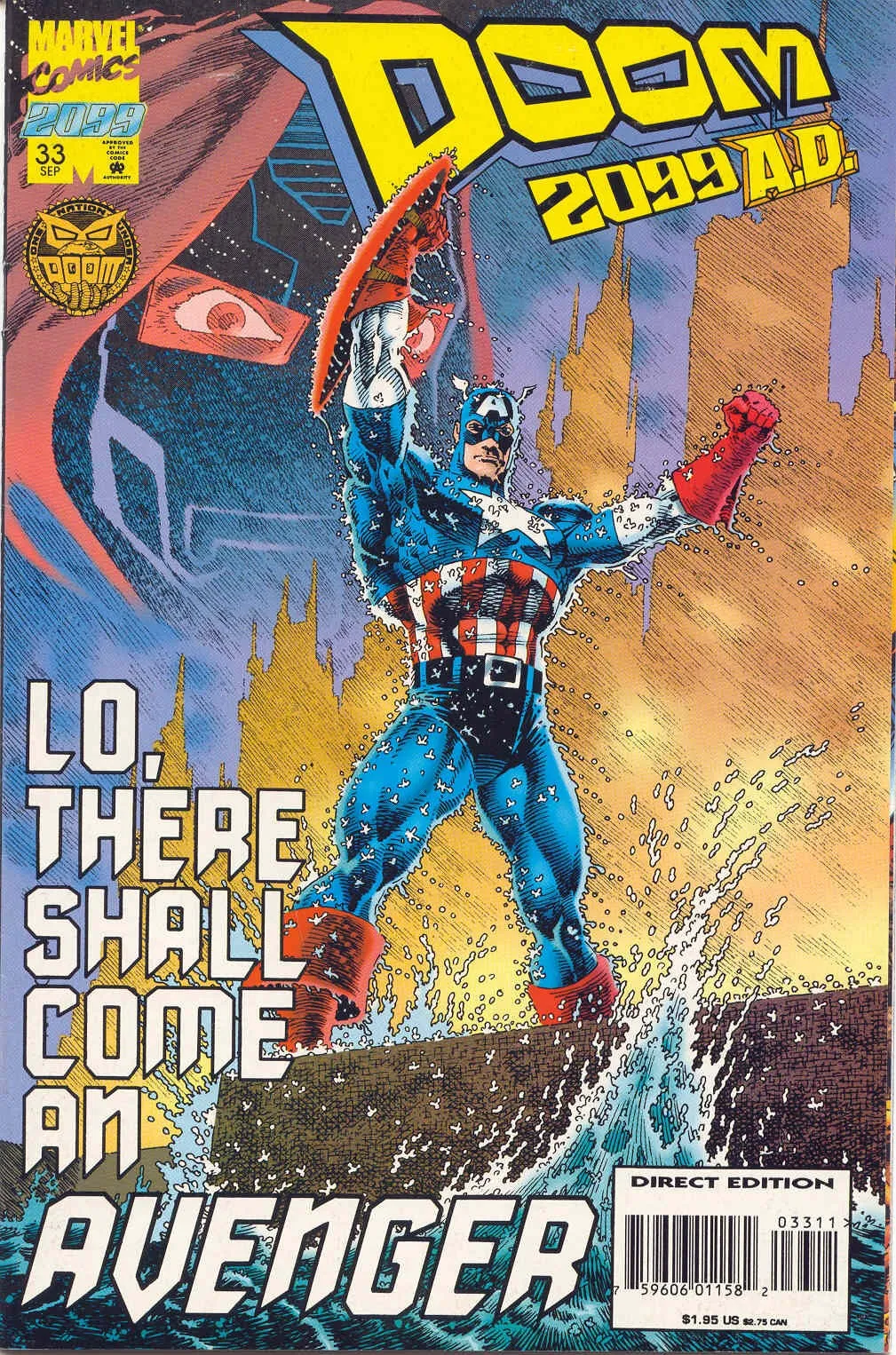
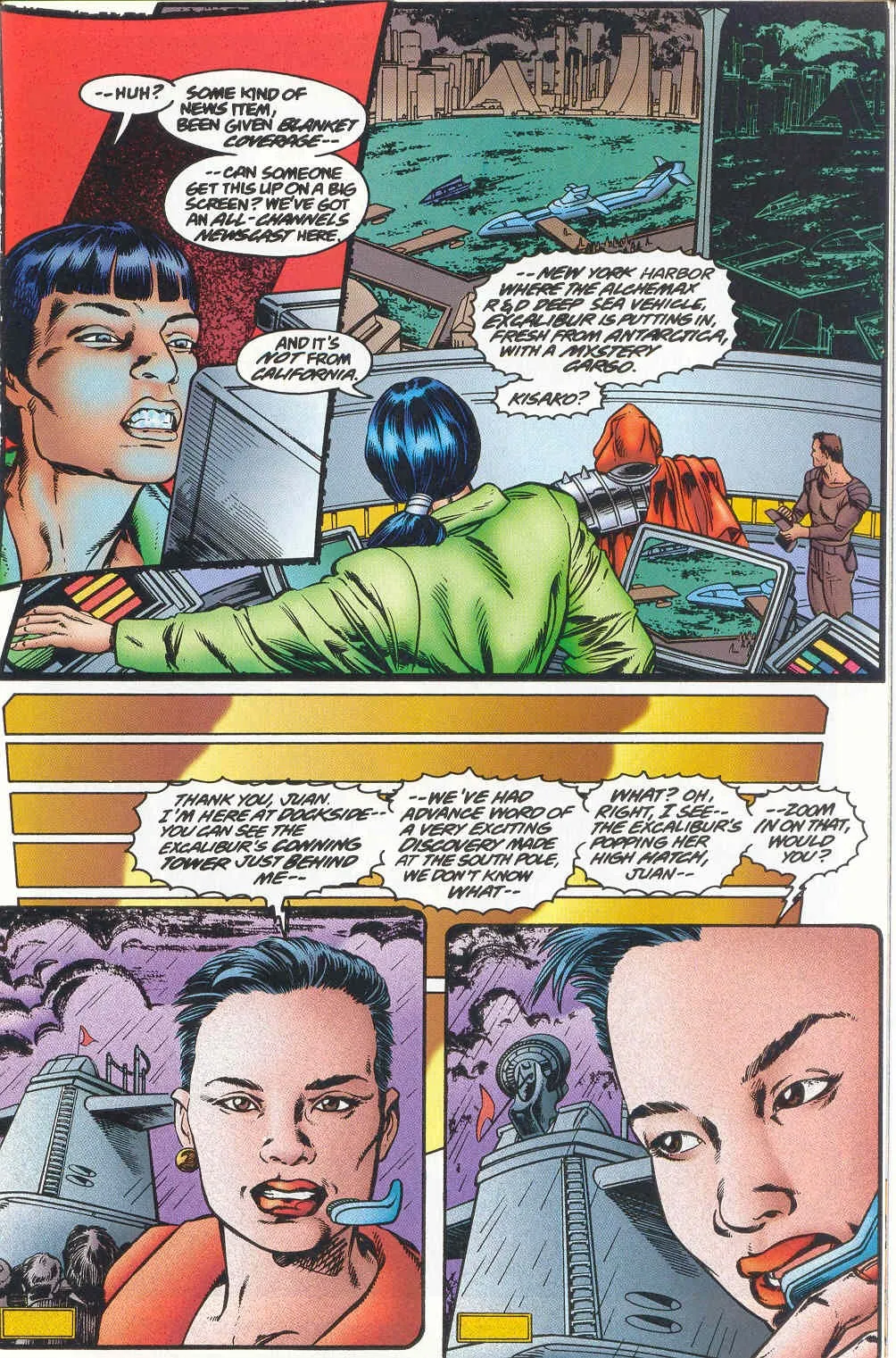
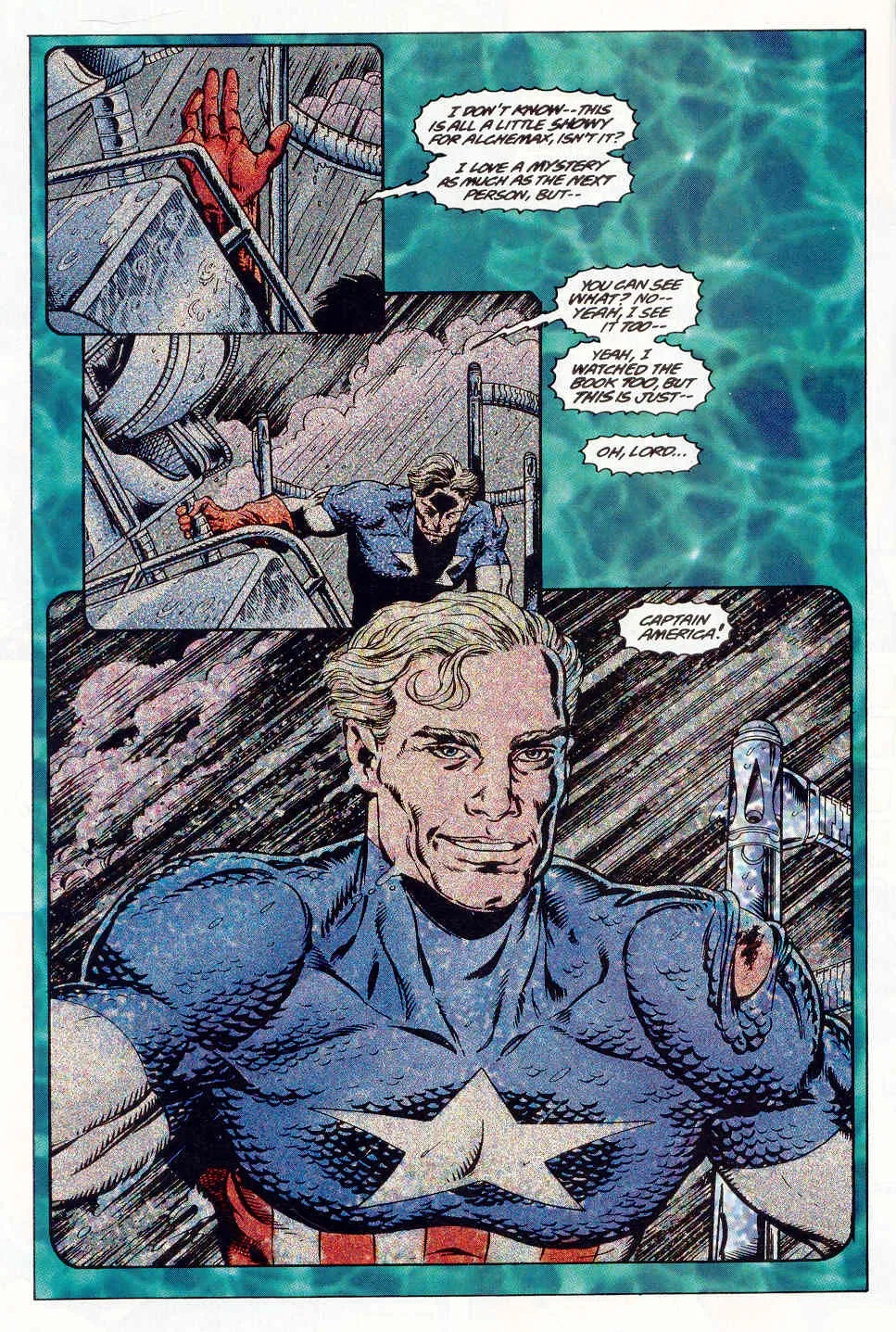
Perhaps the most shocking development in Doom 2099 Issue 33 (1995) is the appearance of a man claiming to be Captain America . At a news conference broadcast to the nation, a figure in the classic Captain America costume steps up to a podium and delivers a damning indictment of President Doom .
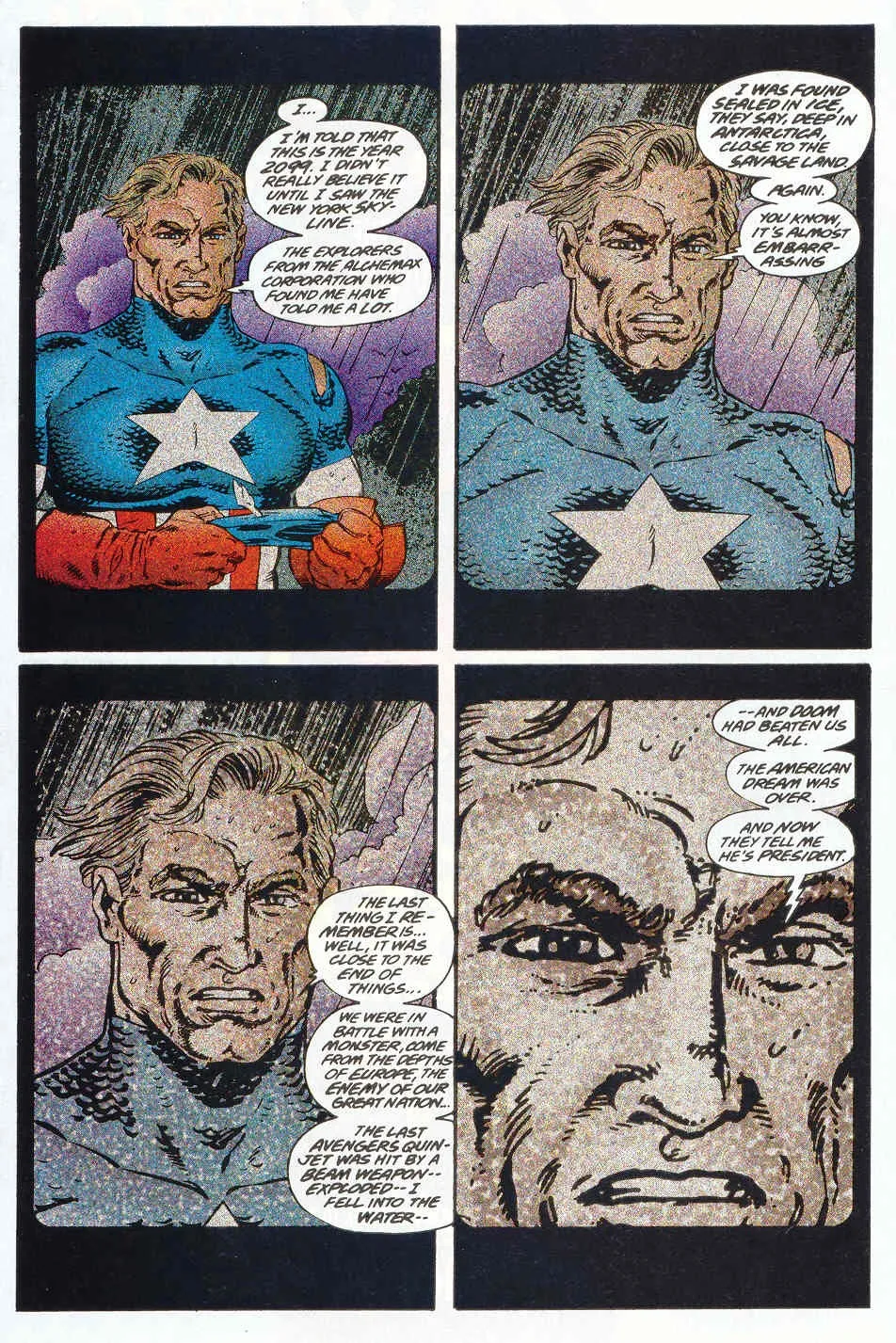
This “Captain America” tells the story of the death of the Avengers, of the last Quinjet being hit by an energy beam from “a monster from Europe,” and how he survived, frozen yet again, only to be thawed out to confront the tyrant who now rules America .
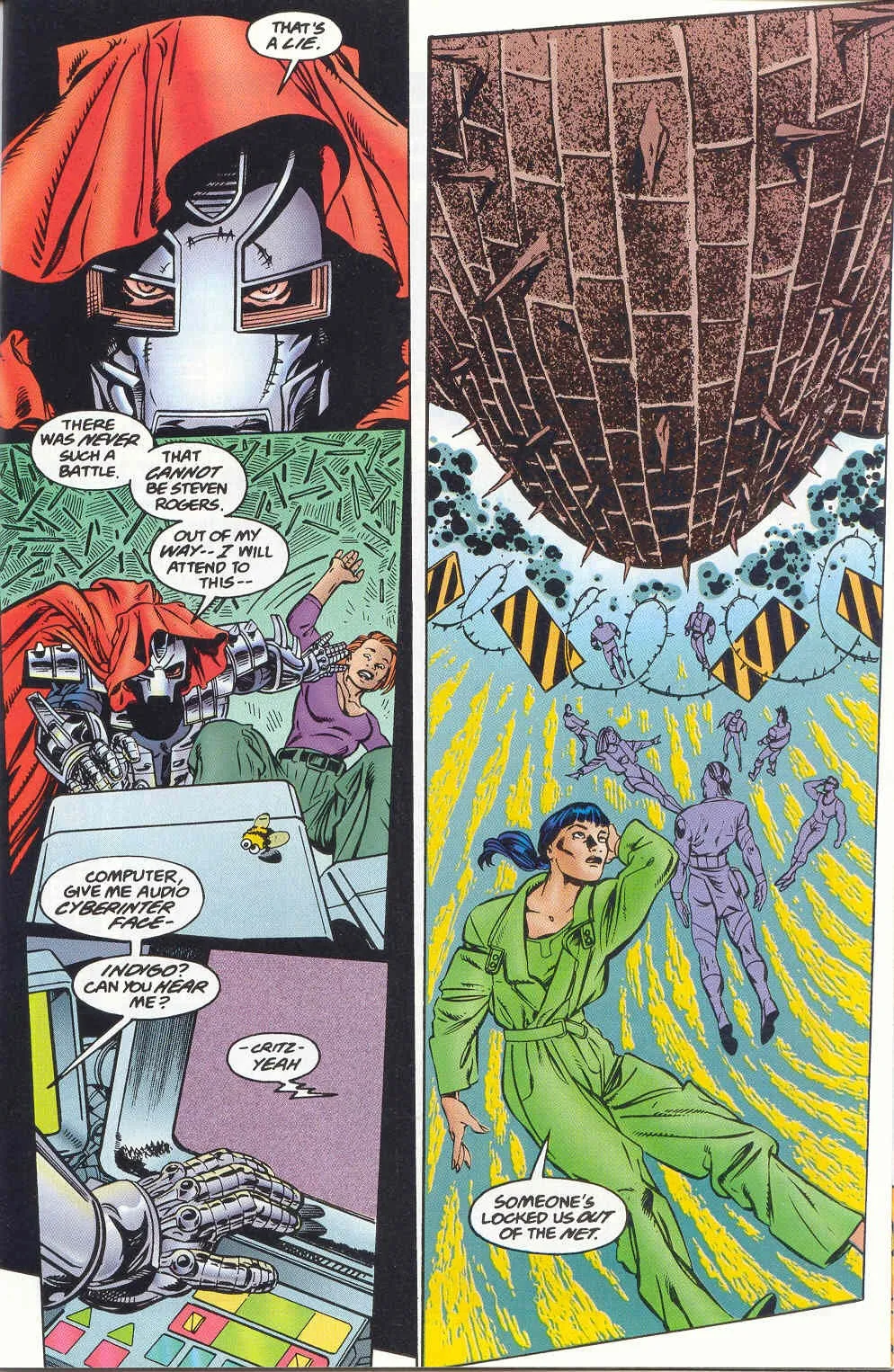
Doom himself is convinced that this Captain America is not the real Steve Rogers, since this version claims that Doom conquered America (or came close to it) during his time, an event Doom insists never happened .
The mystery of this false Captain America adds a layer of intrigue to the narrative, suggesting that history in the 2099 world has been manipulated and distorted. The issue explores the idea that the American population, living in a society reminiscent of George Orwell’s “1984,” would not know whether Doom had actually invaded around the new millennium . This fake Captain America is later revealed to be a genetic creation of John Herod, designed to pervert the legacy of the Avenger and turn public opinion against Doom .
The Destruction of Latveria
The most personal blow of Doom 2099 Issue 33 (1995) is the near-total destruction of Latveria. While Doom is preoccupied with the attacks on America, Herod’s forces unleash the necrotoxins on the nation Doom has sworn to protect . The genocide of the Latverian population is a devastating loss that strikes at the core of Doom’s identity.
He is not just a conqueror; he is a ruler who has always seen himself as the protector of his people. The destruction of Latveria is a direct attack on Doom’s soul, a reminder that his ambition has left his homeland vulnerable .
This tragedy raises questions about Doom’s leadership and the choices he has made. By leaving Latveria with “zero defenses” while he pursued his American conquest, Doom exposed his people to the very forces he sought to defeat .
Some readers have criticized this as a moment of uncharacteristic overconfidence, a failure of the strategic brilliance that defines Doom . Yet it is also a moment of profound vulnerability, showing that even the most powerful ruler can be undone by his own ambition. The destruction of Latveria serves as a powerful reminder that Doom’s grand vision has come at an enormous cost.
The Art of Catastrophe
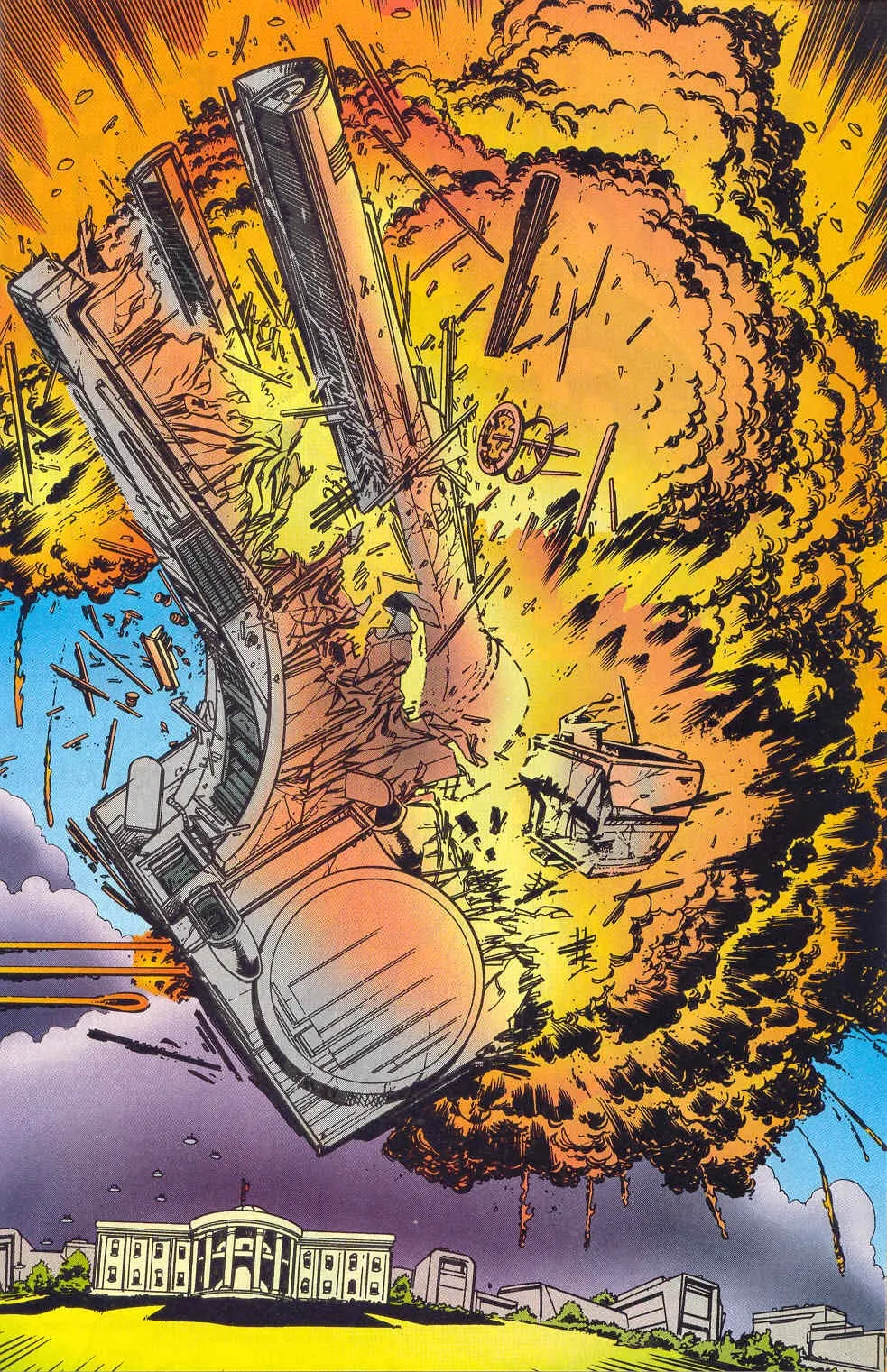
Doom 2099 Issue 33 (1995) features the artistic talents of Steve Pugh on pencils and Scott Koblish on inks . The art captures the escalating chaos of the narrative, from the quiet menace of the news conference to the explosive destruction of Libera Cielo.
Pugh’s style has been described as “gorgeous” by some readers, while others have criticized his faces as “awkward and never quite expressing the emotion in the dialogue” . Regardless of individual opinions on the art, the visual storytelling effectively conveys the scale of Doom’s downfall and the emotional weight of his losses.
The cover art, also by Pugh and Koblish, depicts a dynamic battle scene that promises the action-packed narrative within . The colors by Megan McDowell and Malibu (computer color) bring the world of 2099 to life, from the neon glow of cyber-cadre interfaces to the fiery destruction of Doom’s floating city .
The art team’s ability to craft memorable images that serve the story is a hallmark of this series . For fans of classic 1990s Marvel storytelling, Doom 2099 Issue 33 (1995) represents the best of the 2099 line—complex, political, and unafraid to take risks.
A New Status Quo
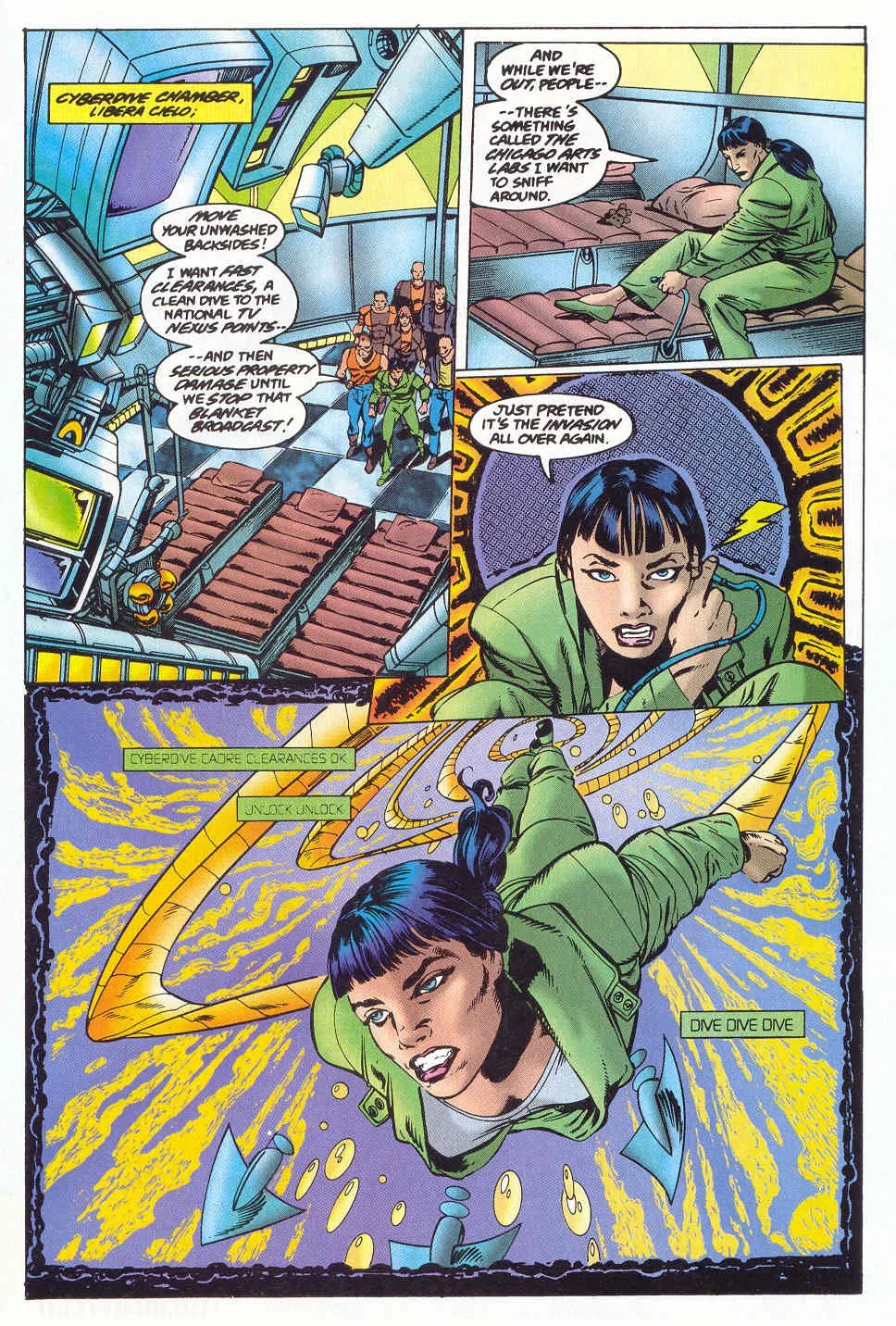
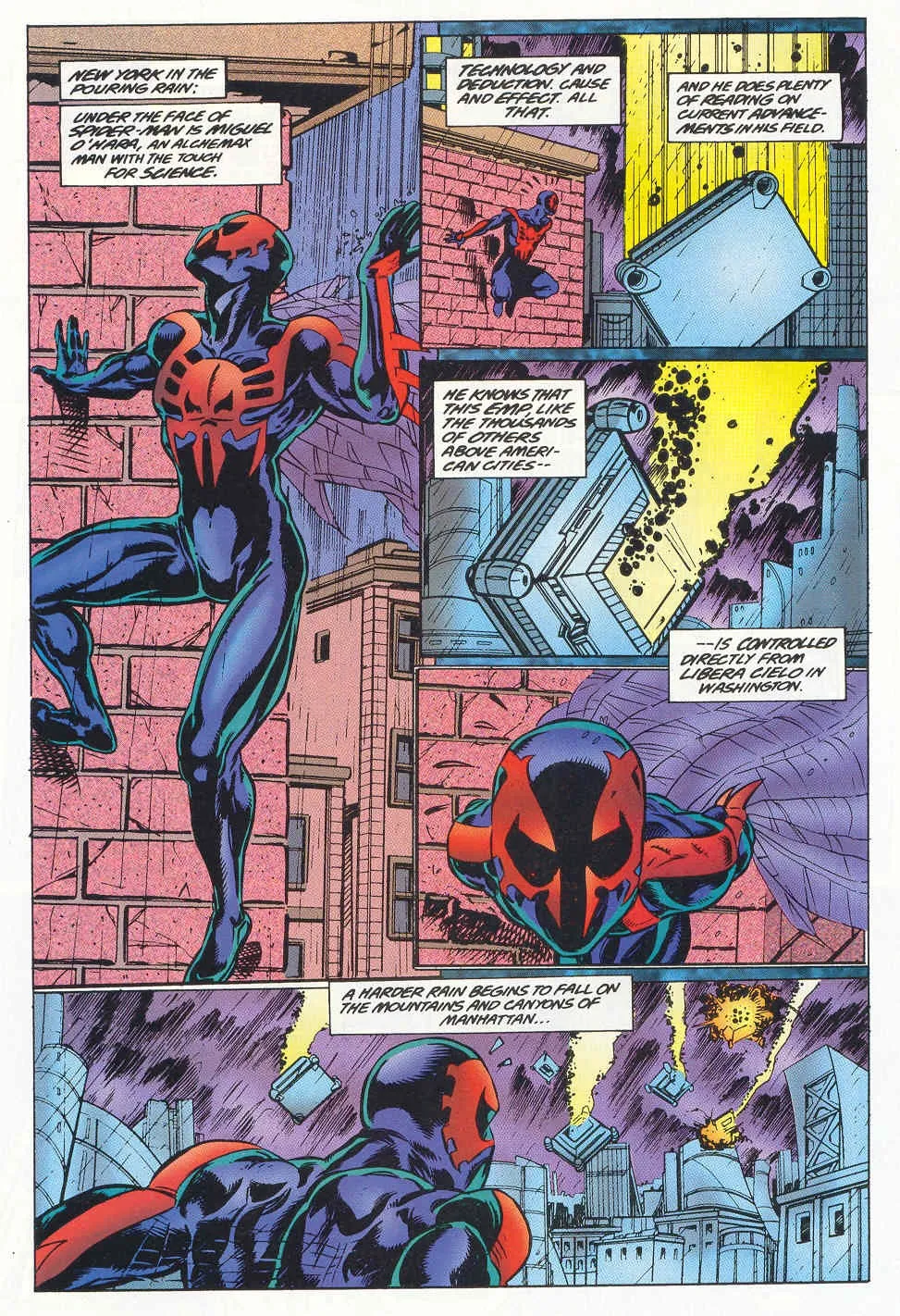
Doom 2099 Issue 33 (1995) clearly moves Doom to a new status quo, laying him low at a time when he believed himself to be at the pinnacle of his power . The attacks on California and New York will hurt his standing in the short term, since he lacks the resources to respond to them sufficiently (particularly since Herod has also blocked him from the Net) .
The resurrection of “Captain America” is a more long-term problem, since, after the dust settles, he will still have an anti-Doom rabble-rouser running around the place . The destruction of Libera Cielo and Latveria, however, are more personal, showing that Herod isn’t just aiming to destabilize Doom as President, but to attack him directly as a person .
The issue raises several intriguing questions that will be explored in future installments. What motivates John Herod? He tells Doom that he’s paying for his mistake of not dismantling the corporations and their infrastructure, where he (Herod) exists .
Is he pro-corp or anti-corp? Why is he so angry that he is willing to commit genocide to punish Doom? Something else is clearly at work . The issue also leaves us wondering about the identity of “Captain America” and the implications of the various weapons of mass destruction that have been unleashed . For readers eager to continue this emotional journey, readfreecomicsonline.com offers convenient access to Doom 2099 Issue 33 (1995) and other Marvel titles.
The Legacy of the Fall
Doom 2099 Issue 33 (1995) is a pivotal chapter in Warren Ellis’s legendary run, demonstrating his willingness to subject his protagonist to devastating defeats . Ellis’s run on Doom 2099 is often compared to Neal Stephenson’s novel “Snow Crash” for its accurate predictions about how we would access the internet, rely on it, weaponize it, and attempt to create spaces in it to live virtually .
This issue is a prime example of that futurist mentality, as a younger Ellis was throwing amazing ideas out there and blowing comic readers’ minds . The legacy of these comics is immense, proving that a character like Doctor Doom could be the protagonist of a compelling, thoughtful, and morally complex story. Be sure to visit readfreecomicsonline.com to explore this issue and the entire series, and stay connected to the Marvel Universe through the official Marvel website.
Conclusion
Doom 2099 Issue 33 (1995), “Fall,” is a powerful and devastating installment in Warren Ellis’s acclaimed run. It depicts a President Doom at the height of his power, only to be brought low by a mysterious enemy wielding forbidden weapons.
The issue balances large-scale political intrigue with devastating personal tragedy, making it a richly layered and compelling read. For fans of classic Marvel storytelling and newcomers alike, Doom 2099 Issue 33 (1995) offers a compelling reading experience that honors the character’s legacy while pushing the boundaries of what a superhero comic can achieve. Be sure to visit readfreecomicsonline.com to explore this issue and the entire series.
About the Author
This article was written by the Read Free Comics Online Team, a dedicated group of comic book enthusiasts and content creators with over a decade of combined experience in the comic book industry. Our team is passionate about bringing high-quality, accurate, and engaging comic book content to fans worldwide.
We strive to provide comprehensive coverage of the latest issues, creative teams, and storylines, ensuring that every article meets the highest standards of Expertise, Authoritativeness, and Trustworthiness (EEAT).
Our writers carefully research each topic, cross referencing information from official sources including Marvel and other reputable comic book publications to deliver content that is both informative and reliable. For more expertly crafted comic content, visit Read Free Comics Online.
Frequently Asked Questions
What is Doom 2099 Issue 33 (1995) about?
Doom 2099 Issue 33 (1995), titled “Fall,” shows President Doom facing a coordinated attack from John Herod, who unleashes forbidden weapons, destroys Latveria, and resurrects a false Captain America to turn public opinion against Doom .
Who wrote and illustrated Doom 2099 Issue 33 (1995)?
Doom 2099 Issue 33 (1995) was written by Warren Ellis with artwork by Steve Pugh, inks by Scott Koblish, colors by Megan McDowell, and letters by John Costanza .
When was Doom 2099 Issue 33 (1995) released?
Doom 2099 Issue 33 (1995) was released in September 1995 .
Where can I read Doom 2099 Issue 33 (1995) online?
You can read Doom 2099 Issue 33 (1995) and other installments of the series at readfreecomicsonline.com.
What is the significance of the false Captain America in Doom 2099 Issue 33 (1995)?
The false Captain America is a genetic creation of John Herod designed to pervert the legacy of the Avenger and turn public opinion against Doom. This figure claims Doom conquered America and killed the Avengers, a story Doom insists never happened .
What happens to Latveria in Doom 2099 Issue 33 (1995)?
Latveria is nearly destroyed by necrotoxins, with its population reduced to “protein-rich sludge.” This genocide is a devastating personal blow to Doom, striking at the heart of his identity as the ruler of his homeland .
What is the Chicago Reserve in Doom 2099 Issue 33 (1995)?
The Chicago Reserve is a secret repository of outlawed technology run by John Herod. It contains banned weapons like wave spiders, air cavalry, and necrotoxins, which Herod uses to attack Doom .
Also Read
Disclaimer: This content is for informational purposes only. All comic book titles, characters, and related materials are the property of their respective copyright holders.
Doom 2099 Issue 33 (1995) Read Free Online
Read Free Comics Online of all comics character on this website with very high-quality images on google free.